

9 Reasons You Panic When You Hear a Certain Notification Tone and How to Calm Notification Anxiety
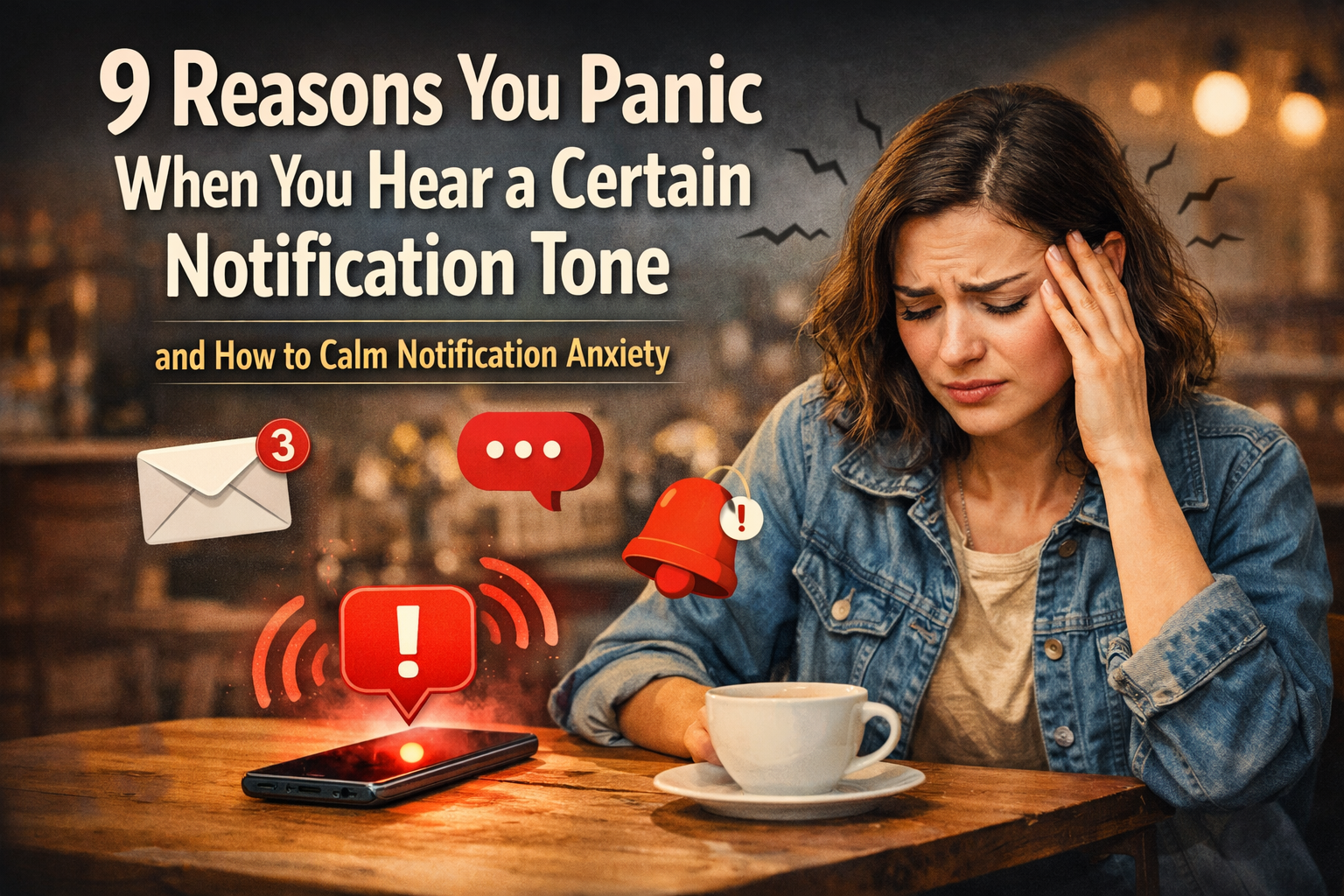
9 Reasons You Panic When You Hear a Certain… Imagine sitting in a quiet café, sipping your favorite coffee, when suddenly, the sound of a notification tone pierces through the ambient chatter. Your heart races, palms sweat, and an overwhelming wave of anxiety washes over you. You glance around, searching for the source of that familiar sound, only to realize it’s not even your phone.
Why does that simple chime send your mind spiraling into a whirlwind of worry and dread? If you’ve ever found yourself caught in this unsettling cycle, you’re not alone. The connection between specific notification tones and heightened anxiety can be perplexing and frustrating, leaving many of us to wonder: why do these seemingly innocuous sounds trigger such intense feelings? Let’s delve into this phenomenon and uncover the reasons behind our conditioned responses to certain notification cues.
Why Do I Panic When I Hear a Certain Notification Tone?
The Evolutionary or Psychological Reason Behind It
Our brains are wired to respond to certain stimuli, particularly those that signal potential threats or important information. The notification tone can trigger a psychological response rooted in our evolutionary past. In an era where survival depended on being alert to danger, any sound that indicated a change in the environment-be it a rustling in the bushes or an approaching enemy-was met with heightened awareness and anxiety.
In modern times, notification tones serve a similar purpose, alerting us to messages, calls, or alerts that could impact our social standing or emotional well-being. The psychological mechanisms at play involve the amygdala, which is responsible for processing emotions, particularly fear and anxiety. When you hear a specific notification tone, your brain may unconsciously associate it with past experiences of stress or urgency, triggering a panic response.
Real-Life Examples or Famous Case Studies
Many individuals have reported heightened anxiety in response to notification tones. For instance, a 2019 study published in the journal “Computers in Human Behavior” found that participants with anxiety disorders often reacted more intensely to smartphone notifications than those without anxiety. In a famous case, a social media manager was documented experiencing severe anxiety attacks upon hearing notification sounds, linking them to the constant pressure of work deadlines and social media engagement.
Additionally, tech companies have started to recognize this phenomenon. A well-known case involved a study by a leading smartphone manufacturer where they explored the psychological effects of notification sounds on users. They discovered that certain tones created an association with stress, leading to the introduction of customizable notification sounds to mitigate anxiety among users.
5 Actionable Coping Mechanisms
- Mindfulness Meditation: Practice mindfulness to help ground yourself and reduce anxiety when you hear a notification tone. Focus on your breathing and bring your attention to the present moment.
- Limit Notifications: Customize your notification settings to minimize the number of alerts you receive, helping to reduce overwhelming feelings associated with constant notifications.
- Change Notification Tones: Experiment with different notification sounds that are less anxiety-provoking, allowing for a more calming response when your device alerts you.
- Develop a Routine: Establish a healthy routine around technology use, including designated times to check notifications, which can help reduce panic responses.
- Seek Professional Help: If panic responses are severe, consider talking to a mental health professional who can provide tailored strategies and support for managing anxiety.
Did You Know? Research indicates that approximately 30% of smartphone users experience anxiety related to notifications. This phenomenon has led to the emergence of ‘notification fatigue,’ where users become overwhelmed by constant alerts.
In summary, the association between certain notification tones and conditioned anxiety responses highlights the profound impact of our environments on mental health.
Have you ever experienced a similar reaction to a specific sound or cue that triggered anxiety in you?
Why Certain Sounds Feel Bigger Than They Should
One of the strangest parts of notification anxiety is how disproportionate it can feel. A short digital sound lasts only a second, yet your body may react as if something urgent, threatening, or emotionally costly has just arrived. That reaction can feel irrational in the moment, but it usually makes sense once you understand that the brain does not respond only to the sound itself. It responds to what the sound has come to predict.
Over time, a specific tone can become linked with pressure, conflict, urgency, bad news, work demands, social tension, or emotional uncertainty. After enough repetition, the body stops waiting for the message to appear before reacting. The tone alone becomes enough to trigger the response. This is why even hearing the sound on someone else’s phone can create a jolt of dread. Your nervous system has learned the cue, and it reacts before conscious thought has a chance to intervene.
Why Notification Panic Feels So Physical
Many people assume anxiety is mostly mental, but notification-triggered panic often proves otherwise. The body may react immediately with a tight chest, clenched stomach, shallow breathing, sweating, racing thoughts, or a sense of instant alarm. These symptoms are not imagined. They are part of a real physiological stress response in which the brain prepares the body for action before the actual meaning of the notification is known.
This is especially common when the tone has become associated with emotionally loaded communication. If past notifications often brought criticism, last-minute demands, conflict, rejection, or stressful obligations, your body may begin responding to the sound as though it signals danger. The result is a form of anticipatory stress in which the alert feels bad before the content is even visible.
9 Reasons You Panic When You Hear a Certain Notification Tone
1. Your Brain Has Built a Conditioned Stress Association
The most common explanation is conditioning. If the same sound has repeatedly preceded stressful information, your brain learns to connect the tone with discomfort. Over time, the tone becomes a trigger rather than a neutral signal. Much like a song can bring back a memory instantly, a notification sound can bring back a stress state just as quickly.
2. Your Nervous System Expects Urgency
Notifications are designed to capture attention fast. They interrupt, redirect, and create a sense that something requires immediate awareness. If you already live under pressure, the body may interpret every notification as urgent by default. Even when the actual message is trivial, the nervous system may still prepare as if a problem needs solving right now.
3. You Associate the Tone With Work Stress
For many people, certain notification sounds are closely tied to work emails, team chats, client messages, or deadline reminders. If your job regularly creates pressure, that tone can become a symbol of performance stress. The sound stops being about communication and starts representing demands, expectations, and the fear of something going wrong.
4. Social Uncertainty Amplifies the Reaction
Not all notification anxiety is work-related. Some people panic because the tone is associated with difficult relationships, emotionally loaded conversations, or unpredictable social dynamics. A message from a certain person, platform, or group can trigger dread because it carries the possibility of conflict, rejection, or emotional labor. In these cases, the sound becomes a cue for relational uncertainty.
5. Your Brain Has Learned to Scan for Threat
When stress has been high for a long time, the brain becomes more vigilant. It starts scanning for signals of trouble and reacting faster to ambiguity. A notification tone can fit perfectly into this pattern because it signals change without immediately explaining what that change means. The unknown fills the gap, and anxiety often rushes in before clarity arrives.
6. You Feel Pressured to Respond Immediately
One hidden source of panic is the internal belief that every alert must be handled quickly. This creates a feeling of instant obligation. You may not just hear a tone; you may hear a demand. If you are someone who feels responsible, easily guilty, or highly available to others, the sound may trigger stress because it represents another expectation landing on your attention.
7. Notification Overload Has Reduced Your Tolerance
Sometimes the issue is not one notification but the accumulation of hundreds. Constant alerts can wear down the nervous system and reduce your ability to stay calm. Once your tolerance is lowered, even one familiar sound can feel like too much. What seems like an overreaction may actually be the effect of chronic digital overstimulation.
8. The Tone Interrupts Your Sense of Safety
People often feel most distressed when notifications break into moments that were previously calm. A quiet meal, a peaceful commute, or a relaxing evening can be disrupted instantly by one sound. The nervous system reacts not only to the notification itself but also to the loss of emotional safety that came before it. The greater the contrast, the sharper the reaction can feel.
9. Anticipation Hurts More Than the Message
In many cases, the panic peaks before you even read the alert. That is because anticipation leaves space for the worst possibilities. Before you know what the message says, your mind can imagine criticism, bad news, new obligations, or emotional conflict. Once the content is known, the anxiety may drop, even if the message is annoying. The uncertainty beforehand is often the most activating part.
Signs You May Be Experiencing Notification-Triggered Anxiety
This response can show up in several ways. You may feel a jolt of fear when your phone buzzes, dread checking messages, avoid opening apps, or feel tense even when someone else’s device makes the same sound. Some people silence their phone completely because the tone itself has become intolerable. Others compulsively check their device in order to end the uncertainty faster, even though the checking habit keeps the cycle alive.
You may also notice that the reaction depends on the source. A work chat tone may feel different from a family message sound or a social media alert. This is an important clue. It suggests that your anxiety is not random but linked to specific meanings your brain has assigned to different digital cues.
How to Reduce Panic Around Notification Sounds
Change the Sound Completely
One of the simplest and most effective interventions is to change the triggering notification tone. If the sound has become emotionally loaded, replacing it can interrupt the learned association. Choose something softer, less sharp, or less familiar. This will not solve the entire problem, but it can reduce the automatic stress spike.
Turn Off Nonessential Alerts
Not every app deserves direct access to your nervous system. Disable alerts that do not genuinely need immediate attention. Reducing the number of interruptions helps your brain relearn that silence is normal and that not every moment needs to be broken by digital demand.
Create Specific Check-In Times
Instead of responding to every alert as it happens, choose designated times to check messages and notifications. This helps retrain your mind to see communication as something you can approach intentionally rather than react to instantly. Predictability lowers panic.
Use a Pause Before Looking
When you hear the tone, try taking one slow breath before checking your phone. This brief pause interrupts the automatic panic loop and reminds the body that it has a choice. Over time, even a two-second pause can weaken the reflexive link between sound and alarm.
Notice the Story Your Mind Tells
Pay attention to the meaning you assign to the sound. Do you immediately assume bad news, criticism, obligation, or conflict? Often the mind fills in the blank with the most threatening explanation. Learning to notice that pattern can help you challenge it before it fully takes over.
Why This Problem Is Becoming More Common
Modern life trains people to live in a state of digital anticipation. Notifications are not occasional interruptions anymore; they are built into work, relationships, scheduling, entertainment, and identity. Many people move through the day half-expecting the next alert, which creates a background sense of unfinished vigilance. Under those conditions, it is not surprising that certain sounds begin to feel emotionally loaded.
The problem is not only technology itself but the way technology has merged with pressure. One tone may now represent your boss, your bills, your social life, your responsibilities, and your emotional labor all at once. That is a lot of meaning for one small sound to carry. Once you understand that, the panic becomes easier to interpret and less mysterious.
Conclusion
If you panic when you hear a certain notification tone, it does not mean you are weak or overdramatic. More often, it means your brain has built a strong association between that sound and stress, urgency, uncertainty, or emotional demand. The reaction may feel sudden, but it usually develops through repetition and reinforcement over time.
The good news is that learned responses can be changed. By reducing unnecessary alerts, changing triggering sounds, creating intentional check-in habits, and understanding the meanings attached to certain tones, you can begin to weaken the panic loop. Once the sound stops representing immediate danger, your body can start responding with less fear and more steadiness.
How Notification Sounds Rewire Daily Habits
Another reason this reaction becomes so intense is that notification tones do not stay isolated in one moment. Over time, they begin shaping your daily habits, attention span, and sense of emotional readiness. A person who has been interrupted hundreds of times by alerts may start living in a low-grade state of anticipation even when the phone is silent. The body learns that peace is temporary, and that any quiet moment can be broken without warning. Once that expectation becomes normal, a single tone can hit much harder than it objectively should.
This is part of why notification anxiety often feels bigger after long periods of burnout, overwork, or emotional strain. The nervous system is already carrying too much, so the sound lands on a body that has very little reserve left. In that state, the tone is not just a sound. It becomes the final straw, the next demand, the next emotional interruption, or the next reminder that your attention is not fully your own. What seems like an exaggerated panic response is often a sign of cumulative overload rather than one isolated trigger.
Why Silence Can Feel Unfamiliar After Constant Alerts
Paradoxically, some people become so used to notifications that silence itself starts to feel strange. They may feel anxious both when alerts happen and when they do not. This creates a difficult cycle. The person dreads the sound, but also becomes uneasy without it because the brain has adapted to a constant rhythm of digital checking and interruption. In those cases, the anxiety is tied not only to the tone but also to the dependency created around it.
That dependency can make recovery harder, because the solution is not simply muting everything overnight. If your brain is accustomed to frequent stimulation, total silence may initially feel unsettling. This does not mean silence is bad. It means your nervous system may need time to adjust to a calmer pace. Just as the body can be conditioned into stress, it can also be retrained toward steadiness. The process usually works best when it is gradual and intentional rather than extreme.
A More Practical Way to Regain Control
If you want to reduce notification-triggered panic in a lasting way, it helps to think in terms of boundaries rather than willpower. You do not need to become perfectly calm every time your phone makes a sound. You need a healthier system around when, why, and how your device is allowed to interrupt you. That may mean separating work apps from personal hours, turning off preview banners, using different sounds for different categories, or keeping the phone out of reach during rest periods. These small structural changes can lower anxiety more effectively than simply telling yourself not to panic.
Most importantly, remember that your reaction is not proof that you are weak or overly sensitive. It is often evidence that your brain has adapted to a pattern of stress and is trying to protect you the only way it knows how. Once you see the reaction through that lens, you can work with it more compassionately. And when compassion is paired with practical digital boundaries, the sound that once triggered dread can gradually lose its power over your body and mind.