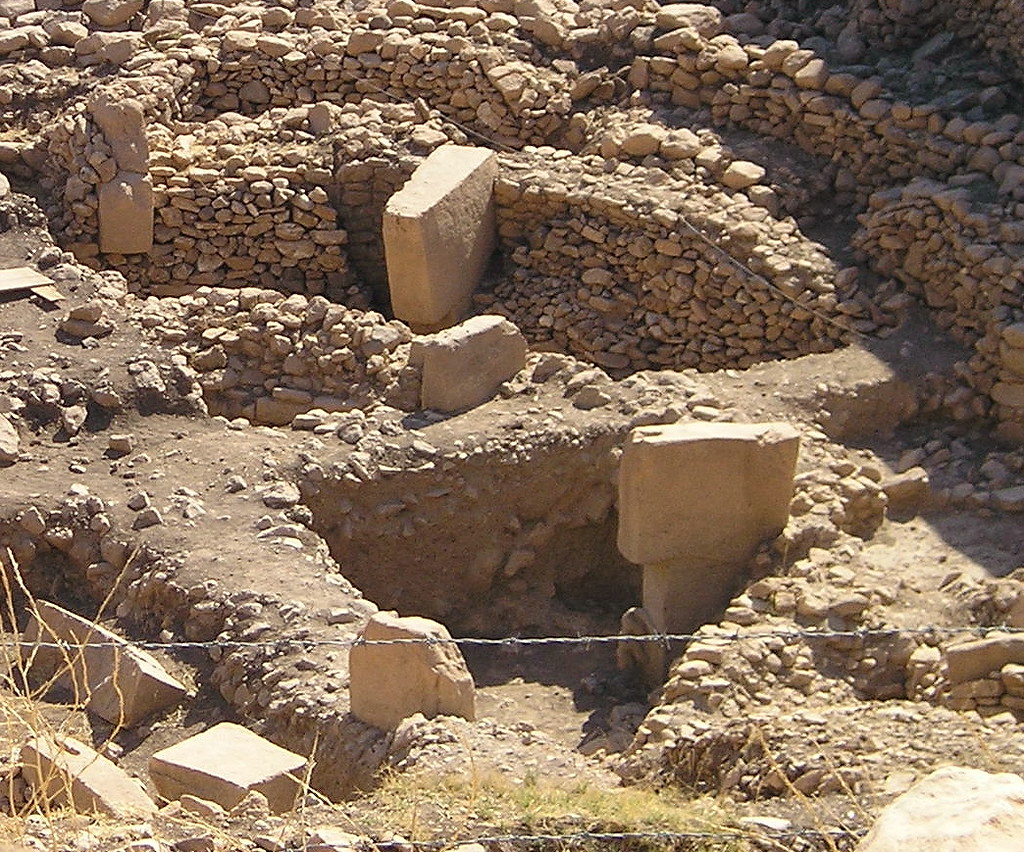
Built Before the Wheel
In the 1990s, German archaeologist Klaus Schmidt uncovered massive T-shaped limestone pillars buried on a hilltop in southeastern Turkey. Radiocarbon dating revealed a date that shocked the scientific world: 9600 BC. This site, Göbekli Tepe, is 6,000 years older than Stonehenge and 7,000 years older than the Great Pyramids. It was built by hunter-gatherers, people who supposedly hadn’t even invented pottery or agriculture yet.
The Impossible Engineering
The pillars weigh up to 20 tons and are intricately carved with lions, scorpions, vultures, and foxes. Moving and erecting these stones would require a workforce of hundreds and a complex social organization-something hunter-gatherers weren’t supposed to have.
- Religion First: Before Göbekli Tepe, historians believed agriculture led to cities, which led to religion. This site suggests the opposite: the urge to worship brought people together, and they invented farming to feed the workforce. Religion sparked civilization.
- The “Skull Cult”: Fragments of human skulls found at the site feature deep incisions, suggesting they were carved and perhaps displayed. Was this a temple for the dead or a site of sky burials where vultures picked bodies clean?
- Why Was It Buried? The most baffling mystery is that around 8000 BC, the site wasn’t just abandoned; it was deliberately and carefully buried under tons of soil. Why did the builders hide their masterpiece?
The Garden of Eden? Some scholars note the site’s location matches the biblical description of Eden. Is Göbekli Tepe the memory of a lost golden age, deliberately buried when humanity “fell” into the hardships of agriculture?