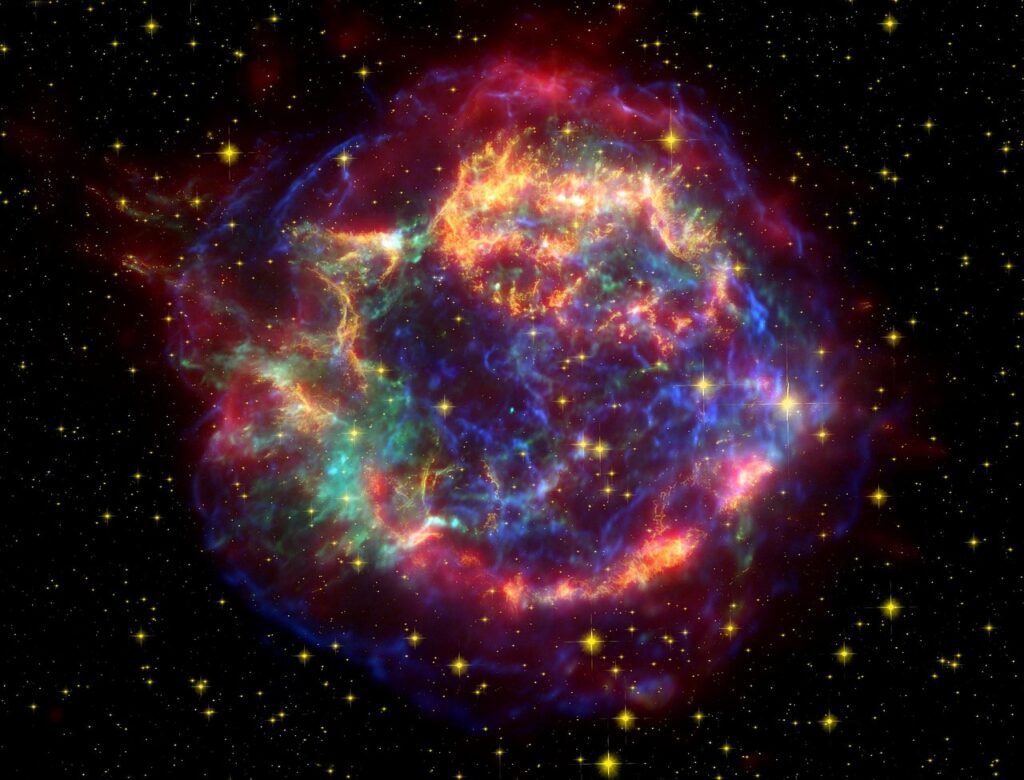
What if the universe’s most spectacular explosion could spell our doom? Supernovae, the cataclysmic deaths of massive stars, are among the most dazzling celestial events, capable of outshining entire galaxies. But what if one of these cosmic titans were to detonate in our galactic neighborhood? As we gaze at the night sky, could we witness the awe-inspiring brilliance of a supernova just moments before its lethal radiation reaches us? Join us as we explore the science behind these stellar explosions and the chilling possibility of witnessing beauty and destruction intertwined.
Could a Supernova Be Seen from Earth Before It Kills Us?
The universe is a magnificent yet perilous place, filled with cosmic events that can have profound implications for life on Earth. One of the most spectacular of these events is a supernova, the explosive death of a star that can outshine entire galaxies for a brief period. But could we witness such a stellar spectacle before one potentially poses a threat to our planet? Let’s dive into the fascinating world of supernovae and their effects on Earth.
#
What is a Supernova?
A supernova occurs at the end of a star’s life cycle, typically in one of two ways:
#
How Close is Too Close?
The distance from which a supernova can be observed safely is crucial. Astronomers project that a supernova must occur within about 50 light-years of Earth to pose a significant threat due to its radiation and shockwave. Fortunately, there are no known stars within this range that are primed to go supernova imminently.
#
Could We See It Coming?
Yes! The beauty of modern astronomy is that we are equipped with advanced telescopes and detection methods that allow us to observe distant stars and their behavior. Here’s how we might catch a glimpse of a supernova before it happens:
#
Countdown to a Cosmic Spectacle
In the event of a nearby supernova, we would likely see the explosion before any harmful effects reached us. Here’s a timeline of what might happen:
1. Detection: We detect unusual activity in a nearby star.
2. Observation: The star becomes increasingly bright as it nears supernova status.
3. Explosion: The supernova occurs, visible from Earth as a brilliant light in the night sky.
4. Radiation Wave: Several thousand years later, any harmful radiation would reach Earth, but by this time, we would be well aware and prepared.
#
Potential Supernova Candidates
To give you an idea of potential supernova candidates, here’s a comparison of some nearby stars and their likelihood of going supernova:
| Star | Distance (Light Years) | Type | Supernova Probability | |
| Betelgeuse | 642 | Type II | Low (not imminent) | |
| Antares | 604 | Type II | Moderate (future) | |
| Rigel | 863 | Type II | Low (future) | |
| Proxima Centauri | 4.24 | Not a supernova candidate | N/A |
#
Fun Facts About Supernovae
#
Final Thoughts
While the thought of a supernova occurring nearby might sound terrifying, the reality is that scientists are keeping a close eye on the cosmos. We are likely to witness the dazzling light of a supernova long before it poses any danger to us. So, instead of worrying, let’s appreciate the beauty of the universe and keep looking up at the stars!
The next time you gaze at the night sky, remember that you might just be looking at a star that could one day go supernova, lighting up our skies and showcasing the immense power of the cosmos!
In conclusion, while the occurrence of a nearby supernova could indeed be visible from Earth, the likelihood of it posing an immediate threat to our planet is relatively low. Such an event would provide a spectacular light show in the night sky, allowing scientists and astronomers to study the phenomenon and its effects on our solar system. However, the chances of a supernova being close enough to cause significant harm are minimal. What are your thoughts on the potential impact of a supernova, and how do you think we should prepare for cosmic events?