

AI Client Onboarding for Freelancers: 12 Steps to Create a Smoother Start
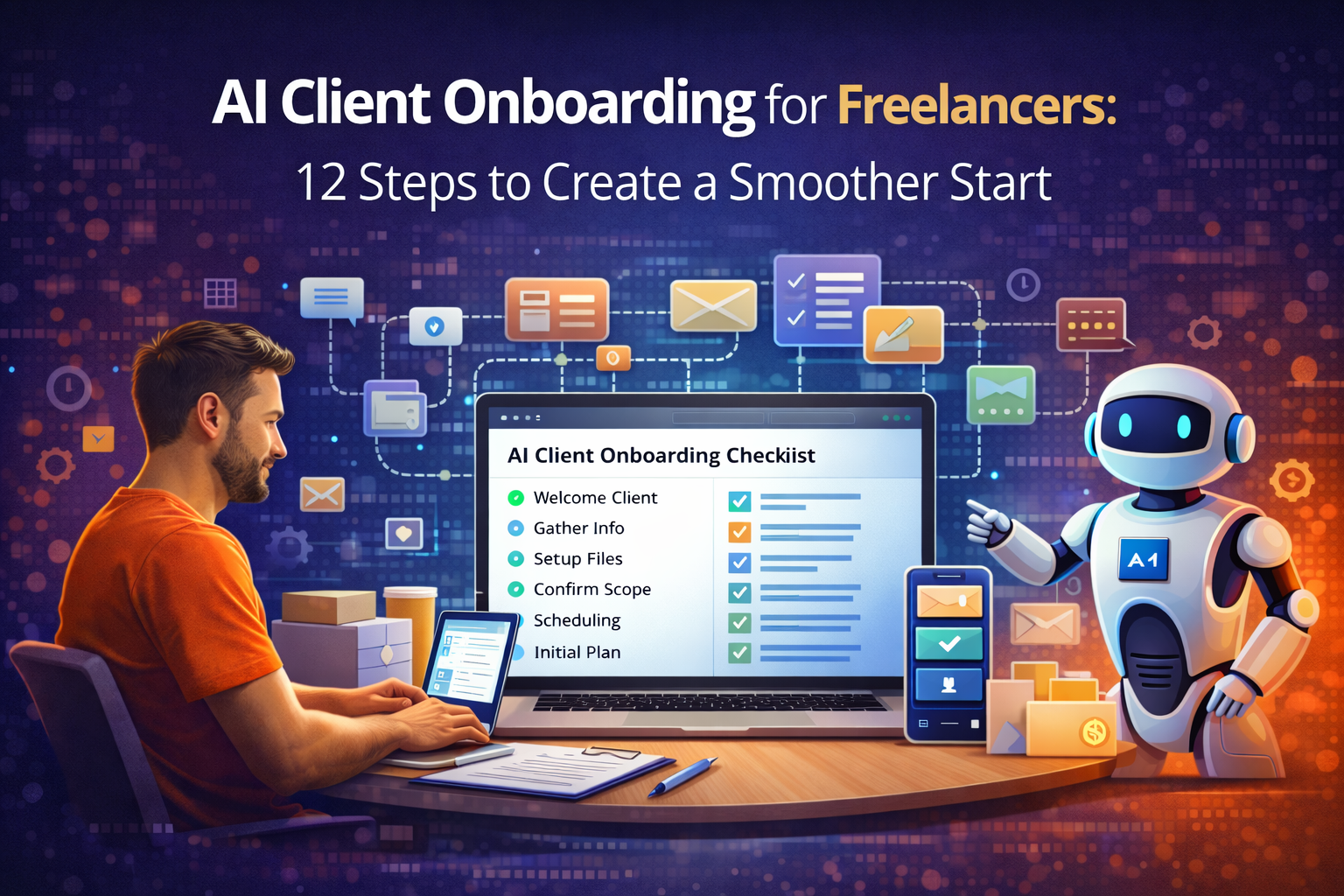
AI client onboarding for freelancers is becoming one of the most practical ways to improve project quality before the real work even begins. Most freelancers spend a lot of time thinking about lead generation, pricing, proposals, and delivery, but many underestimate how much the client onboarding stage shapes everything that follows. A project that starts with confusion often stays inefficient. A project that starts with clarity, structure, and confidence is far more likely to stay on track. This is why onboarding is not just an administrative step. It is a core part of the client experience and one of the strongest predictors of whether a freelance engagement will feel smooth, stressful, profitable, or messy.
For many solo professionals, onboarding is still handled in a loose and inconsistent way. A client says yes, a few emails go back and forth, someone shares a folder, a kickoff call gets booked, and the freelancer tries to organize the project manually from memory, scattered notes, and old templates. Sometimes that works. But as the business grows, that approach becomes fragile. Details get missed. Files arrive late. Expectations remain vague. Scope assumptions stay unspoken. Communication preferences are not documented. Internal preparation becomes rushed. None of these issues seem dramatic on their own, yet together they create friction that affects the entire relationship.
This is where AI can create a meaningful advantage. Used well, AI does not replace the personal side of freelance client work. It strengthens it. It helps freelancers summarize intake forms, organize discovery notes, draft welcome emails, extract tasks from agreements, build project briefs faster, turn kickoff calls into action lists, and maintain a clearer record of what the client expects from the start. In other words, AI helps transform onboarding from a loose handoff into a more reliable workflow.
The freelancers who grow sustainably usually do not rely on memory and improvisation forever. They build systems that make a solo business feel more organized without making it feel cold. Clients do not want to feel like they entered a machine. They want to feel guided, understood, and confident that the freelancer knows what comes next. AI client onboarding for freelancers works when it helps deliver exactly that feeling. It creates more consistency behind the scenes so the human experience becomes smoother in front of the client.
In a market where clients compare multiple providers and often judge professionalism through speed, clarity, and process as much as through raw skill, onboarding has become a strategic advantage. The right system reduces avoidable back-and-forth, protects scope, shortens time to first deliverable, and makes trust easier to build early. That is why this topic matters so much for freelancers who want better projects, better relationships, and better long-term business performance.
AI Client Onboarding for Freelancers: Why It Matters More Than Ever
Freelance work has changed significantly. Clients now expect a smoother experience even when they are hiring a solo expert rather than an agency. They want quick communication, polished handoff processes, clear next steps, clean documentation, and confidence that the project will be managed professionally from the start. This expectation exists whether the freelancer is a writer, designer, consultant, strategist, developer, coach, marketer, or video editor. In practice, the client is not only buying the output. They are buying the experience of working with someone who appears organized and dependable.
That makes onboarding especially important because it is one of the first operational signals the client receives after saying yes. If the process feels slow, confusing, or improvised, the client starts the engagement with doubt. If the process feels clear and intentional, the client starts with confidence. This emotional difference matters. Strong projects are easier to build when the client feels secure enough to collaborate openly and trust the process. Weak starts create hidden tension that tends to resurface later in the form of unclear feedback, delayed approvals, or repeated scope friction.
At the same time, freelancers are handling more moving parts than before. A typical project may involve inquiry forms, proposal documents, contracts, payment collection, kickoff calls, shared folders, questionnaires, brand assets, research notes, timelines, content references, stakeholder comments, and approval workflows. Even a simple client engagement can generate a surprising amount of information in the first few days. When this information is handled manually every time, the freelancer loses time and consistency. That is why many onboarding problems are not caused by carelessness. They are caused by process overload.
AI helps because onboarding contains many tasks that are repetitive but still require structure. Summarizing forms, drafting emails, organizing notes, extracting requirements, building checklists, and converting conversations into usable project records are exactly the kinds of workflows where AI can reduce friction without removing judgment. For a freelancer, that means less admin fatigue and a cleaner start to each project. For the client, it means better responsiveness and clearer guidance.
In an increasingly competitive freelance environment, small operational advantages compound. Better onboarding reduces stress, improves communication, strengthens trust, and makes delivery easier later. That is why it deserves more attention than many freelancers currently give it.
What AI Client Onboarding Actually Means
AI client onboarding is not about sending robotic welcome emails and pretending that automation alone creates professionalism. It is better understood as using AI to support the transition from signed agreement to active project in a way that reduces manual friction and improves clarity. The freelancer still owns the relationship. The client still wants a human point of contact. AI simply helps organize and accelerate the operational parts of the process that would otherwise consume too much time and attention.
In practical terms, AI can assist at several stages. It can summarize the original lead inquiry and discovery call. It can help classify the type of project and expected deliverables. It can draft a personalized onboarding email based on the proposal and scope. It can extract responsibilities, milestones, and dependencies from agreements or kickoff discussions. It can turn a messy call transcript into a clean internal brief. It can suggest next-step checklists, prepare reminder messages, and organize client information into a more searchable project record.
This matters because onboarding is not one single action. It is a chain of micro-transitions. The client moves from interest to commitment, then from commitment to collaboration. The freelancer moves from sales mode to delivery mode. Information moves from email into project structure. Expectations move from verbal language into written process. The smoother these transitions are, the better the project usually performs. AI helps by shortening the gap between what was said and what gets documented or acted on.
The strongest onboarding systems use AI as a support layer, not a substitute for thought. The freelancer still reviews outputs, adjusts tone, validates scope details, and decides what should be communicated. That human review is important because early-stage project communication often includes nuance, hidden concerns, or relationship context that should not be flattened into generic automation. The goal is not efficiency at any cost. The goal is clarity with less wasted effort.
1. It Creates a More Confident First Impression
First impressions in freelance work are often formed after the proposal is accepted, not before. A good sales conversation may win the client, but the early onboarding experience decides whether the client feels relieved, impressed, or uncertain. Many freelancers focus heavily on proposals and portfolio presentation, then treat onboarding as a loose admin sequence. That is a mistake, because onboarding is where the client tests whether the business behind the promise feels real.
AI helps create a better first impression by making it easier to send timely, well-structured, personalized onboarding communication. Instead of waiting too long or sending a generic email copied from an old template, the freelancer can use AI to prepare a cleaner welcome message that reflects the specific project, references what was discussed, and clearly explains what comes next. That makes the process feel intentional from the beginning.
The benefit is not only aesthetic. A strong first operational impression reduces anxiety. Clients who know what to expect tend to be easier to work with because they are not constantly trying to reconstruct the process for themselves. They feel guided. That sense of guidance becomes part of the value of the relationship.
2. It Turns Discovery Information Into Usable Project Context
One of the most common onboarding failures happens when useful discovery information does not carry forward into the actual project. A client may explain priorities clearly during a call, yet the details become scattered across notes, emails, and memory. By the time the work begins, the freelancer remembers the general direction but not the full context. This weakens the quality of decisions made early in the project.
AI can help transform discovery calls, questionnaires, and inquiry forms into a cleaner project summary. Pain points, goals, constraints, stakeholder notes, tone preferences, deadlines, and desired outcomes can be extracted and organized into an internal working brief. That means the onboarding phase becomes a point of knowledge consolidation rather than a period where context quietly leaks away.
This is especially valuable for freelancers who handle several projects at once. A strong brief lets the freelancer re-enter context quickly without relying on memory every time. It also helps later if the client asks why a certain direction was chosen, because the original business context is easier to revisit.
3. It Makes Welcome Emails More Personal Without Taking More Time
Welcome emails seem simple, but they carry more weight than most freelancers realize. A weak welcome email feels transactional and vague. A strong one reassures the client, confirms alignment, explains the next step, and sets the tone for the working relationship. The problem is that writing these well every time takes effort, especially when the freelancer is already juggling other project work.
AI makes this easier by generating a first draft based on the project type, discovery notes, scope, and timeline. The freelancer can then refine the tone so the message still sounds like them. This changes the task from writing from scratch to editing with intention. The result is usually faster and better than either extreme of doing everything manually or sending a cold template unchanged.
The real value is consistency. Clients should not receive a stronger onboarding experience only when the freelancer happens to have more energy that day. AI support helps create a reliable baseline of clarity and professionalism across projects.
4. It Helps Clarify Scope Before Delivery Starts
Many freelance scope problems begin in the onboarding stage, not midway through the project. The client thinks one thing is included. The freelancer assumes something slightly different. A deliverable sounds obvious until it becomes specific. Revision expectations feel understood until the first round of feedback arrives. When scope stays soft in the first week, it often becomes painful later.
AI can help reduce this risk by extracting deliverables, assumptions, constraints, and dependencies from proposals, call notes, and agreements into a clearer internal and external summary. This makes it easier to spot vague areas before the work begins. The freelancer can then clarify those points with the client while everything is still fresh and emotionally easy to discuss.
This is not about making onboarding overly formal. It is about avoiding ambiguity where ambiguity becomes expensive. When scope is clearer at the start, the freelancer protects time, profitability, and relationship quality all at once.
5. It Speeds Up Internal Prep for Solo Operators
Freelancers may work alone, but that does not mean they do not need internal prep. Every new project still requires setup. Files need to be organized. Project documents need to be created. References need to be gathered. Deadlines need to be noted. Initial tasks need to be identified. Without a system, this setup can feel repetitive and draining, especially when several projects begin close together.
AI helps by turning project inputs into setup actions more quickly. A kick-off call can become an action list. A scope document can become a prep checklist. A questionnaire can be summarized into a briefing note. This reduces the time between signing and productive work. Instead of spending too much of the first project phase on organization, the freelancer can move into strategic and creative work faster.
That speed matters because onboarding often overlaps with active deadlines from other clients. Any reduction in setup drag helps the freelancer stay organized without sacrificing quality or responsiveness.
6. It Improves Client Questionnaires and Intake Forms
Client intake forms are useful, but they are often poorly designed or underused. Some are too long and exhausting. Others are too vague to produce useful information. Even when a client completes a strong form, the freelancer still has to read, interpret, and organize the answers manually. That slows down the value of the form itself.
AI can improve this process in two ways. First, it can help freelancers build better forms by identifying the types of questions most likely to surface useful project information based on service type. Second, it can summarize completed responses into a clearer intake brief. Instead of reading through long paragraphs each time, the freelancer receives a structured interpretation of what matters most.
This improves both efficiency and project quality. Better intake creates better starting assumptions. Better starting assumptions lead to better creative or strategic decisions later. The client may never see the behind-the-scenes processing, but they will feel its effects in how quickly and accurately the freelancer seems to understand the project.
7. It Makes Kickoff Calls Easier to Convert Into Action
Kickoff calls often feel productive because everyone leaves with energy, but the operational value of that call depends on what happens next. If the notes remain vague or incomplete, the project starts with soft alignment rather than hard clarity. This is especially risky in freelance work because the same person who led the call is also responsible for turning the discussion into execution.
AI note-taking and summarization tools can help turn kickoff calls into cleaner outputs. Key decisions, responsibilities, dependencies, deliverables, client preferences, and timeline expectations can be extracted more reliably. This reduces the risk that the freelancer forgets a small but important detail while shifting into delivery mode.
It also shortens the lag between conversation and motion. Tasks can be created sooner, recap emails can be sent faster, and the client sees evidence that the conversation actually moved the project forward. That kind of momentum matters early in an engagement.
8. It Strengthens Client Trust Through Better Process Visibility
Many clients are not experts in the service they are buying. They often judge the quality of the engagement through process visibility rather than through technical detail alone. If they can see what is happening, what comes next, and how the freelancer is managing the work, they feel more confident. If the process feels opaque or improvised, trust weakens even if the work itself is good.
AI-supported onboarding helps improve visibility by making it easier to create clean recaps, clearer next-step messages, organized checklists, and more thoughtful follow-up communication. Instead of giving the client a vague sense that things are moving, the freelancer can show the path more clearly.
This matters because trust reduces friction. A trusting client gives feedback more calmly, approves faster, and questions the process less aggressively. Better onboarding creates that trust early, which pays off throughout the project lifecycle.
9. It Reduces Repetitive Admin Across Similar Projects
Many freelancers work within repeating service patterns. A copywriter may offer website copy packages. A designer may repeat a branding process. A consultant may run the same type of audit for different clients. Even when each engagement is customized, parts of the onboarding flow are similar. Rebuilding those parts manually every time creates unnecessary friction.
AI helps reduce this repetitive load by giving the freelancer a smarter starting point for common workflows. Welcome sequences, questionnaire summaries, kickoff recaps, onboarding checklists, client instructions, and project preparation notes can be generated faster and then customized. This is especially useful for freelancers who want to stay boutique while still running a more efficient business model.
The result is not cookie-cutter service. It is more time available for the parts of the relationship that truly deserve customization. The standard pieces become lighter, which makes the high-value pieces easier to deliver well.
10. It Supports Better Handoffs Between Sales and Delivery Mindsets
Freelancers often underestimate the mindset shift between winning work and doing work. In the sales stage, the focus is on fit, trust, value, and possibility. In the delivery stage, the focus shifts to scope, deadlines, execution, and detail. Onboarding is the bridge between these two modes. If that bridge is weak, projects start with a mismatch between what was sold and what is actually prepared for delivery.
AI can support this transition by translating proposals, call notes, and scope conversations into a more operational format. That makes it easier for the freelancer to move from relational language into project language without losing key context. The promise made during the sales process becomes easier to honor because it is documented more clearly.
This is particularly valuable for solo professionals because there is no separate account team or project manager handling the translation. The freelancer must perform both roles. AI helps reduce the strain of switching between them.
11. It Helps Freelancers Onboard Faster Without Feeling Rushed
Speed matters in onboarding, but rushed onboarding creates mistakes. Clients want to feel momentum after they commit, yet the freelancer also needs enough structure to avoid missing details. This tension is exactly where AI can be helpful. It allows the freelancer to move faster on the repetitive parts without sacrificing the quality of the experience.
For example, instead of spending an hour writing a kickoff recap, organizing notes, and building a checklist manually, the freelancer can review AI-generated outputs and focus on refinement. The process remains thoughtful, but the admin burden drops. That makes it more realistic to onboard new clients promptly even during busy weeks.
This balance is important because delayed onboarding creates uncertainty, while chaotic onboarding creates doubt. The best experience sits in the middle: quick, clear, and calm. AI makes that middle ground easier to reach consistently.
12. It Creates a Better Foundation for Repeat Business
Good onboarding does not only affect the first week of a project. It shapes the long-term memory of what it felt like to work with the freelancer. Clients often decide whether they would return, refer, or expand the relationship based not only on outcomes, but on how smooth the process felt from the beginning. A chaotic start can stain even a decent finish. A confident start strengthens the entire experience.
AI-supported onboarding helps create a cleaner project record, stronger documentation, and better communication patterns that remain useful long after the initial project is complete. If the client returns months later, the freelancer has better context. If a retainer conversation opens, the original goals and workflow structure are easier to revisit. If the freelancer wants to build a case study or re-engagement message, the foundational project information is easier to access.
That means onboarding is not just operational setup. It is the beginning of account memory. The better that memory is built, the easier it becomes to turn one project into a longer business relationship.
What Freelancers Get Wrong About Onboarding Systems
One common mistake is assuming onboarding only needs to feel friendly, not structured. Friendliness matters, but friendliness without clarity creates risk. Clients may like the freelancer personally and still feel uncertain about the process. Another mistake is building onboarding entirely around templates without enough project-specific context. Templates save time, but if they are not adapted intelligently, they make the experience feel generic.
Some freelancers also overcomplicate the process. They create large forms, excessive documentation, or too many steps in an effort to look professional. That can backfire. Good onboarding should reduce client effort while increasing clarity. If the process feels heavy before the work even begins, it may create resistance rather than confidence.
Another mistake is expecting AI to solve unclear systems on its own. If the freelancer does not know what should happen after a client says yes, AI will not magically invent a good workflow. It can support and accelerate a process, but it still needs a clear structure. The best results come when freelancers simplify their onboarding first, then use AI to make it more consistent and easier to run.
How to Build a Strong AI Onboarding Workflow
The best way to build an onboarding system is to map the first seven days after a client agrees to work together. What information needs to be collected? What documents need to be sent? What should the client understand immediately? What must the freelancer prepare internally? Where do delays usually happen? These questions reveal where friction is hiding.
Once that process is visible, AI can be applied where it removes repetitive effort. It can summarize calls, organize intake data, draft personalized client communications, convert agreements into checklists, and build cleaner internal project notes. The key is to use AI where the work is repetitive and structural, while keeping human judgment where tone, trust, and strategic interpretation matter most.
It also helps to keep the system light. A good freelance onboarding workflow should make work easier within days, not become another side project to manage. Clear stages, good templates, a strong questionnaire, organized note capture, and AI-assisted summaries are often enough to create a major upgrade without unnecessary complexity.
Most importantly, the workflow should feel better for both sides. The freelancer should feel less scattered. The client should feel more guided. If both outcomes are happening, the system is doing its job.
The Future of AI Client Onboarding for Freelancers
The future of ai client onboarding for freelancers will likely be less about isolated tools and more about connected systems. Discovery calls will flow into onboarding briefs automatically. Signed proposals will trigger personalized welcome sequences. Intake forms will generate internal project summaries. Kickoff calls will create action lists and timeline checkpoints without manual rebuilding. Client records will stay cleaner from the beginning, making the rest of the relationship easier to manage.
This matters because freelancers do not need more apps that create more admin. They need smoother transitions between the moments that already exist in their business. They need onboarding to feel lighter behind the scenes and stronger from the client’s perspective. AI is well suited to this because onboarding contains exactly the kind of structured but repetitive work that benefits from intelligent assistance.
The freelancers who benefit most will not be the ones who automate every client interaction. They will be the ones who understand where process can support trust without replacing it. Better summaries, better handoffs, better scope clarity, better setup, better visibility, and better project memory all create room for more human energy where it matters most.
In the end, a freelance business often rises or stalls based on what happens in the quiet operational moments between sales and delivery. That is where trust is either strengthened or weakened. That is where clarity either appears or disappears. And that is exactly why AI client onboarding matters. It helps solo professionals create a stronger start, a smoother process, and a more scalable version of the business without sacrificing the personal quality that makes clients want to work with a freelancer in the first place.