

Will AI Doctors Be Safer Than Human Doctors? 1 Mind-Blowing Truth
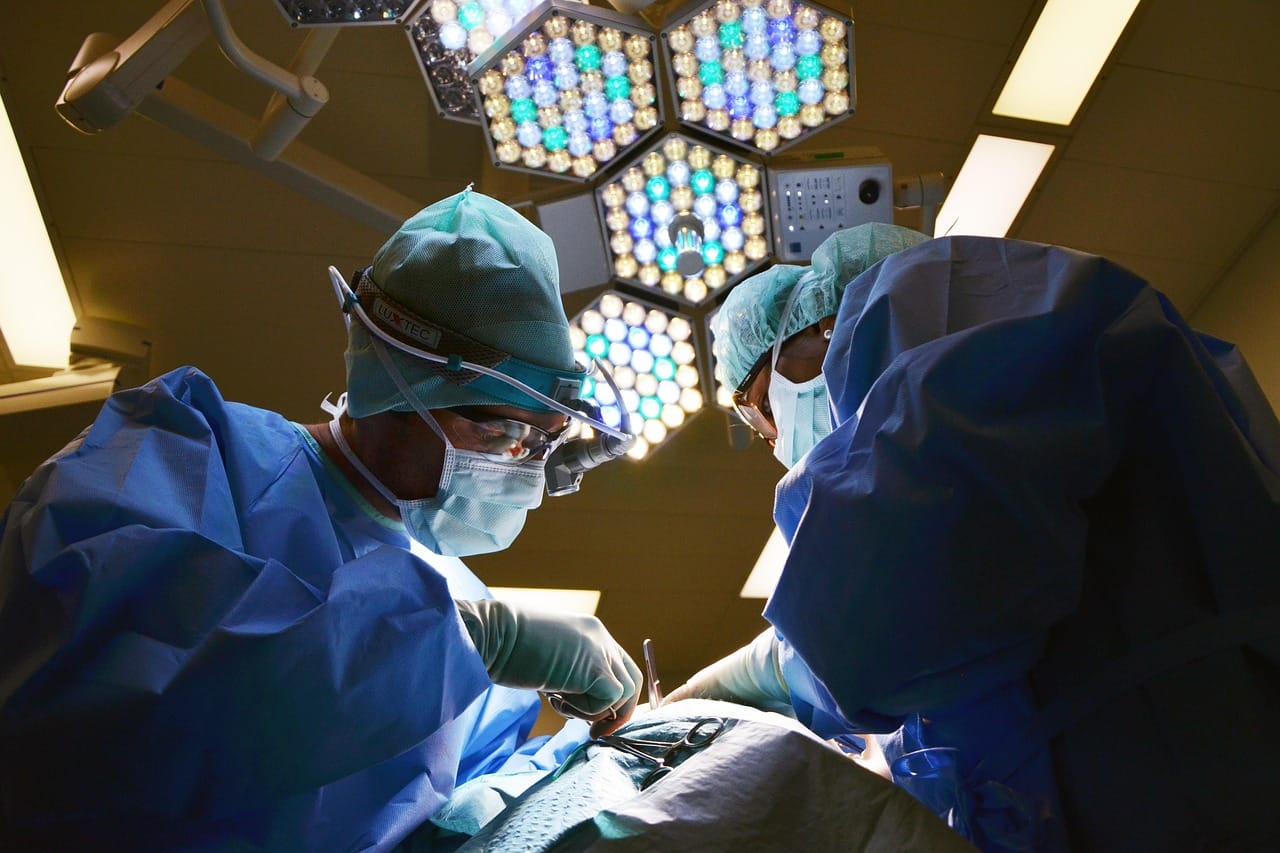
Will AI Doctors Be Safer Than Human Doctors… Imagine a world where a misdiagnosis could become a relic of the past. With studies suggesting that AI can outperform human doctors in diagnostic accuracy by over 20%, the question looms large: could AI doctors be the safer choice for our health? As technology advances at an unprecedented pace, we must confront the implications of entrusting our well-being to algorithms. Are these digital healers the future of medicine, or do they pose risks that we have yet to understand? Join us as we explore the potential of AI in healthcare and its impact on patient safety.
Will AI Doctors Be Safer Than Human Doctors?As technology evolves, the integration of artificial intelligence (AI) into healthcare continues to raise intriguing questions. One of the most pressing inquiries is whether AI doctors will be safer than their human counterparts. To explore this topic, we’ll dive into the capabilities of AI in medicine, the strengths and weaknesses of human doctors, and the implications for patient safety.
The Rise of AI in HealthcareAI technologies, such as machine learning algorithms and natural language processing, are making waves in the medical field. Here are some key points about the rise of AI in healthcare:
While AI technology continues to advance, human doctors bring unique advantages to the table. Let’s examine some of their strengths:
To better understand the differences and potential safety implications, let’s look at a comparison table:
| Feature | AI Doctors | Human Doctors | |
| Data Processing Speed | Extremely fast and efficient | Slower due to manual data interpretation | |
| Emotional Intelligence | Lacks empathy and emotional understanding | High emotional intelligence and empathy | |
| Consistency | Consistent performance without fatigue | Performance can vary due to stress/fatigue | |
| Ethical Decision-Making | Limited ability to navigate ethics | Capable of complex ethical reasoning | |
| Personalization | Limited personalization based on algorithms | Highly personalized care based on patient interaction | |
| Diagnostic Accuracy | High accuracy in data-driven diagnostics | Accuracy can vary; relies on experience |
Now that we’ve set the stage with a comparison, let’s delve into the safety implications of using AI versus human doctors.
#
Pros of AI Doctors#
Cons of AI DoctorsAs we look toward the future, the question of whether AI doctors will be safer than human doctors is complex. While AI offers significant advantages in terms of speed, efficiency, and data processing, it lacks the emotional intelligence and ethical reasoning that human doctors provide.
Ultimately, the most effective healthcare system may be one that combines the strengths of both AI and human doctors. By leveraging AI to assist with diagnostics and treatment plans while preserving the essential human elements of empathy and ethical decision-making, we can create a safer and more effective healthcare environment for everyone.
In the end, the collaboration between AI and human healthcare providers may pave the way for a new era in medicine, where both safety and compassion flourish.
In conclusion, while AI doctors have the potential to enhance diagnostic accuracy and streamline healthcare processes, the question of safety compared to human doctors remains complex. Factors such as the quality of data, ethical considerations, and the need for human empathy play critical roles in patient care. As we explore the integration of AI into medicine, it’s essential to consider how these technologies can complement human expertise rather than replace it. What do you think-can AI truly provide a safer alternative to traditional medical practitioners, or will it always require the touch of a human doctor?
Safety Isn’t Just Accuracy: What “Safer” Actually Means in Medicine
Before we can decide whether AI clinicians are safer, we have to define what safety means in a clinical context. Diagnostic accuracy is only one slice of the safety pie. In real hospitals and clinics, safety is shaped by the entire care pathway: triage, testing, interpretation, medication selection, follow-up, handoffs, documentation, and patient adherence.
A “safer” clinician-human or AI-reduces preventable harm across this pathway. That includes fewer missed diagnoses, fewer unnecessary tests and procedures, fewer dangerous drug interactions, fewer delays in escalation, better monitoring, and clearer communication that helps patients do the right thing after leaving the clinic.
So the question is less “Can AI beat doctors on a benchmark?” and more “Can AI reduce harm in messy, high-stakes workflows without introducing new categories of risk?”
Where AI Can Improve Patient Safety in Practice
AI is most promising in places where humans are vulnerable to cognitive load, fatigue, fragmented data, and inconsistent adherence to best practices. These are common pressure points in healthcare, and they often have predictable failure modes.
1) Pattern recognition under time pressure
In emergency medicine and primary care, clinicians must make fast decisions with incomplete information. AI can help by flagging patterns that are easy to miss when a provider is juggling multiple patients, alerts, and documentation requirements. For example, subtle combinations of lab trends, vitals, and symptoms can indicate early deterioration even before it’s obvious to the care team.
2) Medication safety and interaction checking
Medication harm is frequently preventable. AI systems can continuously reconcile medication lists, dosages, renal function, allergy history, and drug-drug interactions. Humans do this too, but AI can do it relentlessly, every time, without forgetting, rushing, or skipping steps during a busy shift.
3) Clinical documentation and continuity
Safety suffers when clinicians don’t have the full story: prior imaging, recent specialist notes, relevant family history, or context from older admissions. AI can act as a “continuity engine” that surfaces the most relevant fragments of the patient record and organizes them into a decision-ready view-if implemented carefully and transparently.
4) Triage support and risk stratification
Triage is a high-impact lever. If patients are under-triaged, serious conditions can be missed. If patients are over-triaged, limited resources get swamped and care quality falls. AI can help standardize triage decisions by combining symptoms, history, and objective measurements into calibrated risk estimates-ideally with uncertainty clearly displayed.
5) Monitoring and early warning
Humans are not built to track dozens of data streams continuously. AI can monitor vitals, lab deltas, oxygen requirements, and nursing notes for changes that suggest deterioration. When designed well, it can reduce “failure to rescue” events by triggering earlier reassessment.
The New Risks AI Introduces
Even if AI is highly accurate in controlled tests, it can create risks that don’t exist-or exist less intensely-in human-only medicine. These risks are not hypothetical; they emerge from how models are trained, deployed, maintained, and trusted.
1) Automation bias and over-reliance
One of the most dangerous failure modes is when clinicians accept the AI recommendation because “the computer said so,” especially when they are exhausted or under time pressure. If the AI is wrong, automation bias can suppress the natural skepticism that would have caught the error.
Ironically, the better the AI seems, the more likely humans are to stop checking it. Safety requires workflows that keep humans engaged at the right points rather than turning clinicians into passive rubber stamps.
2) Hidden uncertainty
Humans often express uncertainty conversationally: “This could be X, but I’m worried about Y; let’s rule it out.” Many AI outputs are presented as confident single answers or clean scores. If the system doesn’t expose uncertainty, edge cases become hazardous because users don’t realize how far outside the training distribution a patient might be.
3) Data shift and model drift
Hospitals change. Populations change. Testing practices change. Even coding standards and documentation habits evolve. A model that performed well last year may degrade this year if input data shifts. Without robust monitoring, drift can silently turn a “high-performing” system into a risk multiplier.
4) Bias and uneven performance
Bias isn’t just about fairness in a moral sense; it’s a safety issue. If a model is less accurate for certain groups-due to underrepresentation in training data or proxies that correlate with socioeconomic factors-then harms will concentrate in those communities.
5) Brittleness in rare but critical conditions
Medicine is full of “rare but lethal” scenarios. Humans can sometimes catch these through contextual reasoning, gut checks, and narrative clues. AI may miss them if the condition is rare in training data or if its signals are ambiguous. Safety demands explicit handling for rare, high-consequence possibilities-often via rule-based guardrails layered on top of learned systems.
6) Security and adversarial manipulation
Healthcare is a target-rich environment. If AI systems ingest data from multiple sources, the integrity of inputs matters. Bad data-whether accidental or malicious-can lead to wrong outputs. Safety programs have to treat AI as part of the security perimeter, not just a clinical tool.
Will AI Doctors Be Safer Than Human Doctors? The Answer Depends on the Model of Care
If we interpret “AI doctors” as fully autonomous clinicians making independent medical decisions, the safety bar is extraordinarily high. Autonomy would require robust reasoning under uncertainty, transparent explanations, ethical judgment, and accountability. Today’s systems are generally not built for that level of end-to-end responsibility.
If we interpret “AI doctors” as clinical copilots-supporting diagnosis, recommending tests, suggesting treatments, drafting documentation, and monitoring patients-then the safety case becomes more plausible. In this model, the AI’s primary job is to reduce human error and cognitive overload while the human remains accountable for final decisions and patient communication.
In other words, AI is most likely to make medicine safer when it is integrated as a team member with constraints, not a replacement with unchecked authority.
Mechanisms of Error: How Humans and AI Fail Differently
Understanding safety requires comparing failure modes. Humans and AI make different kinds of mistakes, and the safest systems are designed to make those mistakes “non-overlapping” so that one catches the other.
How human clinicians fail
- Availability bias: Recent cases loom large and distort judgment.
- Anchoring: The first plausible diagnosis sticks even when new evidence appears.
- Fatigue and overload: The same doctor can be brilliant at 9 a.m. and error-prone at 3 a.m.
- Fragmented information: Critical history is hidden in a chart, a fax, or a separate system.
- Communication breakdowns: Handoffs and follow-ups fail despite good intentions.
How AI systems fail
- Training-data dependence: The system is only as good as what it has seen and how it was labeled.
- Overgeneralization: Confident outputs for unfamiliar cases.
- Proxy learning: The model “cheats” by using correlated artifacts rather than true clinical signals.
- Interface-driven misuse: Poor UX can cause misinterpretation of risk scores and recommendations.
- Silent degradation: Drift reduces performance without obvious warning.
From a safety engineering perspective, the goal is not to prove one is always better. The goal is to build a system where human intuition catches AI brittleness and AI consistency catches human cognitive slips.
A Realistic Timeline: From Tools to “AI Clinicians”
Medical AI is advancing quickly, but safe adoption tends to be incremental because patients and regulators demand evidence, auditability, and accountability. A plausible evolution looks like this:
- Stage 1: Narrow assistive tools that perform a single function (flag a finding, recommend a guideline-based action, draft a note).
- Stage 2: Integrated copilots that synthesize record data, propose differential diagnoses, and suggest next steps within defined boundaries.
- Stage 3: Semi-autonomous workflows in controlled settings (routine follow-ups, chronic disease management, low-risk triage) with tight escalation rules.
- Stage 4: Conditional autonomy where AI can act independently only when confidence is high and the context matches validated conditions, with mandatory human review for edge cases.
Each stage demands stronger governance: better monitoring, clearer thresholds for escalation, and more robust evaluation in real-world conditions-not just benchmark performance.
What Evaluation Should Look Like (Beyond “Beat Doctors by 20%”)
Claims about outperforming doctors often come from controlled studies with curated cases. That’s useful, but patient safety depends on real-world deployment and outcomes. A meaningful safety evaluation should include multiple layers.
1) Clinical validity in the target environment
Performance in a new hospital can drop if documentation style, patient demographics, or testing patterns differ. A system should be validated locally, not assumed to generalize perfectly.
2) Calibration and uncertainty reporting
A safe system doesn’t just output a label. It communicates probability, confidence, and what additional data would reduce uncertainty. Calibration matters because clinicians use risk estimates to decide whether to observe, test, treat, or discharge.
3) Harm-based metrics
Accuracy alone can be misleading. Safety evaluation should measure outcomes such as missed critical diagnoses, adverse drug events, preventable readmissions, delayed escalation, and inappropriate imaging or antibiotic use.
4) Workflow impact
Even a good model can be dangerous if it increases alert fatigue or creates documentation shortcuts that hide nuance. Evaluation must test the interface and the behavioral effects on clinicians, not just the algorithm.
5) Equity and subgroup performance
Safety is not acceptable if it only applies to the best-represented patient groups. Systems should be evaluated across age groups, sexes, ethnicities, comorbidities, language needs, and disability status-using meaningful clinical endpoints.
Accountability and Liability: Who “Owns” the Mistake?
Patient safety isn’t just a technical question. Healthcare is a responsibility chain. If an AI recommendation contributes to harm, responsibility becomes complex: the clinician who used it, the institution that deployed it, the vendor that built it, and the governance committee that approved its use.
The safest path is to keep accountability crisp. That typically means:
- Clear scope definitions for what the AI is allowed to do.
- Documented decision pathways showing how AI output was interpreted.
- Audit logs that record when outputs were shown, accepted, ignored, or overridden.
- Policies that forbid using AI outputs as standalone justification for high-risk actions.
Without these structures, AI can create a diffusion of responsibility-everyone assumes someone else checked. That is a recipe for avoidable harm.
Practical Implications for Patients
From a patient perspective, the safety question becomes personal: “Will AI help me get the right diagnosis and treatment, and will it protect me from errors?” The answer will vary by context and by how the system is presented.
When AI support is likely to help you
- Complex records where critical details are scattered across years of data.
- Conditions with strong data-driven patterns (certain imaging findings, lab trend syndromes).
- Medication-heavy care where interaction checking is essential.
- Monitoring situations where early deterioration detection matters.
When you should be cautious
- Rare conditions with atypical presentations.
- Situations where the AI cannot access key context (social factors, nuanced symptoms, patient narrative).
- Care settings that treat AI output as authority rather than decision support.
- Systems that do not explain confidence or provide a pathway for human review.
Patients can also benefit from simple transparency: knowing whether AI was used, in what way, and whether the clinician independently reviewed and agreed with the recommendation.
Implementation Checklist: What a “Safer AI” Program Requires
Hospitals that adopt AI responsibly tend to treat it like a high-risk clinical intervention, not like a standard software update. A safety-oriented implementation usually includes:
- Clinical governance: A multidisciplinary committee with authority to approve, pause, or retire models.
- Defined use cases: Narrow scopes with explicit “do not use for” constraints.
- Human factors testing: Evaluation of how clinicians interpret outputs under stress and time pressure.
- Monitoring and drift detection: Ongoing performance checks and triggers for retraining or rollback.
- Incident reporting: A mechanism to log near-misses and harms linked to AI outputs.
- Equity audits: Routine subgroup analyses with corrective action plans.
- Escalation rules: Clear thresholds where AI must defer to human review.
- Patient communication: Policies for disclosure and shared decision-making where appropriate.
Safety is rarely “built once.” It is maintained through operational discipline-just like infection control or medication reconciliation.
The Most Likely Endgame: AI + Humans as a Safety System
In the near to medium term, the safest configuration is likely a blended model:
- AI handles scale and consistency: monitoring, pattern detection, guideline checks, record synthesis, and documentation drafts.
- Humans handle meaning and ethics: contextual interpretation, patient values, tradeoffs, ambiguity, and accountability.
This combination can reduce error rates by making it harder for either type of failure to pass through unnoticed. The human can challenge the AI on edge cases, and the AI can challenge the human when fatigue, bias, or oversight creep in.
The biggest threat to safety is not that AI will be imperfect. The biggest threat is deploying AI in a way that encourages complacency, obscures uncertainty, or amplifies existing inequities.
FAQ
Will AI completely replace human doctors in the near future?
Full replacement is unlikely in the near term because safe medical practice requires contextual judgment, ethical reasoning, and accountability. AI is more likely to expand as decision support and workflow automation.
Does higher diagnostic accuracy automatically mean safer care?
No. Safety also depends on medication choices, follow-up, communication, escalation decisions, and system-level factors. A highly accurate diagnostic model can still cause harm if it increases over-testing, delays treatment, or drives over-reliance.
What is the biggest safety risk with AI in medicine?
Automation bias-clinicians trusting AI outputs too much-combined with hidden uncertainty. If a system looks confident when it shouldn’t, errors can spread quickly through clinical decisions.
How can hospitals prevent AI from getting worse over time?
They need monitoring for model drift, periodic revalidation on local data, clear rollback procedures, and audit trails. Treating AI as a continuously managed clinical system is essential.
Can AI be safer for underserved populations?
It can be, but only with deliberate design and auditing. Without careful subgroup evaluation and bias mitigation, AI can perform worse for underrepresented groups, creating concentrated harms.
Should patients be told when AI is involved in their care?
In many contexts, transparency improves trust and supports informed consent. Patients can reasonably ask how AI was used, whether it was reviewed by a clinician, and what safeguards are in place.
What’s the safest way to use AI for diagnosis today?
As a constrained copilot: AI proposes a differential, highlights missing information, and flags risks, while clinicians retain responsibility and are encouraged to override the model when clinical context demands it.
What would make an “AI doctor” genuinely safer than a human doctor?
Strong real-world validation, clear uncertainty reporting, robust drift monitoring, equitable performance across groups, tight governance, and workflows that prevent over-reliance while preserving human accountability.