

AI Proposal Writing for Freelancers: 9 Ways to Win Better Clients
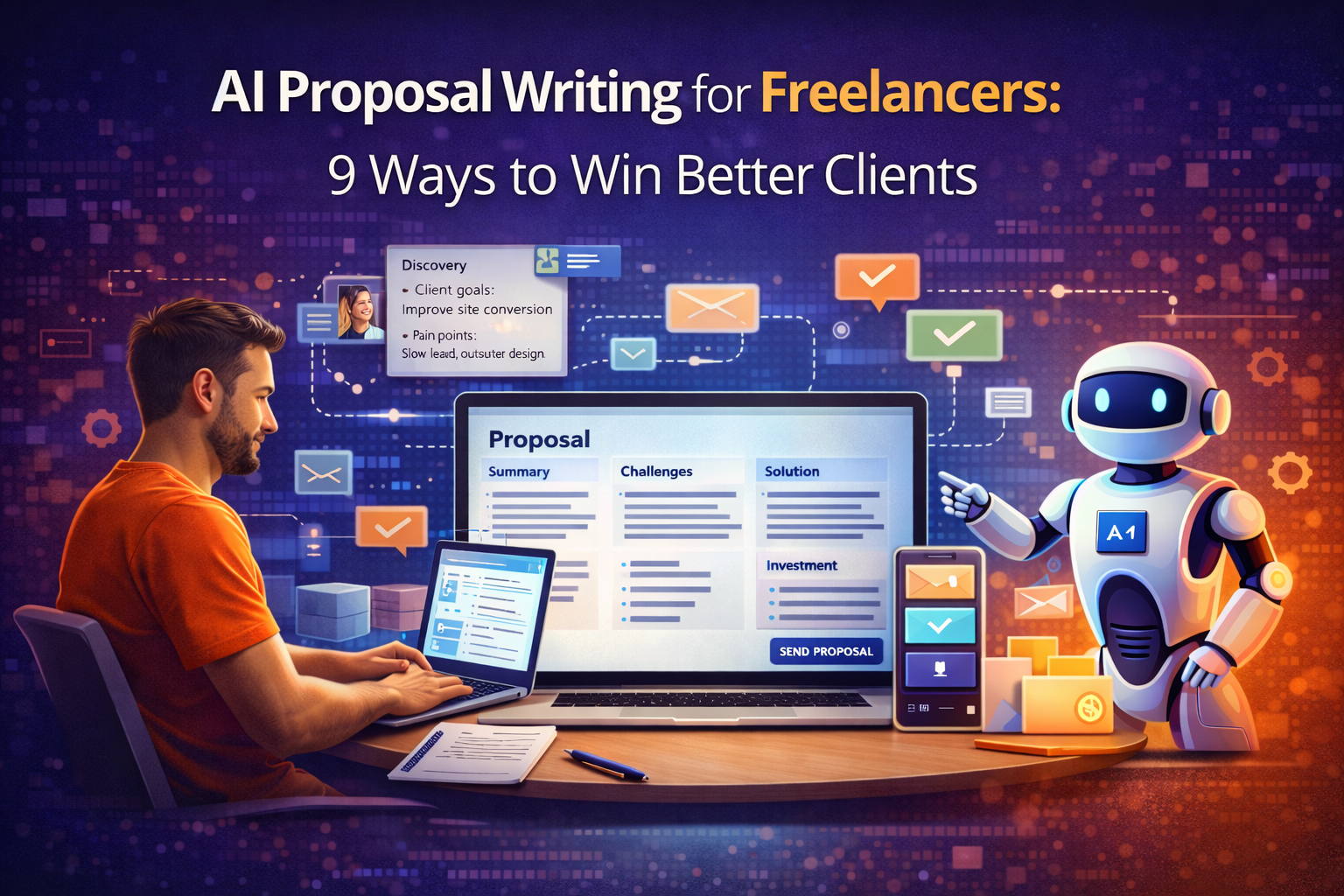
AI proposal writing for freelancers is quickly becoming one of the most practical ways to improve client acquisition without turning the sales process into a full-time job. For many freelancers, proposals sit at the center of a frustrating tension. They are essential for winning good work, but they are also one of the most time-consuming parts of running a solo business. A strong proposal needs to sound clear, specific, strategic, and credible. It has to reflect the client’s goals, address concerns, frame the value of the work, and create enough confidence for the client to move forward. At the same time, every hour spent writing proposals is an hour not spent on delivery, lead generation, rest, or business development elsewhere.
This is why proposal writing becomes such a painful bottleneck for many independent professionals. They want each proposal to feel personalized, but starting from zero every time is slow. They want to sound professional, but not stiff. They want to move quickly, but not send something generic that weakens trust. The result is often a messy middle ground: proposals take too long, revisions pile up, useful discovery information gets lost between the call and the document, and the final output feels less strategic than it should because it was written under time pressure.
That is exactly where AI can create real leverage. Used well, AI does not replace positioning, judgment, or experience. It helps freelancers move faster through the repetitive parts of proposal writing so they can spend more energy on the parts that actually increase close rate. It can summarize discovery calls, extract goals and pain points, turn rough notes into structured proposal outlines, generate first drafts for recurring sections, suggest stronger framing, and help tailor language to different service types or buyer concerns. Instead of asking the freelancer to invent the entire proposal from scratch, it creates a smarter starting point.
For solo professionals, this matters because proposals are not only sales documents. They are trust documents. A proposal tells the client whether the freelancer understood the problem, whether the approach feels thoughtful, whether the scope sounds realistic, and whether the person on the other side seems capable of guiding the project well. A weak proposal can lose work even when the freelancer is highly skilled. A strong proposal can win trust before the project even begins.
The strongest value of ai proposal writing for freelancers is that it helps turn proposal creation into a repeatable system instead of a recurring drain on attention. That is important because growth in freelance work rarely depends only on talent. It often depends on how consistently a freelancer can convert good-fit opportunities into signed projects without burning too much time in the process. AI supports that conversion when it is used to improve clarity, relevance, and efficiency without stripping away the human quality that makes a great freelance offer compelling in the first place.
AI Proposal Writing for Freelancers: Why It Matters More Than Ever
The freelance market has become more competitive, more specialized, and more professionalized. Clients have more choices than before. They can compare solo freelancers, micro-agencies, platforms, referrals, and even in-house alternatives quickly. In many cases, they are not choosing only based on portfolio quality. They are also choosing based on confidence. Who seems easiest to trust. Who understood the problem most clearly. Who sounds organized. Who feels like they can actually lead the engagement instead of simply performing a task. Proposals influence all of these perceptions.
At the same time, clients increasingly expect proposals to reflect their specific context. They do not want generic service descriptions copied from a template. They want to feel that the freelancer listened, recognized the real challenge, and can explain a sensible path forward. That means proposals need more customization than ever, but customization is exactly what makes them slower to produce. This creates a serious problem for freelancers because a slow proposal process can weaken response speed and reduce close momentum.
There is also a pipeline efficiency issue. Many freelancers spend large amounts of unpaid time writing proposals for leads that never convert. Some of this is unavoidable, but much of the pain comes from poor workflow. Discovery notes are unstructured. Proposal sections are rewritten manually every time. Follow-up is inconsistent. Pricing framing varies depending on energy level rather than strategy. Scope language gets fuzzy because the freelancer is rushing to send something before the opportunity cools down.
AI matters now because it helps reduce these weaknesses without requiring the freelancer to become a sales operations expert. It can create structure where there was only scattered information before. It can speed up the transition from discovery call to written proposal. It can improve consistency across repeated proposal elements while still leaving room for personalization. Most importantly, it can protect the freelancer’s attention so that proposal work does not expand endlessly into all available time.
In a market where speed, clarity, and differentiation matter at the same time, that kind of support becomes extremely valuable. Freelancers do not need to become proposal factories. They need to become more selective, more efficient, and more persuasive with the opportunities worth pursuing. AI proposal workflows can help make that possible.
What AI Proposal Writing Actually Means
AI proposal writing does not mean pushing a button and sending whatever appears. That approach usually creates weak, generic documents that sound polished on the surface but disconnected from the client’s actual situation. Real proposal quality still comes from human judgment. The freelancer must understand the service, the buyer, the risks, the project scope, and the most effective way to frame value. AI becomes useful when it supports the process around that judgment.
In practical terms, AI can assist at several different stages. It can summarize the lead inquiry, extract the client’s goals from a discovery call, identify recurring pain points, organize messy notes into a structured opportunity brief, build a proposal outline based on service type, draft standard sections like process or timeline explanations, suggest stronger problem statements, and help rewrite weak sections so they sound clearer and more confident. It can also help create more consistent pricing language, revision policy explanations, and next-step instructions.
This is important because proposal writing is really a sequence of micro-tasks. First, the freelancer needs to remember what the client cares about. Then they need to define scope. Then they need to frame the problem well. Then they need to explain the approach, outcomes, pricing, timing, and next step. Each part requires thought, but not every part requires starting from zero. AI helps reduce the unnecessary repetition inside that sequence.
The best way to think about AI proposal writing is this: the freelancer supplies the strategy, positioning, and judgment; AI helps with structure, speed, drafting, and synthesis. That division is what makes the tool genuinely useful instead of risky. The proposal still sounds like the freelancer. It simply takes less energy to get there.
1. It Helps Freelancers Move Faster After Discovery Calls
One of the biggest reasons proposals get delayed is that the freelancer finishes the discovery call with useful information, but not with usable structure. Notes are partial. The prospect mentioned several priorities quickly. Budget signals were implied rather than stated. A few concerns were raised casually. The freelancer remembers the overall direction but still needs to reconstruct the details before writing anything coherent. That reconstruction step is where time disappears.
AI can shorten this gap dramatically by turning call notes or transcripts into a cleaner project summary. Goals, constraints, preferred outcomes, objections, time pressure, and likely deliverables can be extracted into a usable brief. That means the proposal work begins with structure rather than memory. This is valuable because response speed often affects close rate. A freelancer who can follow up while the conversation is still fresh usually has an advantage over one who waits several days simply because the admin burden is too high.
Faster does not mean rushed. It means the energy from the call is preserved. The client still remembers the conversation clearly, and the freelancer still has direct access to the emotional logic behind the opportunity. AI helps capture that before it fades.
2. It Makes Personalization Easier Without Rewriting Everything
Clients want to feel understood. One of the fastest ways to weaken a proposal is to make it sound like it could have been sent to anyone. At the same time, full customization is expensive in time, especially for solo professionals juggling multiple leads and projects. This is the core problem proposal writing creates: personalization helps win, but personalization takes work.
AI helps by making personalization lighter rather than more burdensome. Once the call notes and opportunity context are structured, AI can help adjust the opening summary, pain-point framing, project approach, and outcomes section so they reflect the client’s specific situation. This does not require rebuilding the entire proposal from zero. It means the freelancer can work from a stronger draft that already includes relevant language and then refine the important parts.
The result is usually better than either extreme. It is better than generic templates because the language reflects the actual opportunity. It is also better than total manual drafting because the freelancer does not lose hours rewriting standard material that already has a repeatable shape. This balance is where proposal efficiency becomes realistic.
3. It Improves the Way Freelancers Frame the Problem
A proposal does not win because it describes services. It wins because it frames the client’s problem in a way that feels accurate and useful. Many freelancers undersell themselves by jumping too quickly into deliverables. They list what they will do before clearly showing that they understand why it matters. As a result, the proposal feels procedural rather than strategic.
AI can help strengthen this section by synthesizing discovery insights into a clearer problem statement. It can highlight repeated concerns, surface implied business goals, and suggest a sharper articulation of what is at stake if the issue remains unsolved. This gives the freelancer a better starting point for writing the opening sections in a way that feels more thoughtful and consultative.
This matters because buyers often decide emotionally before they justify logically. If the proposal makes them feel deeply understood, the rest of the document becomes easier to trust. Better problem framing creates that feeling. AI helps because it can pull relevant threads together more quickly than a rushed freelancer flipping between notes and memory.
4. It Creates More Consistent Proposal Structure Across Opportunities
Inconsistent proposals create unnecessary friction. One proposal explains the process clearly, another forgets to define deliverables, another uses weak pricing language, and another has no clear next step. These inconsistencies rarely happen because the freelancer lacks skill. They happen because proposal writing is often done in bursts, under time pressure, with too much dependence on memory.
AI helps create consistency by supporting a repeatable proposal structure. Once the freelancer knows the sections that usually matter for their service model, AI can help populate those sections more reliably from project-specific inputs. This includes summaries, deliverables, process, timing, investment framing, assumptions, and next steps. The freelancer still adapts the proposal based on fit, but the overall quality no longer depends entirely on how exhausted they are that day.
Consistency matters because it improves both professionalism and close efficiency. A stable structure makes it easier for the client to evaluate the offer and easier for the freelancer to refine their sales process over time. Weak spots become visible. Stronger sections can be reused intelligently. The proposal system becomes something that improves, rather than something reinvented each week.
5. It Helps Clarify Scope Before It Becomes a Problem
Many project issues begin before the client signs. They begin when the proposal describes scope too vaguely. A phrase like “content support,” “branding package,” or “website improvements” may sound fine during drafting, but once the work begins, unclear language creates misalignment. This is one of the most expensive freelance mistakes because it affects time, profitability, and relationship quality all at once.
AI can help reduce this by identifying scope ambiguity and prompting more specific phrasing. It can compare proposal language against known deliverable patterns, suggest clearer wording, and help translate broad concepts into more operationally useful terms. That does not eliminate the need for human review, but it creates a better chance of spotting fuzzy sections before the proposal goes out.
This is particularly useful for freelancers who sell strategic or creative work where the boundaries can blur easily. Better scope language does not just protect the freelancer. It also helps the client feel more secure because they understand more clearly what they are buying and how the work will proceed.
6. It Makes Pricing Presentation More Confident
Pricing sections often reveal a freelancer’s discomfort. Even skilled professionals sometimes undermine themselves here by sounding apologetic, defensive, or overly vague. The offer may be strong, but the investment language feels uncertain. This creates unnecessary doubt in the client’s mind, especially if the proposal has otherwise built good momentum.
AI can help improve the wording around pricing by suggesting stronger framing, cleaner explanation of options, and more confident transitions between value and investment. It can also help the freelancer present pricing in a way that feels aligned with outcomes rather than isolated as a number dropped into the document without context.
This matters because clients do not evaluate price in a vacuum. They evaluate it in the story created by the proposal. If the narrative leading into the price is clear, credible, and connected to results, the number is easier to absorb. AI does not invent pricing strategy, but it can support better presentation of it.
7. It Reduces Proposal Fatigue for High-Volume Freelancers
Some freelancers reach a point where proposals become mentally heavier than the work itself. This is especially true in service businesses where many leads require some custom response, but only a fraction convert. Writing similar documents repeatedly can create proposal fatigue, where the freelancer either slows down, sends weaker work, or avoids pursuing otherwise strong opportunities because the proposal burden feels too high.
AI helps reduce this fatigue by taking some of the repetitive drafting weight off the freelancer’s shoulders. Standard explanations, timeline sections, onboarding notes, revision policies, and process descriptions can be produced more quickly, leaving more attention for the parts of the proposal that truly benefit from bespoke thinking. This makes the overall process feel lighter and more sustainable.
That sustainability matters because proposal quality tends to drop when the freelancer begins resenting the process. AI can help protect close performance simply by reducing how draining proposal creation feels over time.
8. It Supports Better Follow-Up After the Proposal Is Sent
The proposal itself is only part of the sales process. Many opportunities are won or lost in the follow-up stage. Yet follow-up is often inconsistent because once the proposal is sent, the freelancer moves on to delivery work and loses momentum. Days pass. The lead goes quiet. The next message feels awkward because the original context is no longer fresh.
AI can help here too. It can summarize what was sent, suggest follow-up timing, draft check-in messages that reference the proposal accurately, and remind the freelancer of the client’s original priorities so the follow-up feels relevant rather than generic. This is useful because good follow-up is not just persistence. It is timely, contextual communication that makes it easier for the client to move forward.
For freelancers, that means the proposal process becomes a fuller workflow rather than a document dropped into the void. Stronger follow-up often leads to stronger conversion, especially when clients are interested but delayed by internal decisions or competing priorities.
9. It Helps Freelancers Learn From Their Own Winning Proposals
One underrated benefit of AI proposal workflows is that they make it easier to identify patterns across proposals over time. Which opening language tends to work best. Which offer structures convert. Which objections show up most often. Which deliverable framing creates confidence. Which pricing explanations create less friction. Without structure, freelancers usually learn these lessons slowly and vaguely. They remember impressions rather than evidence.
AI can help organize proposal history, compare proposal sections, summarize recurring patterns, and surface common themes from won and lost opportunities. This turns proposals into a learning system rather than just a recurring task. The freelancer starts improving the business’s sales language deliberately instead of only through intuition.
This is where proposal writing becomes more strategic. The goal is no longer just to send something quickly. The goal becomes building a proposal system that gets sharper with every cycle. AI helps because it can hold and interpret more of that history than a freelancer carrying everything in their head alone.
What Freelancers Get Wrong About Proposal Writing With AI
One common mistake is using AI to generate proposals before collecting enough discovery information. A fast document built on weak understanding is still a weak document. Proposal quality begins with client insight, not with writing speed. Another mistake is sending AI-generated language without checking whether it sounds generic, inflated, or disconnected from the freelancer’s actual style. This creates a polished but hollow impression.
Some freelancers also over-rely on templates and expect AI to add magic on top of weak positioning. But a proposal is only as persuasive as the offer underneath it. If the service is unclear, the value proposition is weak, or the discovery process did not surface the real problem, AI cannot compensate for that strategically. It can help improve the writing, but it cannot invent a better business model.
Another mistake is focusing only on speed. Faster proposals are useful, but speed without specificity does not create trust. The real advantage comes from using AI to increase both efficiency and relevance at the same time. That means the freelancer still needs to review, edit, tighten, and humanize the final version before sending it.
How to Build a Better Proposal Workflow With AI
The strongest place to start is with structure. Identify the sections that your proposals usually need: client summary, problem framing, proposed approach, deliverables, timeline, investment, assumptions, and next steps. Then look at where the process currently feels heaviest. Is it summarizing calls, building the first draft, writing pricing language, or following up afterward? That friction point is where AI should support first.
Next, improve discovery quality. Better proposals come from better input. Collect clear notes, record calls where appropriate, and document the language the client uses to describe the problem. AI becomes much more useful when it has real context to work with rather than vague bullet points.
Then use AI as a drafting and synthesis layer, not as the final decision-maker. Let it summarize, structure, draft, and rewrite. Then apply judgment. Tighten the positioning. Adjust the voice. Clarify scope. Remove fluff. Make the proposal sound like a confident expert, not a software output.
Finally, review outcomes. Which proposals convert. Which sections cause friction. Which opportunities took too long to prepare. Over time, build a lighter, smarter system around what actually works. AI should make the proposal process not only faster, but easier to improve repeatedly.
The Future of AI Proposal Writing for Freelancers
The future of ai proposal writing for freelancers will likely be defined by connected workflows rather than isolated drafting tools. Inquiry forms, discovery calls, CRM notes, pricing logic, onboarding documents, and follow-up communication will increasingly flow together. A good discovery call will create a structured opportunity brief automatically. That brief will generate a proposal draft. The signed proposal will trigger onboarding language. The same system will remind the freelancer when to follow up and later help analyze which proposals performed best.
This matters because freelancers do not need more disconnected tools. They need cleaner transitions between the stages of winning work. Proposal writing sits right in the middle of those stages. It is where insight becomes offer, and where trust becomes commitment. AI is particularly useful here because proposal work contains exactly the combination of repetition and nuance that benefits from support but still requires human control.
The freelancers who benefit most will not be the ones who automate blindly. They will be the ones who understand which parts of proposal work should stay deeply human and which parts are wasting time without adding value. Better summaries. Better structure. Better speed. Better consistency. Better follow-up. Better learning. These gains compound in a solo business.
In the end, proposals should not feel like a recurring tax on growth. They should feel like a strong bridge between a client’s interest and a freelancer’s best work. When AI helps build that bridge more clearly and efficiently, it becomes more than a writing tool. It becomes a real business advantage for freelancers who want to win better projects without exhausting themselves in the process.