

Alexithymia Emotional Blindness: 9 Signs, Causes, and Coping Tools
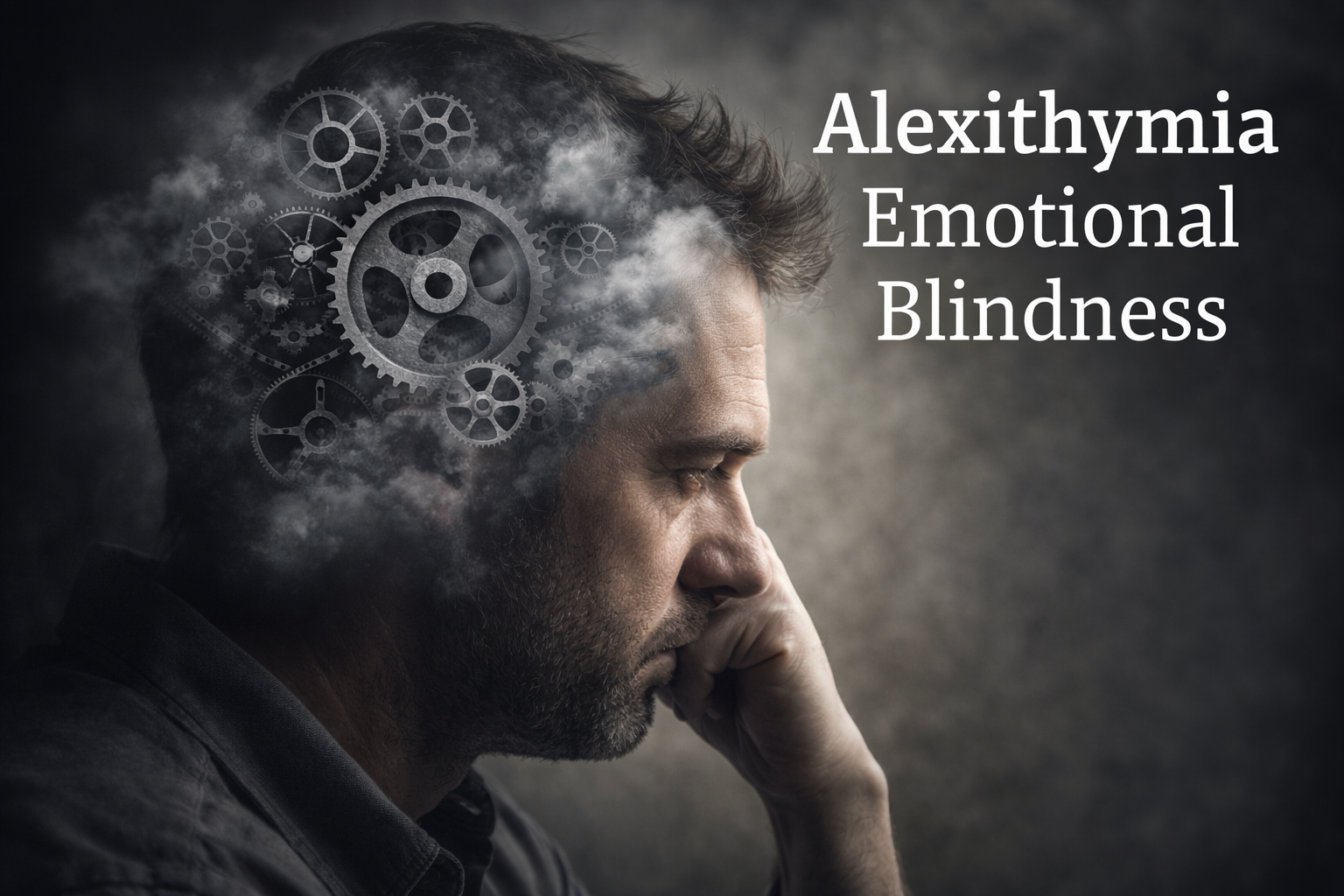
Alexithymia Emotional Blindness…. The human mind is a labyrinth of emotions and thoughts, a complex network that defines how we perceive and interact with the world. Yet, for some, this intricate tapestry is shrouded in a veil of ambiguity due to alexithymia, a condition often referred to as “emotional blindness.” Imagine navigating a world where emotions are indistinct, where the vibrant hues of human experience are muted, leaving only a grayscale existence. While alexithymia challenges the very essence of emotional connection, it also opens a window into understanding the nuances of human behavior and development.
The Bobo Doll Experiment, conducted in the 1960s by psychologist Albert Bandura, serves as a pivotal exploration into the realm of learned behavior and emotional processing. This groundbreaking study revealed how individuals, particularly children, learn and replicate behaviors observed in others, highlighting the profound impact of environmental influences on emotional and social development. As Bandura’s inflatable doll bore the brunt of children’s imitative aggression, it unveiled the stark reality of how external stimuli can shape internal emotional responses, or in some cases, the lack thereof.
In the context of alexithymia, the Bobo Doll Experiment takes on a renewed significance. It challenges us to consider how individuals with emotional blindness might perceive and process such observational learning. Could the muted emotional palette of alexithymia impact the replication of observed behaviors? Does the inability to articulate emotions alter the way one learns from the environment? As we delve deeper into these questions, we uncover the intricate dynamics between emotion, behavior, and the environment, offering a glimpse into the often mystifying world of alexithymia.
Understanding Alexithymia: Emotional Blindness and Its Implications
Alexithymia, often referred to as emotional blindness, is a subclinical phenomenon characterized by difficulties in identifying, describing, and processing emotions. As a psychological construct, it is intricately linked to various mental health disorders and can significantly impact interpersonal relationships and emotional well-being. This article delves into the depths of alexithymia, exploring its cognitive underpinnings, supported by case studies, cognitive tools, and therapeutic approaches.
Case Studies: Real-Life Portraits of Alexithymia
Case studies offer insightful glimpses into the lived experiences of individuals with alexithymia. They help illustrate the nuances and challenges faced by those who struggle with emotional processing.
Case Study 1: John, The Unfamiliar Terrain of Emotions
John, a 35-year-old engineer, presented with chronic difficulties in maintaining relationships. Despite being successful professionally, John reported feeling emotionally disconnected from his partner and friends. During therapy, it became evident that John had trouble identifying his emotional states. When asked about his feelings, he often responded with, “I don’t know what I feel.” This lack of emotional awareness led to misunderstandings and conflicts in his personal life.
Case Study 2: Sarah, The Logical Narrator
Sarah, a 28-year-old teacher, sought therapy for anxiety and a pervasive sense of dissatisfaction. Through cognitive assessments, it was revealed that Sarah had a high degree of alexithymia. She often described her experiences in a logical, factual manner, devoid of emotional content. This cognitive style contributed to her inability to connect with her own emotions, leading to a sense of internal void and heightened anxiety.
Cognitive Tools: Enhancing Emotional Awareness
For individuals with alexithymia, cognitive tools can be instrumental in developing emotional literacy and awareness. These tools aim to bridge the gap between emotional experience and cognitive processing.
- Emotion Identification Charts: Charts that visually represent a range of emotions can aid individuals in recognizing and naming their feelings. These charts often include facial expressions associated with different emotions, providing a visual cue to match internal states with emotional labels.
- Mindfulness Practices: Mindfulness exercises, such as body scans and focused breathing, encourage individuals to become more attuned to their physical sensations and emotional states. By fostering present-moment awareness, mindfulness can help individuals with alexithymia connect with their emotions.
- Journaling: Writing about daily experiences and associated emotions can help individuals practice articulating their feelings. Structured journaling prompts that ask about emotional responses to specific events can gradually enhance emotional vocabulary and insight.
Experiments: Investigating Alexithymia
Scientific experiments have been pivotal in understanding the neural and cognitive mechanisms underlying alexithymia. These studies highlight the distinct ways in which individuals with alexithymia process emotions.
Neuroimaging Studies
Functional MRI (fMRI) studies have revealed that individuals with alexithymia often exhibit reduced activity in brain regions associated with emotional processing, such as the anterior insula and the anterior cingulate cortex. These findings suggest that alexithymia may involve atypical neural connectivity, affecting the integration of emotional and cognitive information.
Emotional Recognition Tasks
Experiments involving emotional recognition tasks have demonstrated that individuals with alexithymia may struggle to accurately identify and differentiate facial expressions of emotion. This deficit in emotional recognition can contribute to difficulties in social interactions and empathy.
Therapy Notes: Approaches to Addressing Alexithymia
Treating alexithymia requires a tailored therapeutic approach that considers the unique challenges faced by each individual. Therapy aims to improve emotional awareness, expression, and regulation.
Cognitive-Behavioral Therapy (CBT)
- Emotion-Focused Techniques: CBT can incorporate emotion-focused techniques that encourage clients to explore and articulate their emotions. Through guided discovery and cognitive restructuring, clients learn to identify and challenge maladaptive beliefs about emotions.
- Psychoeducation: Educating clients about the nature of emotions and the role they play in overall well-being can demystify emotional experiences and reduce anxiety associated with them.
Emotionally Focused Therapy (EFT)
- Attachment-Based Interventions: EFT focuses on understanding the emotional bonds and patterns within relationships. For individuals with alexithymia, EFT can help identify and modify maladaptive attachment styles, fostering healthier emotional connections.
- Experiential Exercises: Engaging in experiential exercises that involve role-playing and emotion enactment can facilitate emotional expression and enhance emotional literacy.
Integrative Therapies
Integrative therapeutic approaches that combine elements of various modalities can be particularly effective for alexithymia. These therapies may include art therapy, drama therapy, and somatic experiencing, offering alternative pathways to emotional exploration and expression.
Overall, understanding alexithymia and its impact requires a multifaceted approach that includes clinical observation, cognitive tools, empirical research, and therapeutic interventions. By addressing this emotional blindness, individuals can work towards achieving greater emotional clarity and improved psychological well-being.
In conclusion, alexithymia, often described as emotional blindness, is a personality trait that affects one’s ability to identify and articulate emotions. Recognizing this condition is crucial as it can impact personal well-being and interpersonal relationships. Understanding the nuances of alexithymia can lead to better coping strategies and improved emotional literacy.
Self-Assessment Test: Alexithymia
Alexithymia Emotional Blindness
Alexithymia is often misunderstood because it does not always look dramatic from the outside. A person may seem calm, rational, practical, and even highly functional while still struggling deeply with emotional awareness on the inside. They may know that something feels wrong in a conversation, but be unable to identify whether the feeling is anger, shame, sadness, fear, or disappointment. Instead of using emotion as a guide, they may rely on logic, routine, or physical sensations to understand what is happening.
That is why alexithymia is sometimes described as emotional blindness rather than emotional absence. The feelings are not necessarily missing. The main problem is access. Emotions may be present in the body but difficult to label, sort, or communicate. A person may notice a tight chest, a racing mind, a headache, or irritability without understanding the emotional meaning underneath. Over time, this disconnect can affect relationships, decisions, stress tolerance, and self-understanding.
What Alexithymia Can Look Like in Daily Life
Alexithymia may show up in subtle patterns rather than obvious symptoms. Someone may give factual answers when asked emotional questions. They may say, “It was fine,” “I am just tired,” or “I do not know,” even when they are clearly under pressure. They may struggle during conflict because they cannot explain what hurt them. They may also seem disconnected during emotional conversations, not because they do not care, but because they cannot track their own feelings quickly enough to respond in the usual way.
Friends and partners sometimes misread this as coldness, indifference, or emotional immaturity. In reality, the person may care intensely while lacking the inner map needed to describe that care. This mismatch often creates loneliness on both sides. The individual with alexithymia feels misunderstood and overwhelmed. The people around them feel shut out or rejected. Without context, everyone may assume the wrong thing about what is happening.
Why Body Sensations Often Matter More Than Words
Many people with alexithymia understand their emotional world first through the body. Stress may feel like stomach pain. Anger may feel like pressure in the face and neck. Anxiety may appear as restlessness, dizziness, or shallow breathing. Sadness may show up as fatigue or numbness rather than as recognizable sorrow. Because emotional labeling is difficult, physical symptoms may become the main language of distress.
This is one reason alexithymia is often linked with somatic complaints, chronic tension, or difficulty knowing when stress is building. If the body becomes the primary messenger, but the message remains untranslated, the person may only recognize emotions once they are already intense. That delay can make coping harder. It is difficult to regulate a feeling you cannot identify until it is already flooding your system.
Alexithymia and Relationships
Relationships can become especially complicated when one person struggles to identify and express emotions. Intimacy usually depends on naming internal states, responding to the feelings of others, and talking through misunderstandings before they harden into distance. Alexithymia can interfere with each of these steps. A person may love deeply yet seem absent during emotional moments. They may want closeness but not know how to respond when another person asks, “How do you feel?”
This can create painful cycles. One partner asks for openness. The other feels pressured and confused. The first partner then feels rejected, while the second feels accused of something they do not fully understand. Over time, resentment can build unless both people begin to recognize the pattern. The issue is not usually a lack of care. It is a breakdown in emotional translation.
Can Alexithymia Affect Empathy?
Alexithymia can affect empathy, but not always in the way people assume. Some individuals struggle with emotional empathy because they have difficulty reading affective cues in themselves and others. If a facial expression or tone of voice is hard to interpret, responding with sensitivity becomes more difficult. However, other people with alexithymia may have strong cognitive empathy. They can understand what another person is likely experiencing on an intellectual level even if they do not emotionally mirror it in a typical way.
This distinction matters. A person with alexithymia is not automatically uncaring or incapable of connection. They may simply need more explicit information, more time to process, and more structured ways to understand feelings. When people around them assume they “do not care,” the shame and confusion often increase. Better understanding of the condition can reduce unnecessary damage.
How Childhood and Environment May Shape It
There is no single cause of alexithymia. In some people, it appears linked to neurodevelopmental factors or long-standing differences in emotional processing. In others, it may be shaped by childhood environments where emotions were ignored, punished, mocked, or never clearly discussed. If a child grows up in a home where feelings are treated as weakness or chaos, they may learn to suppress, intellectualize, or disconnect from emotional experience. Later in life, this can look like alexithymia even if the original adaptation was protective.
Trauma can also play a role. Some people develop emotional numbing or disconnection as a survival response. If emotions once felt overwhelming or unsafe, reduced emotional access may become a way to function. That does not mean every person with alexithymia is traumatized, but it does mean emotional blindness can sometimes reflect a learned protective style rather than a simple personality quirk.
The Bobo Doll Experiment and Emotional Learning
The Bobo Doll Experiment is useful here because it reminds us that human behavior is shaped not only by internal traits, but also by observation, modeling, and environment. Bandura’s study showed that children absorb patterns from what they see others do. In the context of alexithymia, that raises an interesting question: what happens when a person grows up observing behavior without learning a strong emotional vocabulary to go with it? They may learn actions, rules, and consequences clearly while still remaining uncertain about the feelings attached to those experiences.
That gap can matter. A person may know what behavior is expected, what response is socially acceptable, and what outcome follows certain actions, yet still struggle to recognize the emotional meaning of those moments. In that sense, alexithymia can limit not just expression but emotional learning itself. If feelings are not named, mirrored, and discussed, the inner world may remain underdeveloped even while outward behavior appears socially competent.
Common Signs That Often Get Missed
Alexithymia is often overlooked because people expect emotional difficulty to look dramatic. Instead, it may appear as overthinking, excessive practicality, discomfort with vulnerability, shutdown during conflict, or a habit of changing the subject when conversations become emotional. Someone may seem detached, but what is actually happening is overload. They may not know how to stay connected to the conversation once feelings become the focus.
Another common sign is using physical or situational descriptions instead of emotional ones. Instead of saying, “I felt hurt,” a person may say, “It was awkward,” “My chest felt strange,” or “I just wanted to leave.” These statements often contain emotional information, but it is indirect. Learning to hear that language can help in therapy and relationships.
How Therapy Can Help
Therapy for alexithymia is usually not about forcing big emotional breakthroughs. It is more about building a map. That map often starts with noticing body cues, context, patterns, and emotional vocabulary. A therapist may help the person slow down and ask practical questions: What happened right before the tension started? Where do you feel it in your body? What emotion words might fit, even approximately? What did you want to do in that moment?
Over time, this process can strengthen emotional recognition without making it feel abstract or performative. The goal is not to turn someone into a highly expressive person overnight. The goal is to help them recognize internal experience earlier, describe it more accurately, and relate to themselves and others with less confusion. Small gains in awareness can create major improvements in relationships and stress regulation.
Helpful Tools for Emotional Awareness
Simple tools often work best. Emotion wheels, body maps, journaling prompts, mood tracking apps, and structured check-ins can all help build emotional literacy. For example, instead of asking, “How do I feel?” a person might ask, “What happened? What did my body do? What did I want to do next? Which emotion words are closest?” This more concrete approach often feels easier than trying to locate a feeling directly out of nowhere.
Mindfulness can also help, especially when it focuses on noticing rather than performing calmness. A brief body scan, a check-in before sleep, or a habit of naming one feeling each evening can gradually improve emotional recognition. Emotional language often becomes easier through practice, not insight alone.
Alexithymia Is Not a Lack of Humanity
Because alexithymia affects emotion, people sometimes treat it as if it reflects a lack of depth, warmth, or humanity. That is both inaccurate and harmful. Many people with alexithymia feel deeply. They may be thoughtful, loyal, responsible, observant, and caring. Their challenge is not that they are empty. It is that emotional signals are harder to organize and communicate. Judging them as cold often increases shame and pushes them further away from emotional exploration.
A more accurate view is that alexithymia changes the route to emotional connection. The usual route may be blocked or unclear, but that does not mean there is no road at all. With patience, support, and better understanding, many people become more emotionally aware and more able to connect than they once believed possible.
Five Practical Takeaways
- Notice the body first. Physical sensations often appear before emotional labels.
- Use emotion lists or wheels. Specific words make inner experience easier to recognize.
- Slow conversations down. Extra processing time can reduce shutdown and confusion.
- Do not mistake low expression for low feeling. The person may care more than they can currently show.
- Build emotional language gradually. Small repeated practice usually works better than pressure.
Why Understanding Matters
Alexithymia matters because emotional clarity affects almost every part of life. It influences how people handle stress, build intimacy, make decisions, read social situations, and recover from conflict. When emotional blindness goes unnamed, people often blame themselves for being “wrong,” “too logical,” “distant,” or “broken.” When it is understood, the experience becomes more workable. Difficulties that once felt mysterious can start to make sense.
That understanding does not remove every challenge, but it changes the direction of the work. Instead of asking why someone is not feeling correctly, we ask how they process emotion differently and what might help. That shift creates room for compassion and more realistic expectations.