

Anemoia: 11 Reasons You Feel Nostalgia for Places You’ve Never Been
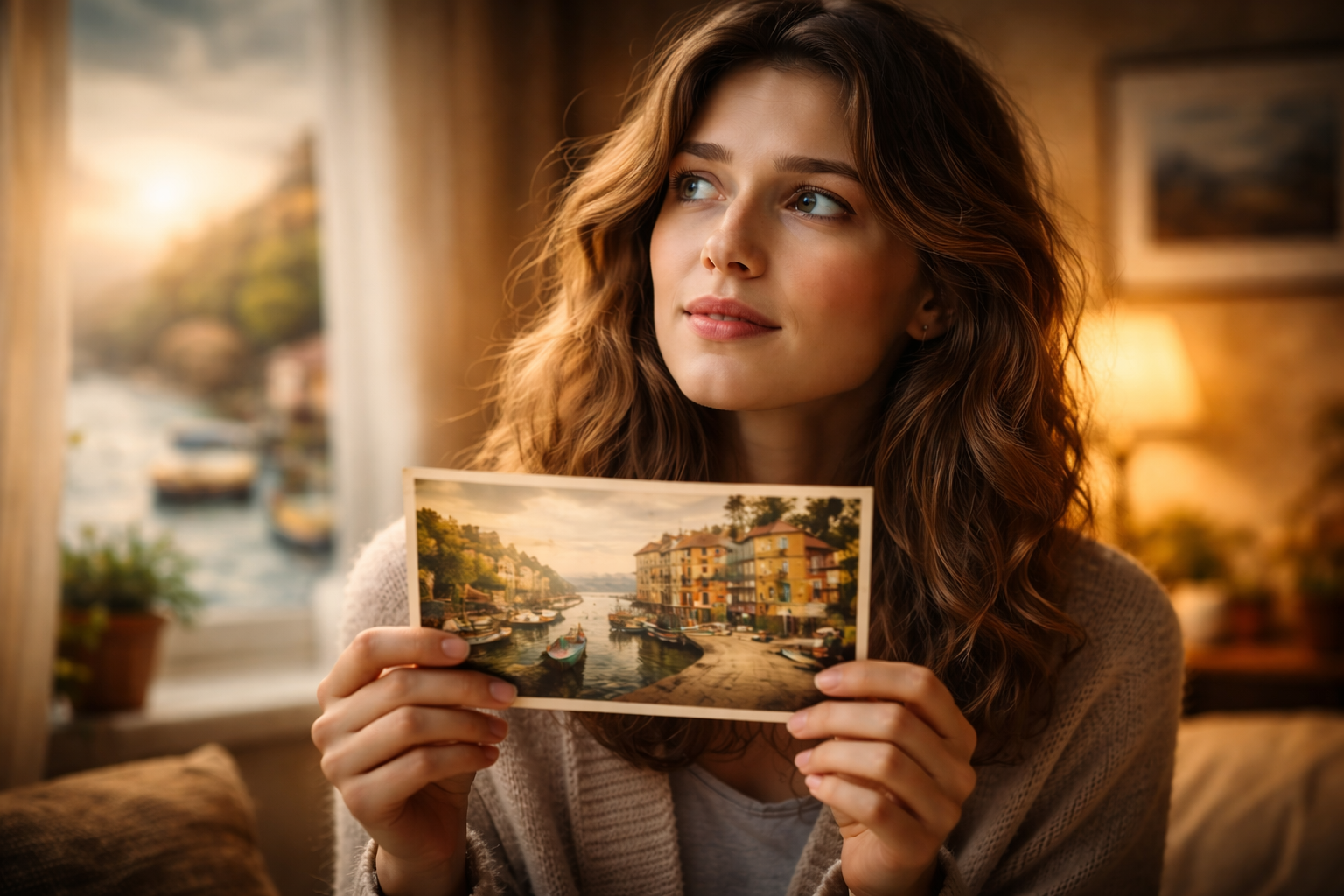
Anemoia… Have you ever found yourself staring at an old photograph of a place you’ve never visited, your heart aching with a sense of longing that feels both familiar and foreign? It’s as if the very essence of that location resonates within you, stirring up emotions that you can’t quite explain. You might catch yourself daydreaming about the cobblestone streets of a quaint village or the golden sands of a distant beach, feeling an inexplicable connection to these places.
This deep-seated yearning, this haunting sense of nostalgia for a world you’ve never known, is a feeling shared by many. In a world where experiences are often defined by our physical presence, what does it mean to feel such intense nostalgia for a place that exists only in our imagination? Join us as we delve into the phenomenon of anemoia, exploring the layers of emotion and memory that intertwine to create this profound and poignant experience.
Why Do I Feel Intense Nostalgia for a Place I’ve Never Been (Anemoia)?
The Evolutionary or Psychological Reason Behind It
Anemoia, the feeling of nostalgia for a place one has never visited, can be attributed to various evolutionary and psychological factors. From an evolutionary perspective, it is believed that humans have an innate desire to connect with their environments. This yearning for belonging and familiarity may trigger memories or imagined experiences related to places we have never physically encountered.
Psychologically, our brains are wired to create narratives and connections based on our experiences and the stories we hear. Influences such as literature, films, and photographs can evoke strong emotions tied to places, leading to a sense of nostalgia. This phenomenon can be further explained by the concept of collective memory, where shared cultural experiences shape individual feelings about certain locations.
Real-Life Examples or Famous Case Studies
Several famous cases exemplify the feeling of anemoia. For instance, the author J.K. Rowling often described her nostalgic feelings for the fictional world of Hogwarts. Although it is a creation of her imagination, many fans feel a similar sense of nostalgia for a place they have never visited, fueled by the rich descriptions and emotional connections built through the books.
Another notable example is the phenomenon surrounding Paris. Many people express deep nostalgia for the city without having set foot there. This feeling can be influenced by its romanticized portrayal in films, literature, and social media, creating an emotional longing for a place imbued with cultural significance and personal meaning.
5 Actionable Coping Mechanisms or Takeaways
- Explore Cultural Artifacts: Engage with books, music, and films that depict the places you feel nostalgic for. This can help you connect with the emotions tied to these locations.
- Travel Through Virtual Reality: Use technology to explore places virtually. Many apps and programs allow you to experience distant locations from the comfort of your home.
- Journaling: Write about your feelings of anemoia. Reflecting on these emotions can help you understand their origins and significance in your life.
- Connect with Others: Join online forums or groups where you can share your experiences and feelings with others who feel similarly. This can foster a sense of community and belonging.
- Plan a Trip: If possible, consider visiting the place that evokes these feelings. Even if you have never been there, planning a trip can help you create meaningful connections to the location.
Did You Know?
The term “anemoia” was coined in the internet age and highlights how modern media can evoke feelings of nostalgia for places that exist only in our imagination, showcasing the powerful impact of storytelling in shaping our perceptions of the world.
Anemoia: Nostalgia for a Place You Have Never Been
Anemoia is one of those emotions that feels strangely personal even though it can be triggered by places we have never touched, walked through, or physically known. A person may look at an old train station, a rainy alley in a foreign city, a quiet mountain village, a retro diner, or a faded seaside postcard and feel an ache that seems older than the present moment. It is not ordinary curiosity. It is not just admiration for beauty. It feels closer to homesickness without a home, memory without a direct experience, or longing without a clear biography. That is why it can feel both moving and confusing at the same time.
The emotional power of anemoia comes from the way the mind blends imagination, identity, beauty, memory, and desire. Even if you have never been to a place, your inner world can still treat it as meaningful. A certain street may symbolize peace. A foggy harbor may symbolize mystery, romance, escape, or another life you wish you had lived. The place becomes more than a location. It becomes a container for emotional needs, lost possibilities, and a version of belonging that feels just out of reach.
Why Imagined Places Can Feel More Emotionally Real Than Real Ones
One reason anemoia feels so strong is that imagined places are often protected from the ordinary friction of real life. When you dream about a village in the countryside, an old European city, a desert road, or a coastal town at sunset, you are usually not imagining utility bills, sore feet, bad weather, loneliness, traffic, noise, bureaucracy, or disappointment. You are connecting with the distilled essence of what that place represents to you. In imagination, places become emotionally edited. They hold mood without inconvenience, beauty without boredom, and meaning without compromise.
This selective quality makes the longing feel even deeper. The place exists as a symbol of emotional truth rather than as a complete physical reality. In many cases, the ache is not really for the place alone. It is for what the place seems to promise: calm, romance, simplicity, depth, freedom, rootedness, adventure, slowness, creativity, safety, or a different version of the self. Once a place becomes linked with those longings, it can feel familiar in a psychological sense even if you have never been there.
How Anemoia Is Shaped by Storytelling
Stories shape emotional geography. Books, films, family anecdotes, paintings, social media images, music, and travel essays all teach us how to feel about places. A city can become melancholic, a village can become timeless, and a coastline can become sacred before we ever arrive. This is not manipulation so much as meaning-making. Human beings do not relate to places only through maps. We relate to them through narrative. We want places to stand for something.
This is why anemoia often develops around places that have already been culturally romanticized. Paris, Kyoto, New York in the 1970s, old Istanbul, the English countryside, seaside Italy, mountain cabins, forgotten arcades, and train travel at night all carry emotional atmospheres built by stories. Even fictional places can cause the same reaction. The mind responds not only to whether a place exists but to whether it offers a world you want to enter emotionally. Once that happens, longing follows naturally.
How Memory Can Form Without Direct Experience
At first, nostalgia for an unknown place sounds impossible because nostalgia usually implies personal memory. But human memory is not limited to direct events. We also develop what might be called borrowed memory or imaginative memory. We absorb fragments from other people’s stories, inherited family histories, old photographs, cultural imagery, films, architecture, and collective myths. Over time, these fragments become emotionally charged enough that they feel almost autobiographical. The mind starts treating them like a remembered atmosphere rather than a learned idea.
For example, someone may grow up hearing grandparents speak about a village they left behind. Even if the younger person never visits, the stories, emotional tones, and sensory details can create an inner landscape. The village begins to live in imagination as something mourned, treasured, and familiar. In another case, a person may have no family tie at all but still absorb enough imagery from books and music that a city begins to feel intimate. That intimacy is not fake. It is psychologically constructed, which is something humans do all the time.
Why Anemoia Often Appears During Emotional Transition
Longing for unknown places often grows stronger during times when a person feels emotionally unrooted. Periods of burnout, grief, loneliness, identity change, heartbreak, stagnation, or existential questioning can all make anemoia more intense. When present life feels too small, too fast, too empty, or too demanding, the mind begins searching for emotional elsewhere. A place never visited becomes a screen onto which the psyche projects hope, restoration, and escape.
This does not mean the feeling is shallow or unrealistic. It means the longing is doing emotional work. It may be expressing a need for beauty, slowness, cultural depth, adventure, tenderness, or a more meaningful rhythm of life. That is why anemoia can sometimes feel painful. The ache is not just for travel. It is for transformation. The place is carrying the weight of a life that feels unlived.
Common Forms of Anemoia People Experience
Not all anemoia looks the same. Some people feel nostalgic for historical periods and the places associated with them. They may feel drawn to gas-lit streets, old libraries, postwar cafés, vintage beach towns, or urban neighborhoods from a decade they never lived in. Others feel it for landscapes rather than cities: remote islands, snowy villages, deserts, rain-soaked forests, cliffside roads, or mountain farms. Some feel it for interiors and atmospheres more than geography, such as old train compartments, dim jazz bars, bookstores in the rain, kitchen windows at dusk, or apartments in cold-weather cities.
In each case, the place is less about coordinates and more about emotional tone. A rainy alleyway may represent solitude without loneliness. A village square may represent community. An old station platform may represent departure, possibility, and bittersweet motion. When you notice what tone keeps repeating, you often learn more about yourself than about the place itself.
Why Old Photographs Trigger It So Strongly
Photographs are especially powerful triggers for anemoia because they freeze mood. Unlike ordinary life, a photograph removes before and after. It captures one sliver of light, one angle, one season, one set of textures, and one emotional suggestion. This compression makes meaning stronger. An old photograph of a place you have never visited can feel like evidence of a lost world, even if that world was never really yours. The grain, color fading, clothing styles, architecture, and silence of the image invite the imagination to fill in the missing emotional story.
The stillness matters too. A photograph does not argue with your projection. It does not tell you what daily life in that place was really like. It simply offers atmosphere. This leaves room for the viewer’s longing to enter and complete the scene. In that sense, photographs do not just show places. They co-create emotional places in the mind.
Anemoia and Identity
Sometimes the ache for a place you have never been is really an ache for a self you have never fully become. A person may long for a city where they imagine they would be more artistic, more elegant, more adventurous, more peaceful, more romantic, or more intellectually alive. The place becomes a version of personal destiny. It says, “Maybe I belong there more than here,” or “Maybe some missing part of me would make sense in that landscape.”
This can be bittersweet but also revealing. The place is acting like a mirror. It reflects traits, values, and desires that may not be getting enough expression in current life. Someone drawn to quiet villages may be craving rest and rootedness. Someone drawn to vast coastlines may be craving emotional space. Someone obsessed with old urban neighborhoods may be craving texture, spontaneity, and human density. The emotional map points inward as much as outward.
Is Anemoia Escapism?
Sometimes yes, but not always in a harmful way. Escapism becomes a problem when it replaces life instead of informing it. If a person spends all their energy fantasizing about another place while refusing to engage with their actual relationships, opportunities, and responsibilities, the longing can become paralyzing. But in many cases, anemoia is not avoidance. It is guidance. It points toward emotional values that are missing and worth honoring.
The key question is whether the longing inspires movement or only dissatisfaction. Does it make you more curious, more creative, more intentional about beauty and meaning? Or does it make your current life feel constantly inferior? Healthy anemoia can enrich life by deepening aesthetic sensitivity and self-understanding. Unhealthy anemoia can trap a person in permanent elsewhere-thinking, where no real place can ever satisfy the imagined one.
How to Work With the Feeling Instead of Fighting It
Trying to dismiss anemoia as silly usually does not work. The feeling is often too sincere for that. A better approach is to ask what the longing is made of. What exactly about the place moves you? Is it the architecture, weather, slowness, age, culture, silence, community, romance, melancholy, or sense of depth? Once you break the feeling into parts, it becomes more workable. You may realize you are not actually longing for one place alone. You are longing for texture, meaning, and emotional atmosphere in your own life.
This insight can be powerful. If what you love is lamplight, old books, rain, walkability, and intimacy, there may be ways to bring those qualities into daily life now. If what you love is openness, sea air, and horizon, maybe you need more nature, more stillness, or more unstructured time. The unknown place may be teaching you how to redesign your present life around what genuinely nourishes you.
Five Practical Ways to Honor Anemoia
1. Name the emotional qualities, not just the destination. Write down what the place represents to you. Is it peace, beauty, history, belonging, anonymity, freedom, or slowness? The clearer you are, the more useful the longing becomes.
2. Build small rituals inspired by the place. Music, food, books, lighting, walking habits, décor, language learning, and film can bring a small part of the atmosphere into your real life without pretending it is the same as being there.
3. Journal about the self that appears in that place. Who are you there in your imagination? What do you wear, notice, value, and feel? This often reveals buried needs and unlived aspects of identity.
4. Travel if possible, but without demanding perfection. Visiting the place can be meaningful, but it helps to remember that no real location can fully match a symbolic inner image. Let the real place be real.
5. Create rather than only consume. Draw, write, photograph, make playlists, cook, or build mood boards. Turning longing into expression often transforms passive ache into something life-giving.
What Happens When You Finally Visit
Actually visiting a place that has lived in imagination for years can be emotional in unexpected ways. Some people feel immediate joy and recognition, as though something private has become tangible. Others feel disappointment because the real place is noisier, messier, more commercial, or more ordinary than the imagined one. Both reactions are normal. Symbolic places carry too much meaning to arrive neutrally.
Sometimes the most healing outcome is neither perfect fulfillment nor total disillusionment. It is integration. You realize the place is real, imperfect, and beautiful in its own way, while the version in your imagination remains a separate inner landscape. The two do not have to cancel each other out. One is geography. The other is emotional truth.
Why the Feeling Is More Common Now
Modern life makes anemoia easier to experience because we are constantly exposed to curated images, historical aesthetics, travel narratives, fictional worlds, and distant cultural atmospheres. We can emotionally visit places long before we physically do. Social media, cinema, music platforms, online archives, and digital photography allow us to build emotional relationships with landscapes and cities across the world. This expands possibility, but it also increases longing. We are exposed to more beautiful elsewheres than any previous generation.
At the same time, modern life often feels rushed, standardized, and emotionally thin. Many people spend their days in functional spaces that do not satisfy their need for depth, beauty, and meaning. This creates fertile ground for anemoia. The mind starts attaching itself to places that seem richer, slower, older, or more soulful than the environments it inhabits every day.
A Gentle Way to Understand the Ache
If you feel intense nostalgia for a place you have never been, it does not mean you are irrational, ungrateful, or detached from reality. It means your emotional life is responding to symbols, atmospheres, and possibilities with unusual depth. Anemoia is not simply about travel. It is about belonging, beauty, memory, imagination, and the kinds of worlds your inner life finds nourishing.
The most compassionate response is to treat the feeling as information. Let it show you what kinds of places, textures, rhythms, and values matter to you. Let it deepen your life without becoming present dissatisfaction. Often the unknown place is not asking you to abandon your life. It is asking you to listen to parts of yourself that want meaning, slowness, tenderness, and wonder.