

Body Language Signs of Hidden Anger: 18 Subtle Cues to Spot
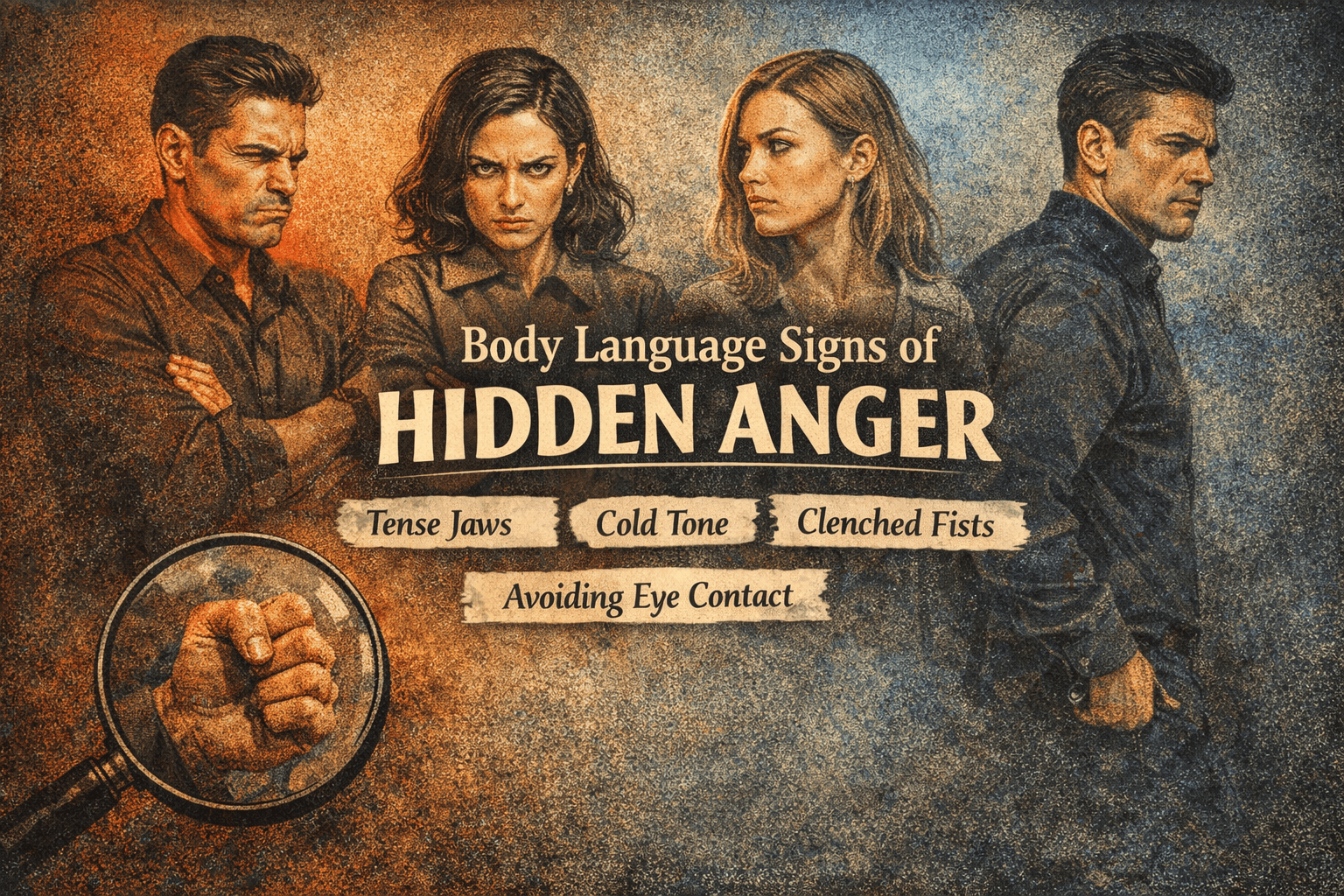
Body Language Signs of Hidden Anger… Did you know that over 70% of our communication is non-verbal, yet most of us are oblivious to the subtle signs of hidden anger? Imagine sitting across from someone who appears calm, but beneath their composed exterior, a storm is brewing. Understanding the body language of concealed anger can unlock the mysteries of our interactions and help us navigate conflicts more effectively. In this exploration of unspoken emotions, we’ll uncover the telltale signs that reveal when anger simmers beneath the surface, allowing you to read between the lines and respond with empathy and insight.
Body Language Signs of Hidden AngerAnger can be a powerful emotion, and while many people express it openly, others tend to hide it beneath a calm exterior. Understanding body language signs of hidden anger can help you navigate social situations more effectively and improve your communication with others. In this post, we’ll explore the subtle cues that might indicate someone is feeling angry but isn’t ready to express it verbally.
The Importance of Non-Verbal CommunicationNon-verbal communication makes up a significant portion of how we convey our feelings. According to studies, body language can account for over 90% of our communication. As such, being attuned to these cues can provide essential insights into what someone is truly feeling, even if their words say otherwise.
Here’s why understanding body language is vital when it comes to detecting hidden anger:
Recognizing hidden anger requires observing a combination of verbal and non-verbal cues. Here are some common body language signs that might indicate someone is harboring anger:
To better understand the nuances of these body language signs, here’s a comparison table:
| Body Language Sign | Possible Interpretation | |
| Tightened Jaw | Suppressed anger or frustration | |
| Crossed Arms | Defensive posture or resistance | |
| Fidgeting | Nervous energy or pent-up emotions | |
| Avoiding Eye Contact | Discomfort or unwillingness to engage | |
| Flared Nostrils | Rising anger or agitation | |
| Tense Shoulders | Stress and emotional tension |
While the above signs can indicate hidden anger, it’s essential to consider the context in which these behaviors occur. For instance, someone who is typically calm may show signs of anger in a high-stress environment. Additionally, individual differences play a significant role; what may signal anger in one culture might not have the same meaning in another.
How to Address Hidden AngerIf you suspect someone is hiding their anger, here are a few strategies to engage with them constructively:
Understanding body language signs of hidden anger can significantly enhance your interpersonal skills. By learning to recognize these subtle cues, you can improve your communication and foster healthier relationships. So the next time you feel tension in the air, pay close attention to the non-verbal signals around you. You may just uncover a layer of emotions waiting to be addressed!
In conclusion, understanding body language signs of hidden anger is crucial for improving communication and interpersonal relationships. Subtle cues such as clenched fists, tense shoulders, and avoidance of eye contact can reveal underlying feelings that may not be expressed verbally. By becoming more aware of these signals, we can better navigate our interactions and address unresolved issues. What body language signs have you noticed in yourself or others that suggest hidden anger? Share your experiences in the comments!
Why People Hide Anger
Hidden anger usually isn’t about “being fake.” It’s often about safety. Many people learned early that expressing anger leads to punishment, rejection, or conflict they can’t handle. Others hide anger because they want to appear professional, maintain control, or avoid regretful words. The problem is that unexpressed anger rarely disappears-it leaks through the body.
That’s why learning body language signs of hidden anger is useful. It helps you notice tension before it escalates, adjust your approach, and create space for direct communication.
18 Body Language Signs of Hidden Anger
One cue alone doesn’t prove anger. Look for clusters-several signs happening together-and notice changes from the person’s baseline.
1) Jaw Clenching and Teeth Grinding
A tight jaw is one of the most common suppression signals. You may notice a squared jawline, tight lips, or tension in the cheeks.
2) Lip Compression
Pressed lips (especially a thin, flat line) often signal restraint. It can mean “I’m holding something back.”
3) Nostril Flaring
Flaring nostrils can appear when the body is preparing for confrontation. It can also happen with stress, so pair it with other cues.
4) Tight, Fixed Smile
A “smile” that looks stiff, brief, or disconnected from the eyes can be social camouflage. The face says “fine,” the body says “not fine.”
5) Microexpressions of Disgust or Contempt
Watch for quick flashes: a one-sided lip raise, slight sneer, or brief nose wrinkle. These can signal judgment and simmering resentment.
6) Hard Staring or “Laser Eye Contact”
Some people avoid eye contact when angry. Others do the opposite: a fixed stare that feels intense, evaluative, or challenging.
7) Avoiding Eye Contact With a Tense Face
Looking away while the jaw stays tight can signal withdrawal paired with irritation-often a sign of suppressed anger.
8) Arms Crossed With Tight Hands
Crossed arms can be neutral, but when paired with tense shoulders and tightly gripping elbows, it often signals defensiveness and contained frustration.
9) Hidden Fists
Hands clenched into fists (sometimes hidden in pockets or under a table) are a classic sign of contained anger.
10) Finger Tapping and Restless Hands
Tapping can reflect impatience and irritation. Look for repetitive, sharp movements rather than playful fidgeting.
11) Sudden Stillness
Not all anger looks active. Some people become unusually still-reduced blinking, frozen posture, minimal gestures-as they suppress a strong emotional response.
12) Tense Shoulders and Raised Traps
Shoulders creep upward when someone is stressed. With anger, the tension often looks rigid, like the body is bracing.
13) Rigid Posture and “Squared” Body
Standing tall can be confident, but anger-related rigidity often looks stiff and controlled. The body becomes “locked,” with little natural movement.
14) Breathing Changes
Shallow breathing, sharp exhales, or visible chest breathing can signal emotional arousal. Some people also “huff” subtly to release tension.
15) Voice Tightness (Even if Words Are Calm)
Hidden anger can show up as a clipped tone, reduced warmth, faster pace, or overly controlled “polite” delivery.
16) Sudden Boundary Behavior
They increase distance, step back, angle away, or create physical barriers (bag, laptop, crossed legs). This can be a nonverbal “I’m done.”
17) Sharp Movements
Closing a laptop harder than necessary, setting an object down loudly, or fast, jerky gestures can be anger leaking through motor control.
18) “Polite Words, Cold Energy”
They say the right things, but the atmosphere feels tense. If the interaction leaves you feeling uneasy, pay attention-your nervous system often detects emotional mismatch before your mind explains it.
Hidden Anger vs. Anxiety: How to Tell the Difference
Anxiety and hidden anger can share signs (fidgeting, tension, avoidance). Use these clues:
- Anger: more rigidity, sharpness, and “edge” (clipped tone, tight jaw, contempt flashes).
- Anxiety: more uncertainty and fear signals (self-soothing touches, apologizing, scattered attention).
- Hidden anger: often includes blame energy-subtle judgment or resistance.
Context matters. If the tension appears during criticism, boundary discussions, or unfairness, anger is more likely.
How to Respond When You Notice Hidden Anger
Your goal is to reduce threat, increase clarity, and invite direct communication-without forcing it.
1) Lower Your Intensity
Slow your pace, soften your face, and reduce volume. Calm signals can help the other person’s nervous system settle.
2) Name What You Notice (Gently)
Try behavior-based language: “You seem tense-did something land wrong?” Avoid labels like “You’re angry,” which can trigger denial.
3) Ask a Clarifying Question
Questions pull anger into words: “What part feels frustrating?” or “What would feel fair here?” This invites honesty without accusation.
4) Validate Without Surrendering
Validation reduces defensiveness: “That makes sense.” Then set boundaries if needed: “And I still need us to keep this respectful.”
5) Offer a Pause
If the tension keeps rising: “Let’s take a break and come back to this.” A pause can prevent escalation and protect the relationship.
Common Triggers That Create Hidden Anger
- Feeling disrespected or dismissed
- Unfairness or double standards
- Boundary violations (time, privacy, workload)
- Public embarrassment or criticism
- Chronic stress and burnout
When you understand likely triggers, you can choose a response that lowers defensiveness and increases cooperation.
What If You’re the One Hiding Anger?
If you recognize these signs in yourself, consider shifting from suppression to expression-calmly. You can be direct without being explosive.
- Name it: “I’m feeling frustrated.”
- Own the need: “I need clarity / fairness / respect.”
- Make a request: “Can we agree on a next step?”
This reduces the “leakage” that creates misunderstandings and helps you regain control without bottling everything up.
Conclusion
Body language signs of hidden anger often appear as tension, restraint, and emotional mismatch: clenched jaw, tight lips, rigid posture, controlled tone, restless hands, and subtle distancing behaviors. The most accurate reads come from cue clusters and context. When you notice hidden anger, respond with calm curiosity, invite directness, and protect boundaries if needed. That approach reduces escalation and creates space for honest, healthier communication.
Hidden Anger in Different Settings
Anger doesn’t “look” the same everywhere. People adapt to social rules. In some places, open anger is punished, so it becomes quieter and more controlled. If you want to read hidden anger accurately, pay attention to how the environment changes what’s safe to show.
Hidden Anger at Work
Workplaces often reward politeness, so anger gets expressed through micro-signals rather than direct confrontation. You may see a person remain professional verbally while their body shows resistance: stiff posture, clipped tone, tight lips, shortened replies, and increased distance.
- Common workplace tells: “Sure” said flatly, minimal eye contact, short email replies, delays, withholding information, sudden formality.
- What it often means: they feel disrespected, overloaded, or blamed, but fear consequences of speaking up.
- What helps: clarify expectations, reduce ambiguity, ask for concerns privately, and keep the conversation solution-focused.
Hidden Anger in Relationships
In close relationships, hidden anger can come from unmet needs, repeated boundary violations, or fear of conflict. The body often signals “I’m upset” long before words do: tense jaw, cold energy, withdrawal, or passive resistance. You may also notice a mismatch-affectionate words paired with emotional distance.
- Common relationship tells: quiet resentment, forced calm, sudden silence, “I’m fine” with tense posture, sharp humor.
- What it often means: they want to be understood, but feel unsafe asking directly.
- What helps: create a nonjudgmental space, ask one clear question, and listen without solving too fast.
Hidden Anger in Social Situations
In groups, people often hide anger to avoid embarrassment. Watch for “social masking” cues: polite smiles that don’t reach the eyes, abrupt shifts to formal tone, microexpressions of contempt, or sudden disengagement. They may also redirect anger into side comments to a friend rather than addressing the source directly.
- Common social tells: tight smiles, subtle eye rolls, fake laughs, quick exits, stiff posture in your presence.
- What it often means: they feel insulted, excluded, or threatened, but don’t want a scene.
- What helps: soften, apologize if appropriate, or offer a calm private check-in later.
Hidden Anger vs. Passive Aggression: What’s the Difference?
Hidden anger is an emotional state. Passive aggression is a behavioral strategy. Someone can feel angry and still behave respectfully. Passive aggression shows up when anger is expressed indirectly through sabotage, guilt, sarcasm, or withholding.
| Hidden Anger | Passive Aggression |
|---|---|
| Anger is present but controlled or suppressed. | Anger leaks out indirectly through behavior. |
| Signals: tension, tight posture, cold tone, withdrawal. | Signals: sarcasm, delays, “forgetting,” backhanded comments. |
| Goal may be self-control or safety. | Goal is often punishment, control, or avoidance of direct talk. |
| Can resolve quickly with safe dialogue. | Often repeats until boundaries are set. |
The “Cue Cluster” Method: A Reliable Way to Read Hidden Anger
Because individual cues can be misleading, use a simple cluster approach:
- Low likelihood (1-2 cues): could be stress, fatigue, or personality.
- Moderate likelihood (3-5 cues): possible irritation; check context and tone.
- High likelihood (6+ cues): strong chance of anger or resentment under the surface.
Then ask yourself one question: Did this shift happen after something specific? If the tension appears right after a comment, boundary, request, or perceived disrespect, hidden anger becomes more likely.
How to De-Escalate Hidden Anger in the Moment
De-escalation is less about perfect words and more about reducing threat. If someone is hiding anger, they’re often already trying to stay controlled. Your job is to make it easier for them to be honest without losing face.
1) Match Calm, Not Emotion
If they’re tense, don’t mirror their tension. Keep your voice low, pace slower, and gestures minimal. This communicates safety and reduces escalation risk.
2) Use “Observation Language” Instead of Accusations
Try: “I noticed your tone changed,” or “You seem quieter than before.” Avoid: “You’re angry.” Observation is harder to deny and feels less blaming.
3) Give Them a Dignified Exit Ramp
Many people hide anger because they don’t want conflict right now. Offer a choice: “Do you want to talk about it now, or would later be better?” Autonomy reduces defensiveness.
4) Validate the Emotion Without Agreeing With Everything
Validation doesn’t mean surrender. It means acknowledging reality: “I can see why that would be frustrating.” Then: “Let’s figure out what would help.”
5) Ask One Clean Question
Hidden anger needs a bridge into words. Use a question that invites clarity:
- “What part felt unfair?”
- “What are you worried this will lead to?”
- “What do you need from me right now?”
6) Set a Boundary if You See Contempt
Contempt (sneers, belittling, mocking) damages relationships quickly. If you see it, protect the tone: “I want to solve this, but not with sarcasm. Can we keep it respectful?”
What Not to Do (These Make Hidden Anger Worse)
- Don’t interrogate: rapid-fire questions can feel like pressure and trigger shutdown.
- Don’t ridicule their feelings: “You’re overreacting” increases resentment instantly.
- Don’t dominate the conversation: over-explaining can feel like control.
- Don’t force resolution: some people need time to regulate before talking.
- Don’t mirror aggression: matching sharpness escalates the nervous system.
Hidden Anger Signals From Yourself (Self-Awareness Guide)
It’s just as useful to recognize your own hidden anger. Many people suppress anger until it turns into burnout, passive aggression, or sudden blow-ups. Your body usually signals it early.
- Physical tension: jaw tightness, clenched hands, headaches, tight chest.
- Short patience: irritation at small things, snapping internally, impatience with delays.
- Withdrawal: wanting to avoid people, feeling cold, “checking out.”
- Rumination: replaying conversations, imagining comebacks, feeling stuck.
A healthy next step is to convert the anger into information: “What boundary was crossed?” “What need isn’t being met?” “What request am I avoiding?” Anger often points to a value or limit that matters.
Healthy Ways to Express Anger Without Escalation
If you want to prevent hidden anger from leaking into your body language, practice clean expression. The goal is to be direct and respectful.
- Name the feeling: “I’m feeling frustrated.”
- Name the trigger: “Because the deadline changed without notice.”
- Name the impact: “It put me in a tough spot.”
- Make a request: “Can we agree on a process for changes?”
This approach reduces misunderstanding and lowers the chance of passive aggression or emotional buildup.
Quick Scripts for Real-Life Moments
- When someone seems tense: “You seem a bit stressed-did something land wrong?”
- When you sense resentment: “I want to make sure we’re okay. What’s bothering you?”
- When the tone turns sharp: “I’m open to this conversation, but I need it to stay respectful.”
- When you need a pause: “Let’s take ten minutes and come back calmer.”
Final Takeaway
Body language signs of hidden anger often show up as tension, restraint, and mismatch: clenched jaw, compressed lips, rigid posture, controlled breathing, cold tone, and distancing behaviors. The safest way to read them is through cue clusters and context-especially sudden shifts after a trigger. When you respond with calm observation, respectful curiosity, and clear boundaries, you reduce escalation and create space for honest, healthier communication.