

Embarrassing Memories Before Sleep: 9 Clear Reasons They Hit at Night
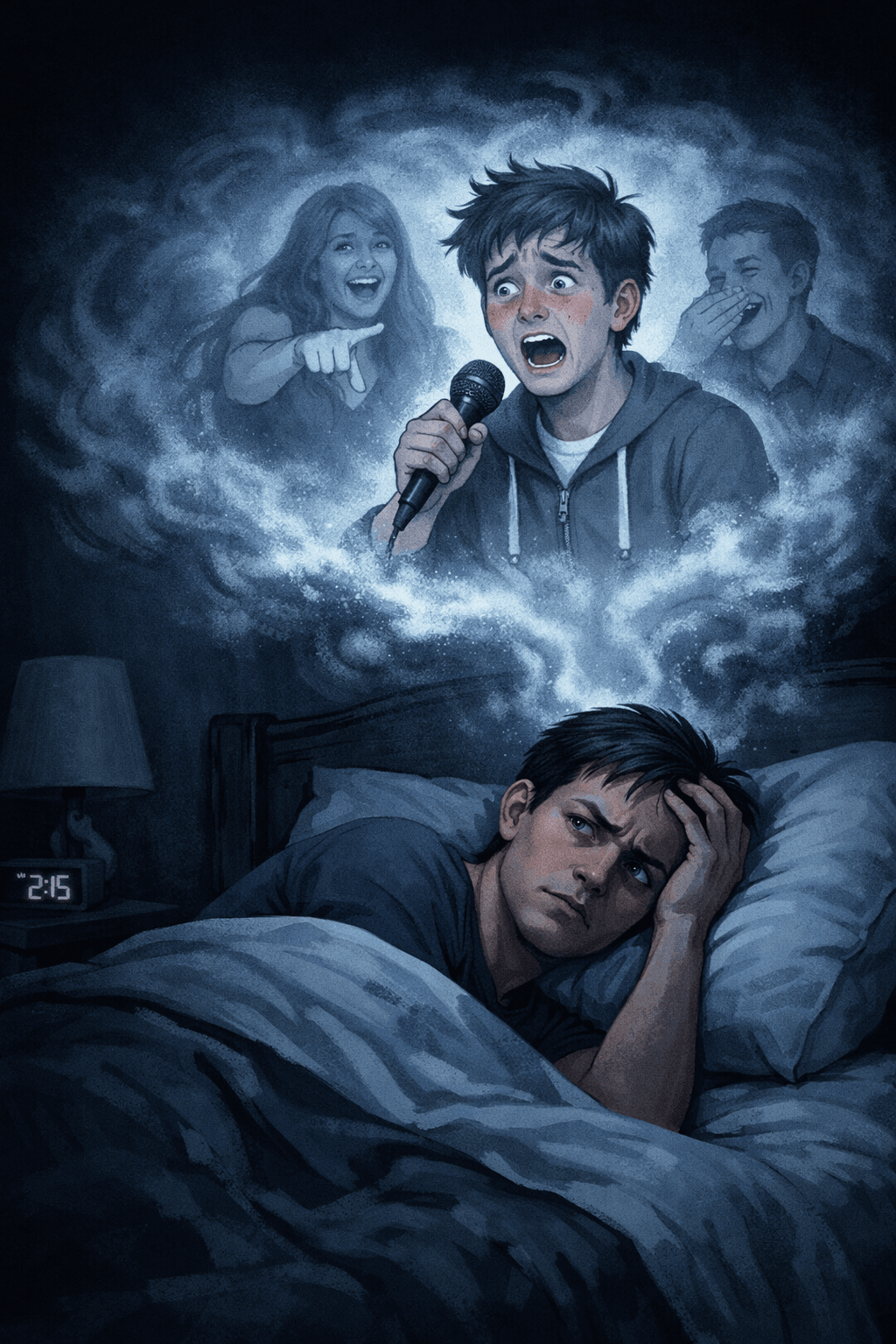
Embarrassing memories before sleep: Have you ever found yourself lying in bed, the room enveloped in darkness, only to be suddenly jolted awake by a cringeworthy memory from years ago? You know the one-a fleeting moment of youthful embarrassment that feels like a spotlight shining right on you, even when no one else is around. As you toss and turn, replaying those awkward interactions or missteps, you can’t help but wonder: why do these memories resurface just when you’re trying to drift off into peaceful slumber?
If you’ve ever felt the sting of those long-buried moments creeping back into your mind when all you want is rest, you’re not alone. Join us as we delve into the fascinating reasons behind this all-too-common experience and explore how our minds work during those quiet hours of night.
The Evolutionary or Psychological Reason Behind Embarrassing Memories
Embarrassing memories often surface when we are in a relaxed state, such as trying to fall asleep, due to a combination of evolutionary and psychological factors. From an evolutionary perspective, our brains are wired to process social interactions and learn from past mistakes. This mechanism helps us avoid similar situations in the future. When we lie down to rest, our minds may start to wander, leading us to reflect on past experiences, including those that evoke feelings of shame or embarrassment.
Psychologically, these memories are linked to our self-esteem and social identity. They can serve as reminders of times when we felt vulnerable or judged, reinforcing our desire to belong and be accepted by others. This internal dialogue is part of a broader cognitive process known as rumination, which can often lead to increased anxiety and stress, especially during quiet moments when distractions are minimal.
Real-Life Examples or Famous Case Studies
Many individuals have reported experiencing embarrassing memories at night, including well-known figures. For instance, comedian Ellen DeGeneres has spoken openly about her struggles with self-doubt and the awkward moments that haunt her. She shares how those thoughts often creep in when she is trying to unwind, demonstrating that even successful people are not immune to the effects of rumination.
Another case study involves a psychological research project where participants were asked to recall embarrassing moments before bed. Researchers found that the majority reported a spike in anxiety levels, suggesting that these memories can significantly disrupt sleep patterns and overall mental well-being.
5 Actionable Coping Mechanisms or Takeaways
- Practice Mindfulness: Engage in mindfulness meditation to help redirect your thoughts away from negative memories and focus on the present moment.
- Journaling: Write down your thoughts and feelings about these memories. This can help process emotions and reduce the frequency of unwanted recollections.
- Positive Affirmations: Create a list of positive affirmations to counteract feelings of embarrassment and reinforce your self-worth.
- Limit Stimulants: Avoid caffeine or other stimulants before bedtime that may increase anxiety and make it harder to sleep peacefully.
- Establish a Relaxation Routine: Develop a calming pre-sleep routine that includes activities like reading, gentle stretching, or listening to soothing music to distract your mind from intrusive thoughts.
Did You Know? Studies have shown that approximately 70% of people report experiencing embarrassing memories when trying to fall asleep, highlighting how common this phenomenon is.
Conclusion
In essence, the resurgence of embarrassing memories as we drift into sleep is a natural phenomenon driven by our mind’s tendency to process emotions and experiences, often leading us to relive moments we wish to forget.
Have you ever experienced a particularly vivid embarrassing memory that caught you off guard while trying to sleep?
Why Embarrassing Memories Hit at Night (And How to Stop the Bedtime Replay)
Embarrassing memories before sleep can feel like a cruel prank. Your day is finally over, the lights are off, and your body is ready to rest-then your brain suddenly plays a highlight reel of the exact moment you wish you could delete. A weird comment you made years ago. A social stumble. A text you regret. It can hit so hard that you feel the physical cringe: tight chest, warm face, stomach drop, racing thoughts.
If this happens to you, you’re not broken. You’re experiencing a very normal interaction between memory, emotion, and the brain’s nighttime processing system. In fact, bedtime is one of the most common times for rumination because the mind has fewer distractions and more room to wander. The key is learning how to interrupt the loop without fighting your mind in a way that makes it worse.
The Short Answer: Your Brain “Processes” When You Stop Moving
When you’re busy, your attention is externally anchored: tasks, conversations, screens, movement. At night, external input drops. Your brain shifts to internal processing-reviewing, organizing, predicting, and trying to learn from social outcomes. Because humans are social creatures, the brain treats social mistakes as high-priority learning signals.
Embarrassing memories carry a strong emotional tag (shame, awkwardness, fear of judgment). Emotion-tagged memories are more likely to pop up when the brain is in review mode. That’s why they often show up right when you want silence.
Why Embarrassing Memories Feel So Loud
Embarrassment is a social pain signal. It exists to help you stay connected to your group. From an evolutionary angle, being rejected or shamed historically could reduce safety and resources. So the brain treats “social missteps” as something to remember and avoid. Even if the event is objectively minor, the brain may replay it because it wants to prevent a repeat.
At night, this can combine with a second factor: sleep-onset sensitivity. As you start to drift off, your brain is still partially alert. Any spike in emotion-like sudden shame-pulls you back awake. That creates the worst loop: memory → shame → adrenaline → wakefulness → more memory.
Rumination vs Intrusive Thoughts: What’s the Difference?
People often describe these moments as “intrusive thoughts.” Sometimes they are. But it helps to separate two patterns:
- Rumination: repetitive thinking that feels like problem-solving but goes nowhere (“Why did I do that? What do they think of me?”)
- Intrusive memory flash: a sudden image or moment that appears uninvited and triggers emotion (“I can’t believe I said that.”)
Both can disrupt sleep. Rumination tends to be longer. Intrusive flashes can be short but intense. The solution is similar: reduce emotional arousal and stop the brain from treating the memory as an emergency.
Why It Gets Worse in Bed Specifically
Bedtime creates the perfect environment for embarrassment to resurface:
- Low distraction: fewer external anchors means more internal focus
- Quiet amplifies emotion: silence makes thoughts feel louder
- Fatigue reduces control: tired brains have less cognitive flexibility
- Stress carryover: unresolved stress makes the mind scan for “problems”
- Perfectionism and self-criticism: increases shame response and replay frequency
It can also be worse during transitions: starting a new job, social changes, relationship tension, or any time your brain is evaluating your social standing.
What to Do in the Moment (The 3-Minute Bedtime Reset)
When the memory hits, you don’t need to “solve” it. You need to reduce arousal and shift attention. Try this sequence:
Step 1: Label the pattern (10 seconds)
Say: “This is bedtime rumination. My brain is reviewing, not warning.”
Step 2: Downshift your nervous system (60-90 seconds)
Use slow-exhale breathing: inhale 4 seconds, exhale 6 seconds, repeat 8 times. Longer exhales signal safety and reduce adrenaline.
Step 3: Use a “containment” phrase (20 seconds)
Pick one sentence and repeat it calmly:
- “Not now. Tomorrow.”
- “This is a memory, not a current threat.”
- “I’m safe. My job is to rest.”
Step 4: Redirect to neutral focus (60 seconds)
Choose one neutral anchor:
- Count breaths from 1 to 20 and restart if distracted
- Feel the weight of the blanket and relax jaw/shoulders
- Listen to steady sound (fan/white noise at low volume)
The goal is not to “erase” the memory. The goal is to stop feeding it attention and emotion.
The Biggest Mistake: Arguing With the Memory
When you fight the memory-“Stop thinking about that!”-your brain hears: “This is important.” That increases attention and makes it return. Instead, treat it like a pop-up ad:
- Acknowledge it exists
- Don’t click it
- Return to your main task (sleep)
Long-Term Fix: Reduce the “Shame Charge”
Most bedtime embarrassment isn’t about the event itself-it’s about the emotional charge attached to it. Reducing the charge makes the memory less sticky.
1) The two-minute journal dump (high ROI)
Before bed, write for two minutes:
- What memory keeps showing up?
- What am I afraid it means about me?
- What would I say to a friend who had the same memory?
This helps move the memory from emotional replay to cognitive processing.
2) Use “self-compassion scripting”
Write one compassionate reframe, short and believable:
- “I was learning.”
- “I’m allowed to be imperfect.”
- “That moment is not my identity.”
Believability matters more than positivity. Pick a line you can accept.
3) Create a consistent wind-down routine
Your brain loves predictable cues. A routine reduces mental scanning:
- Dim lights 30 minutes before bed
- Light stretching or warm shower
- Low-stimulation reading or calm audio
- No intense content or debates right before sleep
4) If rumination is chronic, consider CBT-style techniques
CBT-based tools often focus on interrupting ruminative loops, challenging catastrophic interpretations, and reducing safety behaviors (like excessive reassurance seeking or mental reviewing). Professional support can accelerate progress if the pattern is persistent.
When to Seek Professional Support
Occasional bedtime embarrassment is common. Consider support if:
- Sleep disruption happens multiple nights per week
- Rumination causes significant anxiety or daytime impairment
- You have panic symptoms, depression, or trauma-related flashbacks
- Intrusive thoughts become distressing or feel uncontrollable
This content is for informational purposes and does not replace medical advice.
FAQ
Why do embarrassing memories come back years later?
Because the brain stores emotionally tagged memories as learning signals. When stress is high or distractions are low, those signals can resurface.
Does this mean I have anxiety?
Not necessarily. But anxiety and stress can increase rumination and make bedtime memories more intense and frequent.
What’s the fastest way to stop the replay?
Label it as rumination, do slow-exhale breathing, and redirect attention to a neutral anchor. Avoid “checking” if the memory is gone.
Is journaling actually effective?
For many people, yes. Journaling externalizes thoughts, reduces emotional charge, and helps the brain feel “finished” with the topic before sleep.
Will this ever go away?
Often, yes-especially when sleep, stress, and self-compassion improve. The memory may still exist, but it stops feeling urgent.
Closing Reflection
Embarrassing memories before sleep are usually your brain trying to learn and protect your social self-not a sign that you’re doomed to overthink forever. With a few practical tools-breathing, journaling, and a consistent wind-down routine-you can reduce the replay and make bedtime feel safe again.
Question for you: Do these memories show up more after stressful days, social events, or when you’re sleep-deprived? Your pattern is the clue to your best solution.
Why Nighttime Makes Old Shame Feel New Again
One of the strangest things about embarrassing memories before sleep is how current they can feel. A moment from five years ago, ten years ago, or even childhood can suddenly land in your body as if it happened this afternoon. Your face heats up. Your stomach drops. Your chest tightens. Rationally, you know the event is over. Emotionally, your nervous system reacts as though the social threat is still active. That gap between knowing and feeling is what makes the experience so frustrating.
Nighttime intensifies this because it removes the buffers that usually soften emotional memory. During the day, you are moving, responding, deciding, speaking, and managing external input. At night, those outside anchors fall away. What remains is the mind with more space to drift toward whatever feels unfinished, emotionally charged, or unresolved. Old embarrassment often qualifies because shame is one of the brain’s stickiest emotional markers. It says, “Remember this. Do not repeat it.”
That is why the memory can return with surprising force even when the actual event was small. The brain is not measuring the objective size of the incident. It is reacting to the emotional meaning attached to it. And at bedtime, those meanings often echo louder.
Embarrassing Memories Before Sleep and the Brain’s Review Mode
As the brain shifts toward sleep, it often enters a kind of internal review mode. Thoughts loosen from the demands of the external world and begin moving more freely between memory, imagination, and unresolved emotion. This is not necessarily a problem. In many cases, it is part of how the mind processes the day and integrates older experiences. But when a memory carries shame, regret, or self-criticism, that same review process can become unpleasant very quickly.
The brain tends to prioritize emotionally tagged material because emotional memories are treated as important for future learning. If something once made you feel socially exposed, foolish, rejected, or judged, the mind may keep it available as a warning system. At bedtime, when attention turns inward, those warnings can float to the surface. What feels like random cruelty from the brain is often just a badly timed attempt at social learning.
This helps explain why the memory is so often repetitive. The brain is not trying to entertain you. It is trying, in its own clumsy way, to rehearse avoidance. The problem is that replay is not the same as resolution. Instead of teaching you something useful, it often just keeps you awake.
Why Shame Is Such a Powerful Sleep Disruptor
Shame is different from ordinary regret. Regret says, “I wish I had done that differently.” Shame says, “What does that say about me?” That deeper identity-level sting is one reason embarrassing memories can feel so potent at night. The memory is not only about what happened. It becomes linked to self-worth, belonging, and fear of judgment. Once those themes get activated, sleep becomes harder because the nervous system reads them as emotionally important.
Shame also tends to create looping thought patterns. Instead of simply remembering the event once, the mind begins circling around it. Why did I say that? What did they think? Do they still remember? What kind of person does that make me? These questions do not lead anywhere restful. They keep the brain in social threat mode. And social threat mode is not good at falling asleep.
This is why even tiny memories can carry so much charge. The actual incident may have lasted five seconds. But if it touched something sensitive in your sense of self, the brain may continue treating it like unfinished business long after everyone else has forgotten it.
Perfectionism Makes the Replay Louder
People with perfectionistic tendencies often experience embarrassing memories more intensely because their internal standard for acceptable behavior is unusually high. Small awkward moments do not feel small to a perfectionistic mind. They feel like evidence of failure, loss of control, or social incompetence. That makes the emotional tag stronger, which makes the memory more likely to resurface during quiet moments.
Perfectionism also makes the memory harder to release because it encourages endless internal editing. You replay the conversation and imagine what you should have said instead. You mentally rewrite the email, the joke, the facial expression, the tone, the timing. This can feel like problem-solving, but it usually just deepens the rumination. The mind becomes obsessed with the impossible task of fixing a moment that no longer exists.
At bedtime, that tendency can become especially strong because there is no external deadline to interrupt it. The perfectionistic brain starts editing the past when it should be resting in the present. That is one reason self-compassion matters so much in nighttime rumination. Without it, the mind keeps treating ordinary human awkwardness as something that must be solved before sleep can happen.
Why These Memories Often Spike After Stressful Days
Embarrassing memories do not usually appear in a vacuum. They often show up more after days when the nervous system is already strained. Stress lowers emotional resilience and makes the brain more likely to pull up threat-related material. If you had a socially intense day, felt criticized, made a mistake, or simply carried a lot of pressure, old shame memories may become more accessible at night because the system is already tuned to evaluation and self-protection.
This is why the timing can feel so random when it is not really random at all. You may think, “Why am I suddenly remembering that thing from 2016?” But the real question may be, “What about today made my brain vulnerable to old shame themes?” Often the answer is stress, social tension, sleep deprivation, or feeling emotionally exposed in some current situation.
In that sense, the old memory is sometimes less about the past than it appears. It may be hitching a ride on present-day vulnerability. The brain reaches for an old example because the emotional channel is already open. Understanding that can make the replay feel less mysterious and less personal.
How to Stop Treating the Memory Like an Emergency
One of the most helpful shifts is learning to stop treating the memory like an emergency signal. When the embarrassing moment appears, many people instantly react with resistance. They tense up, argue with the thought, or demand that it go away. But this often backfires because the brain interprets resistance as proof that the memory matters. The more important it seems, the more likely it is to stay.
A calmer approach is often more effective. When the memory shows up, name it gently: “This is bedtime replay.” That label reduces confusion. It reminds you that the brain is in a familiar pattern, not delivering a revelation. Then shift from content to state. Instead of debating the memory, help the body settle. Slow your exhale. Relax the forehead and jaw. Feel the mattress under you. Let the nervous system know that the current moment is safe, even if the memory is socially painful.
The goal is not to approve of the embarrassing moment or convince yourself it was wonderful. The goal is to stop escalating it into a present-moment crisis. Once the body stops treating it like danger, the memory usually loses some of its grip.
Why Self-Compassion Works Better Than Self-Criticism
Many people secretly believe that harsh self-criticism will prevent future embarrassment. They think that if they shame themselves hard enough, they will become more careful, more polished, or more acceptable. In reality, self-criticism usually makes embarrassing memories more sticky, not less. It increases emotional intensity, deepens identity-level shame, and teaches the brain that the memory is highly important.
Self-compassion works differently. It does not say the moment was perfect. It says the moment was human. It lets you place the memory in a broader context rather than treating it like proof of permanent deficiency. A compassionate response might sound like, “That was awkward, but people are awkward sometimes,” or “I was doing my best with the skills and awareness I had then.” These responses reduce the shame charge, which makes the memory less likely to dominate your nights.
Compassion is often harder than criticism because it feels less familiar. But if your goal is sleep and healing rather than self-punishment, compassion is usually far more effective. The brain rests more easily when it is not under attack from within.
How to Build a Bedtime Routine That Interrupts Replay
A good bedtime routine can reduce embarrassing memory loops because it gives the mind a predictable path into sleep. The brain tends to do better when the transition from day to night feels deliberate rather than abrupt. If you go straight from stimulation, work, scrolling, or emotional content into darkness, the mind often keeps spinning. But if you create a wind-down period, the nervous system gets a chance to settle before the review mode takes over too strongly.
This does not need to be complicated. Dim lights. Reduce screens. Do a short journal dump of anything unresolved. Stretch gently. Read something calm. Listen to quiet audio that does not pull you into emotional intensity. The purpose is not to force yourself to feel peaceful instantly. It is to lower arousal enough that the brain is less likely to grab the most emotionally charged memory available.
Over time, a consistent routine also becomes a cue. It tells the mind, “We are not here to solve social mistakes right now. We are here to sleep.” That cue can be surprisingly powerful when repeated nightly.
Final Thoughts
Embarrassing memories before sleep are common because bedtime gives the brain space to review emotionally charged social moments without the distractions of the day. Shame-tagged memories feel louder in those quiet hours because the mind is trying to process, learn, and protect your social self, even if it does so in an exhausting way. The replay is not proof that the event defines you. It is often just the brain over-prioritizing something that once felt emotionally important.
The more you understand this pattern, the less power it tends to have. You do not need to solve the memory at midnight. You do not need to punish yourself into better behavior. And you do not need to treat every old cringe moment like an urgent warning. A calmer body, a gentler interpretation, and a more predictable bedtime routine can go a long way toward reducing the replay.
What once felt like a cruel nighttime attack can start to look more manageable: a tired brain, a social pain memory, and a nervous system that needs reassurance more than analysis. When you give it that, sleep often comes back more easily.