

Galaxy Collision Earth: 9 Terrifying Effects If Two Galaxies Merge
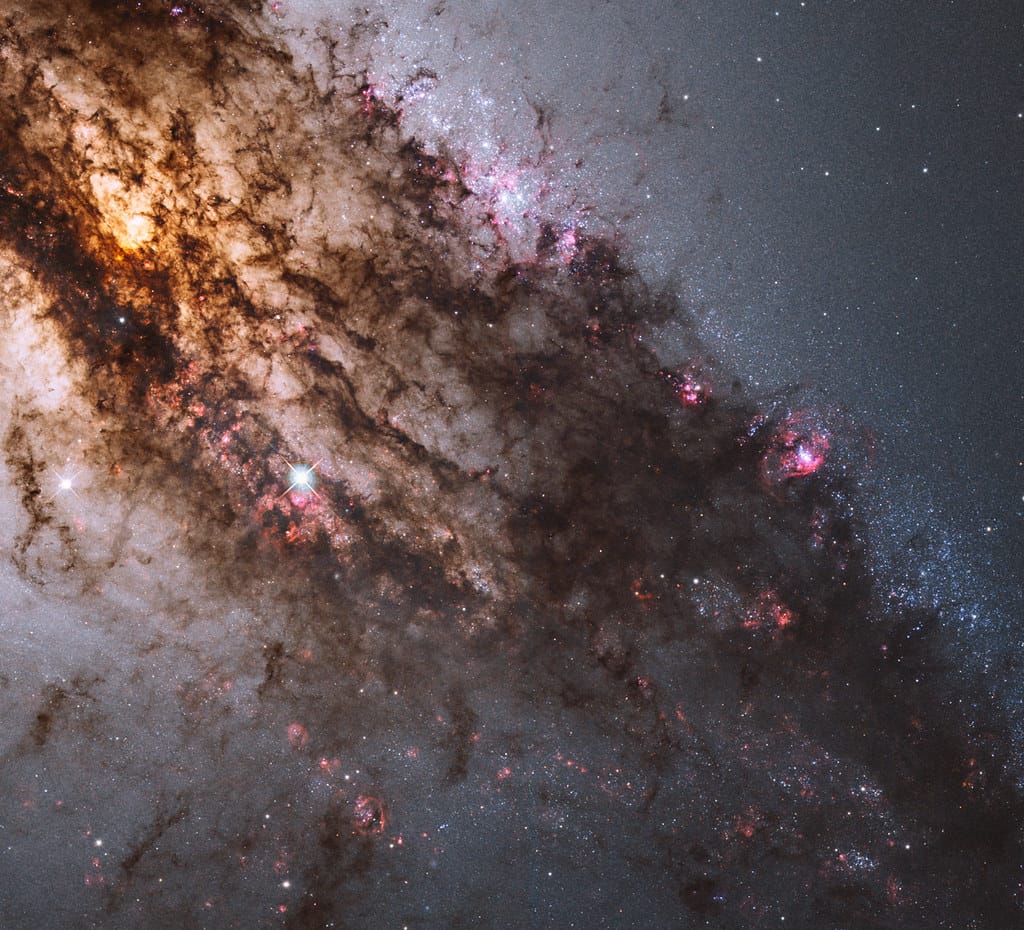
Galaxy collision Earth… What if I told you that the universe is a colossal battleground, where galaxies clash with the force of a billion suns? Imagine our Earth caught in the tumult of two galaxies colliding, a cosmic dance of destruction and creation. As stars are born and obliterated in a spectacular display of celestial chaos, our planet would face unimaginable consequences. Would we witness the end of civilization or the dawn of a new era? Buckle up as we explore the cataclysmic aftermath of such a cosmic event and its profound implications for life as we know it.
What Would Happen If Two Galaxies Collided with Earth Inside Them?
The cosmos is a vast and mysterious place, filled with wonders and spectacular phenomena. One of the most awe-inspiring events in the universe is the collision of galaxies. Imagine, for a moment, if two galaxies collided with Earth situated right in the midst of this cosmic chaos. What would that mean for our planet? Let’s dive into the astronomical implications, the science behind it, and what we can expect!
The Scale of Galactic Collisions
Galaxies are massive collections of stars, gas, dust, and dark matter, held together by gravity. When two galaxies collide, the event is not just a spectacular light show; it can lead to profound changes in their structures and the fates of the stars within them, including Earth. Here’s how it breaks down:
| Aspect | Collision Scenario |
|---|---|
| Duration | Millions of years for full merger |
| Star Density | Very low; stars rarely collide |
| Effects on Earth | Potentially catastrophic, but not immediate |
| Gravitational Effects | Significant changes in orbits and environments |
| Aftermath | New star formation, possible supernovae |
What Happens During a Galactic Collision?
- Initial Encounter:
- When two galaxies approach each other, their gravitational forces begin to interact.
- The galaxies start to distort each other due to tidal forces, creating beautiful tidal tails and bridges of stars and gas.
- Star Interactions:
- Despite the vast distances between individual stars, the gravitational interactions can cause stars to be flung into new orbits.
- Some stars may collide, but the likelihood of direct collisions is extremely low due to the immense distances involved.
- Formation of New Structures:
- As the galaxies merge, their gas clouds may compress, leading to bursts of star formation, known as “starbursts.”
- The collision can also trigger supernovae, contributing to the cosmic cycle of star birth and death.
Effects on Earth
Now, let’s take a closer look at what Earth might experience if it were caught in the crossfire of two colliding galaxies.
- Gravitational Influence:
- The gravitational pull from the merging galaxies could alter the orbit of our solar system, potentially leading to drastic climate changes on Earth.
- Increased Cosmic Rays:
- The merging process might expose our planet to increased cosmic rays, which could have harmful effects on life and technology.
- Potential for Catastrophic Events:
- While the chances of Earth colliding with another star are slim, the gravitational chaos could disrupt the orbits of comets, leading to a higher likelihood of impacts.
- Visual Spectacle:
- If we could see the collision from Earth, the night sky would be filled with vibrant colors and formations as new stars ignite and old ones explode.
The Reality Check
Despite the dramatic nature of galactic collisions, it’s important to remember a few key facts:
- Time Scale: Galactic collisions occur over millions of years, so there would be no immediate danger.
- Distance Matters: Stars are incredibly far apart; even during a collision, the chance of direct star-to-star collisions is negligible.
- We’re Safe…For Now: The Milky Way is on a collision course with the Andromeda Galaxy, but this will happen in about 4.5 billion years, giving us plenty of time to prepare-or evolve.
Conclusion
The collision of two galaxies is a magnificent spectacle that illustrates the dynamic and ever-changing nature of our universe. While the likelihood of Earth facing immediate peril during such an event is low, the cosmic ballet of stars and gas would indeed reshape the night sky and the future of our celestial home. So, the next time you gaze up at the stars, remember that the universe is full of surprises, and our place in it is just one small part of a grand cosmic story. Enjoy the wonder of the night sky, and perhaps imagine what stories it holds for the future!
In conclusion, if two galaxies were to collide with Earth situated within them, the consequences would be catastrophic and transformative on an astronomical scale. The gravitational forces involved would lead to significant alterations in the orbits of stars, potentially instigating a barrage of cosmic events, including the formation of new stars and the destruction of existing solar systems. While the likelihood of such an event occurring anytime soon is extremely low, it raises fascinating questions about the dynamics of our universe. What do you think would be the most surprising outcome of such a galactic collision?
The Biggest Misunderstanding: A “Collision” Isn’t a Crash
It sounds like a cosmic car wreck, but a galactic collision is more like two ghostly swarms passing through each other while gravity rewrites everything’s trajectory. Most of a galaxy is empty space. Even in a dense spiral arm, the average distance between stars is so enormous that direct star-to-star impacts remain extremely unlikely. That’s why the most dangerous parts of a merger aren’t “stars slamming into Earth.” The danger comes from the slow, cumulative consequences: orbital reshuffling, compressed gas, starbursts, and a harsher radiation environment.
So if Earth is inside one of the colliding galaxies, the story is not instant annihilation. The story is a long era of instability where the odds of certain rare disasters rise-and where the night sky becomes a living, evolving catastrophe mural.
What a Galactic Merger Looks Like From the Inside
From Earth, the first signs wouldn’t be a shockwave or a sudden gravitational yank. They’d be visual and subtle: another galaxy swelling in size over time, its spiral features becoming distinct, its star clouds thickening across the sky. Eventually, tidal streams-ribbons of stars pulled out by gravitational forces-would begin to paint arcs across the darkness.
As the encounter deepens, the sky could become brighter at night in some regions due to the sheer number of additional stars and the glow of disturbed gas. Depending on how the galaxies pass through each other, the sky might develop dramatic, asymmetric structures-bright bridges and tails-like a celestial wound that never stops bleeding light.
But the most important “inside view” isn’t what you see. It’s what you’re embedded in: changing gravitational fields and changing interstellar conditions that can influence the Solar System’s long-term safety.
The Timeline: Why This Takes Forever (and Why That Still Matters)
Galactic mergers unfold across millions to billions of years. That sounds like a guarantee of safety, but it isn’t. A long timeline doesn’t reduce risk; it spreads risk. Instead of one doomsday, you get a prolonged period where multiple hazard channels are elevated: more star formation, more stellar explosions, more gravitational stirring of distant comet reservoirs, and a higher probability of the Solar System wandering into a hostile neighborhood of the merging system.
Think of it as moving from a quiet suburb to a city under constant construction. Most days, nothing kills you. But the background hazard rate rises, and over long enough time, “rare” events stop being rare.
The Real Physics Weapon: Gas Compression and Starbursts
Stars rarely collide, but gas clouds do interact. When two galaxies interpenetrate, their gas and dust can compress and shock. Compression triggers rapid star formation-starbursts-especially in regions where gas is funneled into denser knots. Starbursts are beautiful and violent: they create many massive, short-lived stars, which then die as supernovae.
This is one of the primary ways a merger becomes dangerous to life. Supernovae are not just fireworks. They inject high-energy radiation and particles into the environment and can erode atmospheric chemistry if they occur close enough. A starburst era increases the number of supernovae per unit time, raising the chance that one happens uncomfortably near the Solar System at some point during the merger epoch.
The key mechanism is statistical, not deterministic: you don’t need the merger to aim a supernova at Earth. You only need the merger to increase the rate of massive-star birth, which increases the rate of massive-star death.
Galaxy Collision Earth… Cosmic Rays: The Slow Poison Scenario
Cosmic rays are high-energy particles that can damage DNA, disrupt electronics, and alter atmospheric chemistry indirectly. Earth is protected by its magnetic field and atmosphere, but that protection is not absolute. A merger-driven increase in supernova activity can elevate cosmic ray flux across large regions of a galaxy.
The dangerous version of this isn’t “instant radiation death.” It’s long-term pressure on biology and climate: more ionization in the upper atmosphere, possible shifts in ozone chemistry, and higher mutation rates over geological timescales. Civilization might not notice cosmic rays the way it notices an asteroid impact, but ecosystems and technological infrastructure can be sensitive to slow, sustained increases in background radiation.
In a merger, Earth’s risk is less about a single cosmic ray and more about being parked for long periods in a more energetic galactic environment.
Gamma-Ray Bursts: Rare, Extreme, and Worth Mentioning
Gamma-ray bursts are among the most energetic events known. They are rare, and their threat depends heavily on distance and direction. A merger doesn’t guarantee a gamma-ray burst aimed at Earth. But by increasing the population of massive stars and dynamic stellar interactions, it may increase the overall frequency of extreme transient events in the combined system.
The reason GRBs belong in this thought experiment is not probability porn. It’s because they represent a “low-likelihood, high-consequence” channel. Over a long enough merger timescale, even very rare events deserve attention, especially if the merger increases the relevant stellar populations.
Still, it’s important to keep the tone honest: the merger makes many dangers more likely, but it does not make the universe suddenly maliciously targeted. The threat is a shifted distribution of outcomes.
The Solar System’s Address Could Change
In a calm galaxy, the Sun orbits the galactic center in a relatively stable path. During a merger, gravitational torques can rearrange stellar orbits. Some stars get thrown into extended halos; others migrate inward; some are ejected into intergalactic space. The Solar System itself could be nudged into a different orbit around the merged galaxy’s center.
That relocation is a major hidden hazard because different galactic neighborhoods have different risk profiles. Near dense star-forming regions, you’re closer to supernovae. Near the galactic center, you face higher stellar density and potentially stronger radiation backgrounds. In the outskirts, you may face fewer nearby stellar explosions but could be more exposed to intergalactic environments and different cosmic ray backgrounds.
The worst case isn’t “we get ejected and die immediately.” The worst case is “we drift into a rough neighborhood for long enough that the odds of a biologically disruptive event climb.”
Comet Showers: When Gravity Shakes the Oort Cloud
One of the most civilization-relevant risks is not stars, but comets. The Solar System’s distant comet reservoir-the Oort Cloud-is loosely bound. It can be perturbed by passing stars and changing tidal forces. A galactic merger increases stellar flybys and gravitational irregularities, which can disturb distant comets and send some inward.
This is how a galactic event can translate into a very local apocalypse. A merger can raise the rate of long-period comets entering the inner Solar System. Most will miss Earth. But if the flux increases for millions of years, the cumulative probability of a major impact rises. It’s the same logic as the starburst problem: raise the base rate, and eventually the dice land on something catastrophic.
Unlike supernova risk, which depends on proximity to a dying star, comet risk depends on how thoroughly the Solar System’s outskirts get “shaken” over long times.
Black Holes at the Center: The Drama People Expect
If both galaxies host central supermassive black holes, a merger can eventually bring those black holes into a binary system and then into a final coalescence. That sounds like an instant doomsday, but the direct threat to Earth is not the black holes “sucking everything in.” Gravity doesn’t suddenly reach out like a vacuum cleaner. At distances like ours, the primary effects are subtle: changes in the central gravitational potential and, in the final stages, gravitational waves passing through space.
The true danger from the center is indirect. A merger can funnel gas inward, potentially feeding the central black hole(s) and igniting active galactic nucleus behavior-powerful radiation and jets in some cases. If a jet were oriented toward our region, it could be harmful, but orientation and distance matter enormously.
So yes, the center can become more active. But for Earth, the black hole storyline is mostly about whether the merger increases central activity enough to alter the radiation environment across large scales, not about gravitational swallowing.
Would Civilization End or Adapt
If you define “caught in the collision” as a short human timeline event, civilization would mostly experience it as a changing night sky and an increased long-term hazard rate rather than as a single apocalypse. The existential threats-supernova proximity, major impacts, extreme radiation events-are probabilistic across deep time. That means the most realistic “civilization” response is not panic but risk management: detection of incoming comets, planetary defense strategies, radiation-hardened technology, and possibly off-world redundancy.
On the other hand, if the merger era lasts long enough (and it would), the question becomes less about one civilization and more about the long survival of complex life. Over hundreds of millions of years, even modest increases in catastrophic-event frequency can shape evolutionary trajectories. A merger could act like a cosmic stress test-knocking down some biospheres and giving others evolutionary opportunities.
In that sense, a merger is both destruction and creation. It increases the frequency of reset buttons, but it also triggers new star formation-new planetary systems, new chemical environments, and new chances for life elsewhere.
The Most Surprising Outcome
The most surprising outcome is that the prettiest part might also be the most dangerous. A sky blazing with new star clusters, bright tidal arcs, and dense glowing regions would be a visual proof of starburst activity. And starburst activity is the engine behind many of the hazards: more massive stars, more supernovae, more high-energy particles, more disruption.
In other words, the universe doesn’t announce danger with sirens. It announces danger with beauty.
Practical Takeaways
- Stars won’t crash like billiard balls. Direct collisions are rare; indirect effects dominate.
- Risk rises by base rates. More star formation means more supernovae over time.
- Comet flux is a sleeper threat. Shaking the Oort Cloud can increase inner-system impacts.
- Your galactic neighborhood matters. Where the Solar System ends up can change the hazard profile.
- The event is slow but persistent. “Millions of years” means many chances for rare disasters to occur.
FAQ
Would Earth collide with another star during a galactic merger
It’s extremely unlikely. Stars are so far apart that direct star-to-star collisions remain rare even during a merger.
What is the most realistic danger to Earth
Indirect effects: increased supernova rates from starbursts and increased comet injections into the inner Solar System due to gravitational stirring.
How would the night sky change
The other galaxy would grow larger and brighter over time, with tidal streams, star bridges, and glowing gas structures becoming visible across the sky.
Could a merger increase radiation on Earth
Yes, by increasing the frequency of nearby supernovae and elevating cosmic ray backgrounds in certain regions of the merged system.
Would the Milky Way and Andromeda collision destroy the Solar System
Not necessarily. The Solar System could survive the merger, but its orbit within the merged galaxy could change, altering long-term risks.
Can a galactic merger trigger more asteroid or comet impacts
It can increase the chance of long-period comet showers by perturbing distant reservoirs like the Oort Cloud over long timescales.
Do supermassive black holes make mergers instantly lethal
No. Their direct gravitational threat at our distance is minimal; the bigger concern is whether the merger fuels central activity that increases radiation output.
What’s the most surprising consequence for life
That the merger’s beauty-starbursts and bright new clusters-could coincide with a harsher cosmic environment that slowly raises extinction-level risks.