

Shocking Göbekli Tepe: The Game-Changing Temple (9600 BC)
Built Before the Wheel
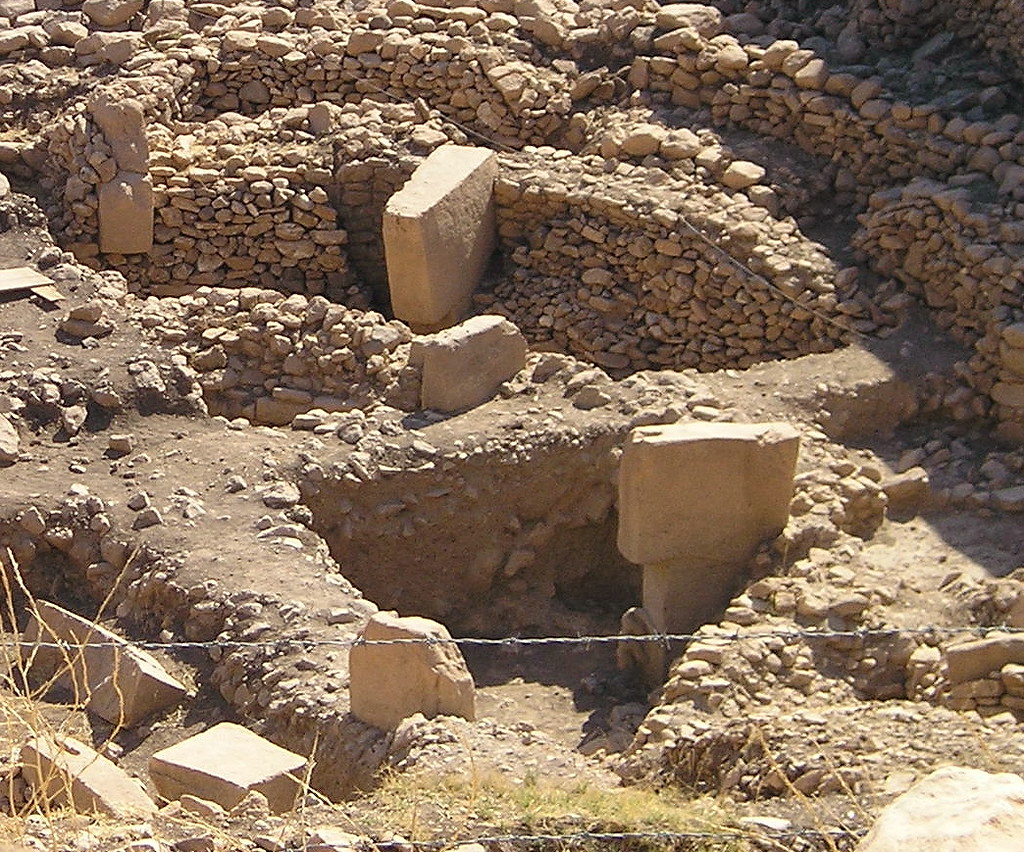
Shocking Göbekli Tepe: The Game-Changing Temple: In the 1990s, German archaeologist Klaus Schmidt uncovered massive T-shaped limestone pillars buried on a hilltop in southeastern Turkey. Radiocarbon dating revealed a date that shocked the scientific world: 9600 BC. This site, Göbekli Tepe, is 6,000 years older than Stonehenge and 7,000 years older than the Great Pyramids. It was built by hunter-gatherers, people who supposedly hadn’t even invented pottery or agriculture yet.
The Impossible Engineering
The pillars weigh up to 20 tons and are intricately carved with lions, scorpions, vultures, and foxes. Moving and erecting these stones would require a workforce of hundreds and a complex social organization-something hunter-gatherers weren’t supposed to have.
- Religion First: Before Göbekli Tepe, historians believed agriculture led to cities, which led to religion. This site suggests the opposite: the urge to worship brought people together, and they invented farming to feed the workforce. Religion sparked civilization.
- The “Skull Cult”: Fragments of human skulls found at the site feature deep incisions, suggesting they were carved and perhaps displayed. Was this a temple for the dead or a site of sky burials where vultures picked bodies clean?
- Why Was It Buried? The most baffling mystery is that around 8000 BC, the site wasn’t just abandoned; it was deliberately and carefully buried under tons of soil. Why did the builders hide their masterpiece?
The Garden of Eden? Some scholars note the site’s location matches the biblical description of Eden. Is Göbekli Tepe the memory of a lost golden age, deliberately buried when humanity “fell” into the hardships of agriculture?
Built Before the Wheel
In the 1990s, German archaeologist Klaus Schmidt uncovered massive T-shaped limestone pillars buried on a hilltop in southeastern Turkey. Radiocarbon dating revealed a date that shocked the scientific world: 9600 BC. This site, Göbekli Tepe, is 6,000 years older than Stonehenge and 7,000 years older than the Great Pyramids. It was built by hunter-gatherers, people who supposedly hadn’t even invented pottery or agriculture yet.
The Impossible Engineering
The pillars weigh up to 20 tons and are intricately carved with lions, scorpions, vultures, and foxes. Moving and erecting these stones would require a workforce of hundreds and a complex social organization-something hunter-gatherers weren’t supposed to have.
- Religion First: Before Göbekli Tepe, historians believed agriculture led to cities, which led to religion. This site suggests the opposite: the urge to worship brought people together, and they invented farming to feed the workforce. Religion sparked civilization.
- The “Skull Cult”: Fragments of human skulls found at the site feature deep incisions, suggesting they were carved and perhaps displayed. Was this a temple for the dead or a site of sky burials where vultures picked bodies clean?
- Why Was It Buried? The most baffling mystery is that around 8000 BC, the site wasn’t just abandoned; it was deliberately and carefully buried under tons of soil. Why did the builders hide their masterpiece?
The Garden of Eden? Some scholars note the site’s location matches the biblical description of Eden. Is Göbekli Tepe the memory of a lost golden age, deliberately buried when humanity “fell” into the hardships of agriculture?
Built Before the Wheel
In the 1990s, German archaeologist Klaus Schmidt uncovered massive T-shaped limestone pillars buried on a hilltop in southeastern Turkey. Radiocarbon dating revealed a date that shocked the scientific world: 9600 BC. This site, Göbekli Tepe, is 6,000 years older than Stonehenge and 7,000 years older than the Great Pyramids. It was built by hunter-gatherers, people who supposedly hadn’t even invented pottery or agriculture yet.
The Impossible Engineering
The pillars weigh up to 20 tons and are intricately carved with lions, scorpions, vultures, and foxes. Moving and erecting these stones would require a workforce of hundreds and a complex social organization-something hunter-gatherers weren’t supposed to have.
- Religion First: Before Göbekli Tepe, historians believed agriculture led to cities, which led to religion. This site suggests the opposite: the urge to worship brought people together, and they invented farming to feed the workforce. Religion sparked civilization.
- The “Skull Cult”: Fragments of human skulls found at the site feature deep incisions, suggesting they were carved and perhaps displayed. Was this a temple for the dead or a site of sky burials where vultures picked bodies clean?
- Why Was It Buried? The most baffling mystery is that around 8000 BC, the site wasn’t just abandoned; it was deliberately and carefully buried under tons of soil. Why did the builders hide their masterpiece?
The Garden of Eden? Some scholars note the site’s location matches the biblical description of Eden. Is Göbekli Tepe the memory of a lost golden age, deliberately buried when humanity “fell” into the hardships of agriculture?
Built Before the Wheel
In the 1990s, German archaeologist Klaus Schmidt uncovered massive T-shaped limestone pillars buried on a hilltop in southeastern Turkey. Radiocarbon dating revealed a date that shocked the scientific world: 9600 BC. This site, Göbekli Tepe, is 6,000 years older than Stonehenge and 7,000 years older than the Great Pyramids. It was built by hunter-gatherers, people who supposedly hadn’t even invented pottery or agriculture yet.
The Impossible Engineering
The pillars weigh up to 20 tons and are intricately carved with lions, scorpions, vultures, and foxes. Moving and erecting these stones would require a workforce of hundreds and a complex social organization-something hunter-gatherers weren’t supposed to have.
- Religion First: Before Göbekli Tepe, historians believed agriculture led to cities, which led to religion. This site suggests the opposite: the urge to worship brought people together, and they invented farming to feed the workforce. Religion sparked civilization.
- The “Skull Cult”: Fragments of human skulls found at the site feature deep incisions, suggesting they were carved and perhaps displayed. Was this a temple for the dead or a site of sky burials where vultures picked bodies clean?
- Why Was It Buried? The most baffling mystery is that around 8000 BC, the site wasn’t just abandoned; it was deliberately and carefully buried under tons of soil. Why did the builders hide their masterpiece?
The Garden of Eden? Some scholars note the site’s location matches the biblical description of Eden. Is Göbekli Tepe the memory of a lost golden age, deliberately buried when humanity “fell” into the hardships of agriculture?
Built Before the Wheel
In the 1990s, German archaeologist Klaus Schmidt uncovered massive T-shaped limestone pillars buried on a hilltop in southeastern Turkey. Radiocarbon dating revealed a date that shocked the scientific world: 9600 BC. This site, Göbekli Tepe, is 6,000 years older than Stonehenge and 7,000 years older than the Great Pyramids. It was built by hunter-gatherers, people who supposedly hadn’t even invented pottery or agriculture yet.
The Impossible Engineering
The pillars weigh up to 20 tons and are intricately carved with lions, scorpions, vultures, and foxes. Moving and erecting these stones would require a workforce of hundreds and a complex social organization-something hunter-gatherers weren’t supposed to have.
- Religion First: Before Göbekli Tepe, historians believed agriculture led to cities, which led to religion. This site suggests the opposite: the urge to worship brought people together, and they invented farming to feed the workforce. Religion sparked civilization.
- The “Skull Cult”: Fragments of human skulls found at the site feature deep incisions, suggesting they were carved and perhaps displayed. Was this a temple for the dead or a site of sky burials where vultures picked bodies clean?
- Why Was It Buried? The most baffling mystery is that around 8000 BC, the site wasn’t just abandoned; it was deliberately and carefully buried under tons of soil. Why did the builders hide their masterpiece?
The Garden of Eden? Some scholars note the site’s location matches the biblical description of Eden. Is Göbekli Tepe the memory of a lost golden age, deliberately buried when humanity “fell” into the hardships of agriculture?
Built Before the Wheel
In the 1990s, German archaeologist Klaus Schmidt uncovered massive T-shaped limestone pillars buried on a hilltop in southeastern Turkey. Radiocarbon dating revealed a date that shocked the scientific world: 9600 BC. This site, Göbekli Tepe, is 6,000 years older than Stonehenge and 7,000 years older than the Great Pyramids. It was built by hunter-gatherers, people who supposedly hadn’t even invented pottery or agriculture yet.
The Impossible Engineering
The pillars weigh up to 20 tons and are intricately carved with lions, scorpions, vultures, and foxes. Moving and erecting these stones would require a workforce of hundreds and a complex social organization-something hunter-gatherers weren’t supposed to have.
- Religion First: Before Göbekli Tepe, historians believed agriculture led to cities, which led to religion. This site suggests the opposite: the urge to worship brought people together, and they invented farming to feed the workforce. Religion sparked civilization.
- The “Skull Cult”: Fragments of human skulls found at the site feature deep incisions, suggesting they were carved and perhaps displayed. Was this a temple for the dead or a site of sky burials where vultures picked bodies clean?
- Why Was It Buried? The most baffling mystery is that around 8000 BC, the site wasn’t just abandoned; it was deliberately and carefully buried under tons of soil. Why did the builders hide their masterpiece?
The Garden of Eden? Some scholars note the site’s location matches the biblical description of Eden. Is Göbekli Tepe the memory of a lost golden age, deliberately buried when humanity “fell” into the hardships of agriculture?
Built Before the Wheel
In the 1990s, German archaeologist Klaus Schmidt uncovered massive T-shaped limestone pillars buried on a hilltop in southeastern Turkey. Radiocarbon dating revealed a date that shocked the scientific world: 9600 BC. This site, Göbekli Tepe, is 6,000 years older than Stonehenge and 7,000 years older than the Great Pyramids. It was built by hunter-gatherers, people who supposedly hadn’t even invented pottery or agriculture yet.
The Impossible Engineering
The pillars weigh up to 20 tons and are intricately carved with lions, scorpions, vultures, and foxes. Moving and erecting these stones would require a workforce of hundreds and a complex social organization-something hunter-gatherers weren’t supposed to have.
- Religion First: Before Göbekli Tepe, historians believed agriculture led to cities, which led to religion. This site suggests the opposite: the urge to worship brought people together, and they invented farming to feed the workforce. Religion sparked civilization.
- The “Skull Cult”: Fragments of human skulls found at the site feature deep incisions, suggesting they were carved and perhaps displayed. Was this a temple for the dead or a site of sky burials where vultures picked bodies clean?
- Why Was It Buried? The most baffling mystery is that around 8000 BC, the site wasn’t just abandoned; it was deliberately and carefully buried under tons of soil. Why did the builders hide their masterpiece?
The Garden of Eden? Some scholars note the site’s location matches the biblical description of Eden. Is Göbekli Tepe the memory of a lost golden age, deliberately buried when humanity “fell” into the hardships of agriculture?
Built Before the Wheel
In the 1990s, German archaeologist Klaus Schmidt uncovered massive T-shaped limestone pillars buried on a hilltop in southeastern Turkey. Radiocarbon dating revealed a date that shocked the scientific world: 9600 BC. This site, Göbekli Tepe, is 6,000 years older than Stonehenge and 7,000 years older than the Great Pyramids. It was built by hunter-gatherers, people who supposedly hadn’t even invented pottery or agriculture yet.
The Impossible Engineering
The pillars weigh up to 20 tons and are intricately carved with lions, scorpions, vultures, and foxes. Moving and erecting these stones would require a workforce of hundreds and a complex social organization-something hunter-gatherers weren’t supposed to have.
- Religion First: Before Göbekli Tepe, historians believed agriculture led to cities, which led to religion. This site suggests the opposite: the urge to worship brought people together, and they invented farming to feed the workforce. Religion sparked civilization.
- The “Skull Cult”: Fragments of human skulls found at the site feature deep incisions, suggesting they were carved and perhaps displayed. Was this a temple for the dead or a site of sky burials where vultures picked bodies clean?
- Why Was It Buried? The most baffling mystery is that around 8000 BC, the site wasn’t just abandoned; it was deliberately and carefully buried under tons of soil. Why did the builders hide their masterpiece?
The Garden of Eden? Some scholars note the site’s location matches the biblical description of Eden. Is Göbekli Tepe the memory of a lost golden age, deliberately buried when humanity “fell” into the hardships of agriculture?
Built Before the Wheel
In the 1990s, German archaeologist Klaus Schmidt uncovered massive T-shaped limestone pillars buried on a hilltop in southeastern Turkey. Radiocarbon dating revealed a date that shocked the scientific world: 9600 BC. This site, Göbekli Tepe, is 6,000 years older than Stonehenge and 7,000 years older than the Great Pyramids. It was built by hunter-gatherers, people who supposedly hadn’t even invented pottery or agriculture yet.
The Impossible Engineering
The pillars weigh up to 20 tons and are intricately carved with lions, scorpions, vultures, and foxes. Moving and erecting these stones would require a workforce of hundreds and a complex social organization-something hunter-gatherers weren’t supposed to have.
- Religion First: Before Göbekli Tepe, historians believed agriculture led to cities, which led to religion. This site suggests the opposite: the urge to worship brought people together, and they invented farming to feed the workforce. Religion sparked civilization.
- The “Skull Cult”: Fragments of human skulls found at the site feature deep incisions, suggesting they were carved and perhaps displayed. Was this a temple for the dead or a site of sky burials where vultures picked bodies clean?
- Why Was It Buried? The most baffling mystery is that around 8000 BC, the site wasn’t just abandoned; it was deliberately and carefully buried under tons of soil. Why did the builders hide their masterpiece?
The Garden of Eden? Some scholars note the site’s location matches the biblical description of Eden. Is Göbekli Tepe the memory of a lost golden age, deliberately buried when humanity “fell” into the hardships of agriculture?
Göbekli Tepe and the Shockwave It Sent Through Prehistory
Göbekli Tepe is not just an ancient site-it is a stress test for the story we tell about how civilization began. Dated to roughly 9600 BC (with activity spanning millennia), it predates Stonehenge and the pyramids by thousands of years and belongs to a time when people in the region are often described as hunter-gatherers living without pottery and before fully established agriculture. Yet on a hilltop in southeastern Anatolia, they built monumental stone enclosures defined by towering T-shaped limestone pillars, some weighing many tons, carved with vivid animal imagery.
The reason Göbekli Tepe feels “impossible” is not that ancient people were incapable of ambition-it’s that the scale and coordination implied by the architecture contradict older assumptions about what small, mobile communities could organize. Monumental building was once treated as a late-stage product of settled life: first farming, then villages, then bureaucracy, then temples. Göbekli Tepe suggests that the urge to gather, ritualize, and build something enduring may have been present at the very beginning of the Neolithic transition-and may even have helped drive it.
The Architecture: T-Shaped Pillars and Circular Enclosures
The site is best known for its large circular or oval enclosures anchored by massive T-shaped pillars. Many of these pillars stand upright like stylized human figures: the “T” can be read as shoulders and head, and some pillars include carved arms and hands, implying that the stones are not mere supports but symbolic beings-possibly ancestors, spirits, or deities. At the center of certain enclosures, paired monoliths face one another, hinting at a ritual focus point rather than a purely structural necessity.
The stones are limestone, quarried locally, and shaped with stone tools. Even without metal, people could produce precise carving and smoothing through labor and technique. What elevates Göbekli Tepe from “ancient construction” to “world-changing anomaly” is the combination of scale, artistry, and repeated architectural planning across multiple enclosures. This is not a one-off monument. It is a complex, with patterns, conventions, and long-term maintenance implied by rebuilding and expansion phases.
The “Impossible Engineering” Problem: Moving Multi-Ton Stones
Many pillars are estimated in the multi-ton range, and some are described as reaching weights that would challenge even organized communities. Moving and erecting such stones without wheels or draft animals forces us to consider methods that are simple in principle but heavy in labor: sledges, rollers, ropes, leverage, earthen ramps, and coordinated hauling. The “technology” here is not a machine-it is social organization. You need planning, role specialization, time allocation, food provisioning, and leadership capable of coordinating groups across repeated building episodes.
This does not mean the builders had cities or kings. It means that hunter-gatherer social life was likely more flexible and capable than earlier stereotypes allowed. Seasonal gatherings, shared ritual calendars, and inter-group alliances can create short windows where hundreds of people cooperate. If those gatherings recur, monumental building becomes possible without permanent urban settlement-especially if the project itself strengthens identity, cohesion, and obligation.
In that light, Göbekli Tepe’s engineering becomes a social signal. The site may have been built not only to serve rituals but to make society-creating bonds through shared labor, shared feasts, shared myths, and shared sacred space.
Animal Carvings: A Stone Bestiary With Meaning
The pillars are famous for high-relief carvings of animals: lions, foxes, boars, snakes, scorpions, birds, and especially vultures. These are not random decorations. In pre-literate societies, symbolic systems often use animals as carriers of meaning: clan emblems, mythic characters, spiritual guardians, or warnings. The repeated presence of certain creatures suggests a shared iconography recognizable to the people who gathered there.
Several interpretive frameworks compete here. One sees the imagery as a mythic map: animals representing stories, cosmology, or ritual roles. Another sees a social code: different groups may have identified with different animals, and the enclosures could reflect coalition spaces where identities were displayed in stone. A third sees a ritual ecology: animals that mattered emotionally-because they were feared, hunted, or associated with death-were elevated into sacred representation.
The key point is that the carvings imply both technical skill and a stable symbolic language. You do not invest thousands of hours into carving if the images are meaningless. The images are likely “read” within a worldview that treated the boundary between human and animal as spiritually charged.
Religion First: Did Ritual Create the Need for Farming?
One of the most influential ideas associated with Göbekli Tepe is the “religion first” hypothesis: people gathered for ritual before they had fully developed agriculture, and those gatherings created logistical pressure to stabilize food supply. If hundreds of people meet repeatedly, you need predictable calories. Hunting and foraging can feed groups, but large gatherings increase risk: shortages, seasonal variability, and the need to host guests without failure. Over time, managing wild cereals, encouraging plant growth, and eventually domesticating crops becomes an attractive solution.
In this model, farming is not the origin of religion; religion is a driver of farming. The site becomes a catalyst-a magnet that draws people together, building traditions and obligations that eventually reshape the economy. Civilization, then, does not begin with technology alone. It begins with shared meaning strong enough to mobilize labor.
This does not require imagining a single moment when “they invented farming to build a temple.” It can be gradual: increased reliance on specific plant patches, more intensive harvesting, new storage behaviors, selective replanting, and evolving settlement patterns. Göbekli Tepe would represent the cultural engine that makes intensification socially worthwhile.
The Skull Cult Clues: Display, Ritual, and the Management of Death
Reports of modified skull fragments-showing incisions or alterations-feed the idea of a “skull cult,” a practice known in several Neolithic contexts where skulls were curated, displayed, or reworked. If Göbekli Tepe was a ritual center, it may also have been a place where the dead were symbolically managed: ancestors invoked, enemies neutralized, or identities preserved through curated remains.
The most provocative interpretation is that the site served funerary or transitional rites-perhaps linked to excarnation practices in which bodies are exposed to the elements or scavengers (including birds) before final handling of bones. This could connect with the prominence of vultures in the iconography: vultures can symbolize both death and transformation, carrying what was human into the sky. In such a worldview, death is not an endpoint but a passage requiring ritual precision.
A more cautious reading is that skull modification practices varied widely and could serve multiple roles: ancestor veneration, trophy-taking, or community identity reinforcement. What matters is that the evidence suggests ritual complexity. Göbekli Tepe was likely not a simple “temple” in the modern sense; it was an arena where social meaning, power, memory, and fear were negotiated.
Why Was Göbekli Tepe Buried on Purpose?
Perhaps the most baffling feature is that parts of the site were not merely abandoned. They were deliberately buried under large amounts of fill. Intentional burial changes how we interpret the builders’ relationship to the monument. People do not casually bury a masterpiece. They bury it when burial itself is meaningful.
Several plausible explanations exist, and more than one can be true:
- Ritual closure: Enclosures may have been “retired” as part of a ceremonial lifecycle. Burial becomes a respectful sealing-like closing a sacred chapter rather than leaving it to decay.
- Social transition: As communities shifted toward more permanent settlement and early farming, the old gathering system may have lost relevance. Burying the site could mark an ideological change: the end of one ritual economy and the start of another.
- Protection and containment: If the enclosures were viewed as spiritually potent, burial could prevent misuse, desecration, or uncontrolled contact with sacred forces.
- Pragmatic rebuilding: New enclosures may have been built over older ones, and fill could stabilize terrain. Even a practical explanation can be infused with ritual meaning.
What is striking is the care implied by “deliberate burial.” The fill is not simply windblown sand. It suggests organized effort. That effort is itself a ritual act: a final labor offered to what the place represented.
The Garden of Eden Angle: Geography, Memory, and Myth
The suggestion that Göbekli Tepe lies near landscapes associated with Eden narratives is tempting because it feels like myth brushing against archaeology. The safer way to frame the “Garden of Eden” idea is not as proof of literal biblical geography, but as a reminder of how human memory works. Foundational myths often arise in regions where early social transformation happened-where hunting economies shifted, where settlement intensified, where the relationship between humans and labor changed dramatically.
If early people experienced a profound transition from mobile abundance to agricultural routine-with harder work, social constraints, and new forms of inequality-it would be natural to produce stories about a lost golden age, a “before” time when life was simpler and the world was closer to the sacred. Göbekli Tepe can be interpreted as a monument from that threshold: a place that embodies the last great ritual system of hunter-gatherer life as it evolved into the first agricultural societies.
In that sense, the Eden resonance is not about proving scripture. It’s about understanding how powerful transformations generate myths that encode emotional truth: the feeling that something was lost when civilization began.
Timelines and Transitions: From Foragers to a New World
Göbekli Tepe belongs to a period when humans across parts of the Near East were experimenting-sometimes unconsciously-with new relationships to land. Wild cereals, predictable water sources, and seasonal animal migrations created “hotspots” where groups could return repeatedly. Repeated returns create familiarity; familiarity creates territoriality; territoriality creates the logic of investment. When you invest, you build. When you build, you need continuity. This is how small shifts can cascade into a new mode of life.
Monument building fits into this transition as both cause and consequence. A ritual center draws people, people create obligations, obligations demand planning, planning encourages storage, storage encourages cultivation, cultivation encourages settlement. None of these steps requires a sudden invention of “civilization.” They require a gradual intensification of social complexity anchored by places that matter.
Göbekli Tepe is a snapshot of that intensification. It demonstrates that symbolic life-ritual, art, shared identity-was not a luxury added after survival was solved. Symbolic life was a survival technology in itself, organizing people into systems capable of building the future.
Comparisons: Göbekli Tepe vs. Later Monuments
Comparing Göbekli Tepe to later megalithic monuments clarifies what is truly surprising. Stonehenge and the pyramids emerge from societies with agriculture, specialization, and hierarchical organization. Their monuments are often read as expressions of state power or centralized planning. Göbekli Tepe lacks clear evidence of that kind of state structure. Its monuments suggest coordination without obvious kingship-collective labor without fully urban bureaucracy.
This distinction matters because it expands the range of what human groups can do. Monumentality does not require empire. It can emerge from shared belief, shared feasting, and seasonal congregation-forms of organization that are powerful even without permanent institutions. Göbekli Tepe therefore reshapes the default assumption that big stones always mean big states.
What Göbekli Tepe Changes About the “Civilization Story”
The classic narrative once ran like a straight ladder: agriculture produces surplus, surplus produces cities, cities produce religion and complex art. Göbekli Tepe suggests a different sequence, or at least a more circular one. Humans appear capable of complex symbolic architecture early, and that symbolic architecture may have helped generate the social conditions that made farming scalable.
The deeper shift is philosophical. Göbekli Tepe implies that meaning-making is not a byproduct of civilization; it is one of its engines. People do not wait to become “advanced” before they build sacred spaces. They build sacred spaces to become advanced-because those spaces create identity, coordination, and continuity. The site is therefore not merely a mystery. It is a clue about human nature: our willingness to mobilize for shared stories.
Practical Takeaways: How to Think Clearly About the Mystery
Göbekli Tepe attracts extreme interpretations-lost civilizations, advanced prehistoric engineers, hidden knowledge-because it is genuinely early and genuinely monumental. The most productive approach is to focus on mechanisms that are both impressive and plausible:
- Coordination without cities: seasonal gatherings can mobilize large workforces.
- Ritual as infrastructure: shared ceremonies create social glue and obligations.
- Symbolic systems as organization: iconography can encode identity and shared rules.
- Burial as closure: deliberate burial can mark ideological change, not failure.
- Transition pressures: feeding gatherings can encourage cultivation and storage.
With these lenses, the site remains astonishing without requiring impossibilities. Göbekli Tepe becomes what it most likely is: a powerful ritual complex built by people whose intelligence and social flexibility were always there, waiting for the right ecological and cultural conditions to scale up.
FAQ
Why is Göbekli Tepe considered so important?
Göbekli Tepe is important because it shows monumental ritual architecture appearing extremely early, suggesting complex social organization existed before or alongside fully developed agriculture.
How could hunter-gatherers move multi-ton pillars?
Large stones can be moved with coordinated labor using ropes, sledges, rollers, levers, and earthen ramps. The key requirement is social organization and repeated communal effort.
Does Göbekli Tepe prove religion came before farming?
It supports the idea that ritual gatherings may have helped drive social coordination and intensification, potentially encouraging cultivation and food management, but it does not reduce the transition to a single cause.
What is the “skull cult” and how does it relate to the site?
The “skull cult” refers to Neolithic practices involving modified or curated skulls. Evidence of skull treatment at Göbekli Tepe suggests complex ritual behavior, possibly linked to ancestors or death rites.
Why did people deliberately bury parts of the site?
Plausible reasons include ritual closure of sacred spaces, social transition toward new settlement systems, protection of a potent site, or practical rebuilding combined with symbolic intent.
Is Göbekli Tepe connected to the Garden of Eden?
Some people note geographic overlap with ancient Near Eastern landscapes linked to origin myths, but the strongest interpretation is cultural: major transitions can generate “lost golden age” stories without being literal maps.
What’s the biggest misconception about Göbekli Tepe?
A common misconception is that early people were too “primitive” for large projects. Göbekli Tepe suggests early communities could be highly organized when shared ritual meaning made cooperation worthwhile.