

How To Spot Fake Smiles In Seconds: 1 Mind-Blowing Tricks
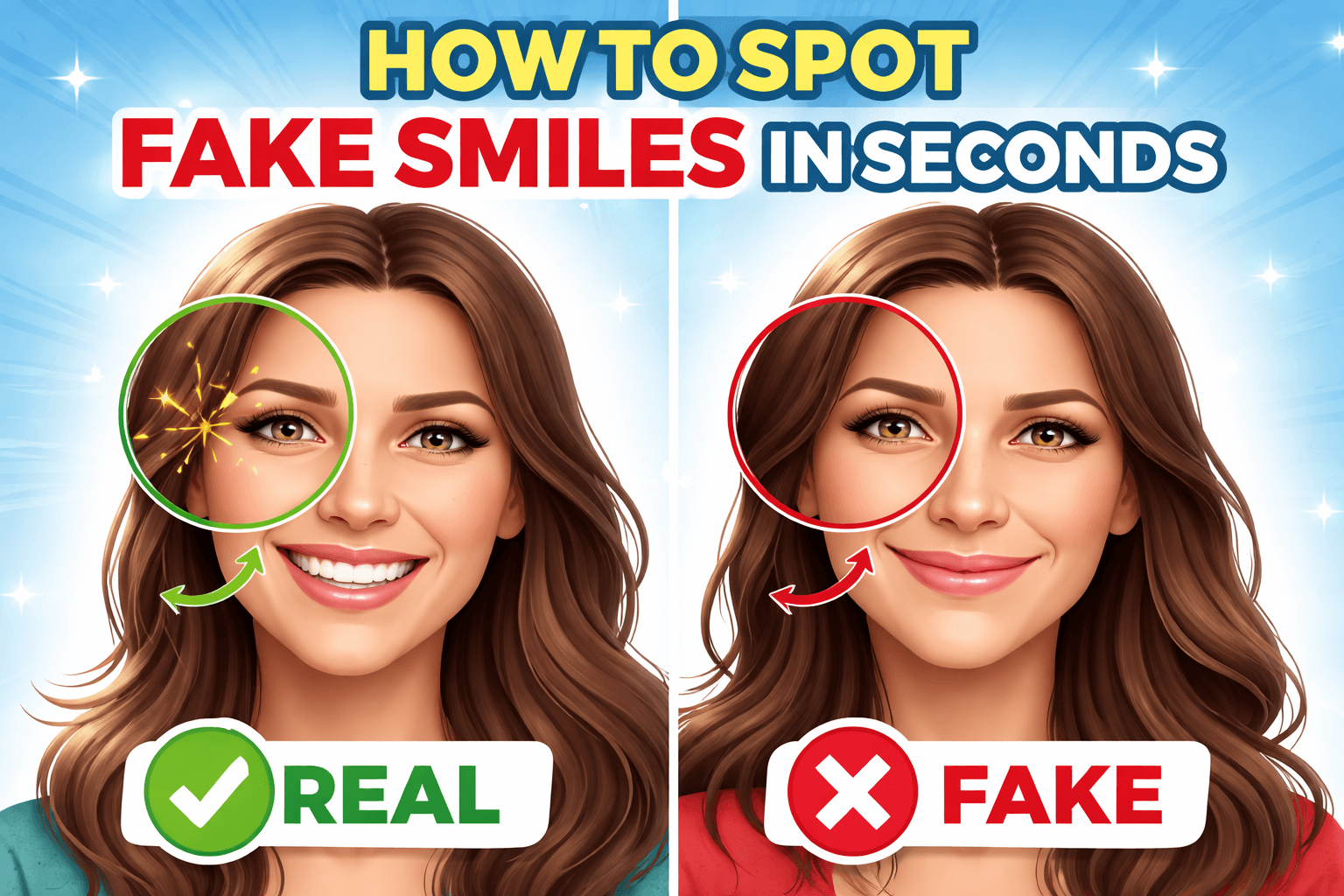
How to Spot Fake Smiles in Seconds… Did you know that studies suggest over 50% of smiles we encounter daily are insincere? In a world where social interactions are often masked by façades, the ability to discern a genuine smile from a counterfeit one is more crucial than ever. Whether in personal relationships, business negotiations, or social gatherings, detecting a fake smile can reveal hidden emotions and intentions. In this guide, we’ll equip you with essential techniques to identify those telltale signs of inauthenticity, allowing you to navigate interactions with confidence and clarity. Get ready to sharpen your perception and unveil the truth behind the smiles!
How to Spot Fake Smiles in SecondsSmiling is one of the most universal forms of communication, but not all smiles carry the same meaning. While a genuine smile can convey warmth and friendliness, a fake smile often masks true emotions. Learning to spot the difference can enhance your interpersonal skills and improve your social interactions. Here’s how to identify fake smiles in mere seconds!
The Anatomy of a SmileBefore diving into the specifics of spotting fake smiles, it’s essential to understand what constitutes a genuine smile. A real smile, also known as a Duchenne smile, involves more than just the mouth. Here are the key components:
In contrast, a fake smile usually lacks the eye involvement and may appear stiff or forced.
Key Differences Between Genuine and Fake Smiles| Feature | Genuine Smile | Fake Smile | |
| Eye Engagement | Crow’s feet, eyes sparkle | Flat, no eye movement | |
| Mouth Shape | Full and natural arc | Tight and often asymmetrical | |
| Facial Tension | Relaxed face, no tension | Tension in the face, may seem rigid | |
| Duration | Natural and fleeting | Oftentimes held for longer than normal | |
| Contextual Fit | Matches the situation | May feel out of place or inappropriate |
Now that you know the differences, let’s explore some specific signs that can help you identify a fake smile quickly:
Being able to spot a fake smile can enhance your communication skills and help you navigate social situations more effectively. Here are some tips to practice:
Understanding the nuances of smiles can significantly improve your social interactions and help you read between the lines of communication. By recognizing the signs of a fake smile, you can better understand the feelings of those around you and respond more appropriately. Remember, a genuine smile can light up a room, while a fake smile can leave you feeling just a bit more suspicious. Happy smiling!
In conclusion, recognizing a fake smile involves paying attention to key facial cues, particularly the eyes and the overall expression. Genuine smiles engage not just the mouth but also create a warm, authentic look in the eyes. By observing these subtle differences, you can quickly discern between a true and a false expression of happiness. Have you ever noticed someone’s smile didn’t quite match their eyes? Share your experiences in the comments!
Why Digital Detox Works: The Habit Loop Behind the Scroll
Most people don’t “choose” to spend hours on their phone in a single decision. Screen time usually grows through a predictable habit loop: a trigger (boredom, stress, uncertainty), a behavior (check the phone), and a reward (novelty, reassurance, social validation, or simply distraction). The more often the loop runs, the more automatic it becomes.
That’s why willpower alone tends to fail. The loop is fast, frictionless, and emotionally reinforcing. Notifications act like external triggers, while internal triggers-like mild anxiety or mental fatigue-are even more powerful because they follow you everywhere.
A successful detox is less about “being disciplined” and more about redesigning the loop: removing triggers, adding friction to the behavior, and replacing the reward with something offline that genuinely satisfies the same need.
Digital Detox Tips to Reduce Screen Time and Boost Health Without Going Extreme
A common mistake is aiming for a dramatic all-or-nothing detox. That approach can work for a weekend, but it often backfires because modern life is built on digital coordination. A better approach is building a system that makes healthy screen time the default.
Think of your phone like a kitchen. If junk food is on the counter, you’ll snack. If healthy food is prepped and visible, you’ll eat differently. Your device is the same: design determines behavior. The goal is to make the “healthy path” easier than the “scroll path.”
The Three-Level Detox Framework
To make this practical, it helps to structure detox habits in three levels. You can do all three, but even one level produces noticeable change.
Level 1: Friction (make mindless use harder)
This is where small tweaks like grayscale, hiding apps, or keeping the phone in another room shine. You’re not relying on motivation; you’re raising the effort required to scroll.
Level 2: Replacement (swap the reward)
If your phone is fulfilling boredom relief, stress relief, or connection, you need alternatives that actually work. Otherwise, you’ll “detox” and then relapse because the need is still there.
Level 3: Identity (become someone who uses tech deliberately)
This level is the long-term game: building a self-image around intentional use. Instead of “I’m trying to quit my phone,” it becomes “I’m someone who protects my attention.” That subtle shift reduces friction over time.
The Most Effective Levers (Ranked by Impact)
Not all detox tactics are equal. Some create a dramatic drop in screen time with minimal effort because they target the biggest drivers: notifications, infinite feeds, and late-night usage.
1) Kill the triggers: notification surgery
Most screen time starts with a ping. Turn off notifications for everything except true essentials (calls, messages from key people, time-sensitive work alerts). Then reduce badges on the home screen. If your phone is constantly “asking” for attention, you’ll give it attention.
For social apps, remove all push notifications. If you want to check them, you can still check them-on your terms.
2) Create “no-phone zones” that match your life
Rules like “never use your phone” fail. Rules like “no phone in bed,” “no phone at the table,” or “no phone in the bathroom” succeed because they are specific and tied to real routines. The bedroom rule alone often reduces late-night screen time and improves sleep quality because it eliminates the endless “one more scroll” loop.
3) Make checking expensive: distance and inconvenience
The simplest friction tool is physical distance. Put your phone in a drawer, on a shelf, or in another room during deep work. If you need it for emergencies, keep the ringer on but keep the device away from your hands. Even a 20-second walk can break autopilot and force conscious choice.
4) Convert “free time” into “planned time”
Unstructured moments are prime scrolling territory. Convert them into micro-plans: a short walk after lunch, five minutes of stretching, a book by the couch, a notepad by your desk. The goal is not to schedule your whole life-it’s to give your brain a default alternative when boredom hits.
Practical Routines That Actually Stick
Detox success comes from repeating a small set of habits until they become automatic. Below are routines that work because they target the highest-risk time windows: morning, transitions, and late night.
The 30-minute morning buffer
For the first 30 minutes after waking, avoid feeds, email, and notifications. Use that window for a basic sequence: water, light movement, and a quick plan for the day. If you open social apps first, you start the day in reactive mode-your brain becomes trained to seek stimulation before intention.
The “transition ritual” rule
People scroll most during transitions: waiting for food, finishing a task, walking to another room. Create a ritual that replaces the phone in these gaps: take three deep breaths, do a posture reset, or write one line in a notes app that’s strictly for planning (not social). The point is to prevent the phone from becoming your default transition tool.
The evening shutdown (two-step)
Step one: set a “digital sunset” time when the most addictive apps stop being available (using app blockers or Focus modes). Step two: swap the reward-music, a shower, light reading, or a screen-free hobby. If you only remove the phone, you create a vacuum, and vacuums get filled with relapse.
Counter-Strategies for the Hard Cases
Some screen time isn’t driven by boredom-it’s driven by stress, loneliness, or avoidance. That’s where “simple tips” fail unless you address the emotional driver.
If you scroll to reduce anxiety
Doomscrolling is a nervous system pattern: you search for certainty, but you end up more activated. Replace it with a predictable calming loop: short walk, breathing exercise, journaling, or a low-stimulation task like tidying. The key is consistency. Your brain needs to learn that anxiety can be reduced without novelty feeds.
If you scroll because you feel lonely
Social apps can simulate connection without delivering it. Build a “real connection” shortcut list: one person you can text, one person you can call, one place you can go (gym, café, walk). If the phone is filling a relationship gap, the fix is not just blocking apps-it’s building easier pathways to real interaction.
If you scroll to avoid a hard task
This is the procrastination loop. Use the smallest possible start: open the document, write one sentence, or work for five minutes. Then allow a deliberate break. Avoid endless breaks. The detox goal here is not zero phone use; it’s replacing avoidance with tiny progress.
How to Detox as a Teen or a Parent
Teen screen time is a different ecosystem because social life often lives on the device. The right goal is usually not “no phone,” but boundaries that protect sleep, school focus, and mental health.
For teens
- Protect sleep first: no phone in bed is the highest impact rule.
- Move social off the home screen: keep messaging accessible, but hide infinite feeds.
- Use time windows: social apps after homework, not during.
- Replace with identity-based activities: sports, art, music, volunteering-offline identity reduces online dependency.
For parents
Modeling matters more than lecturing. If family dinner includes adult phone use, rules won’t feel legitimate. Make screen-free zones a household norm. Also, frame detox as performance and well-being, not as moral failure. The conversation should be “We protect attention and sleep,” not “Phones are bad.”
How To Spot Fake Smiles In Seconds. Digital Detox at Work: Reduce Screen Time Without Losing Productivity
Many professionals can’t avoid screens, but they can avoid fragmented screen time. The health damage often comes from constant switching: email, chat, tabs, notifications, and endless micro-interruptions.
Batch communication
Check email and messaging at set times (for example, top of the hour or three times a day) rather than continuously. This reduces cognitive residue and improves deep focus.
Single-task screens
Use full-screen mode, close tabs, and keep one task open. Your brain pays a switching cost every time you hop between windows. Less switching usually means less fatigue-even if total screen hours stay similar.
Meeting hygiene
Turn off non-essential notifications during meetings and keep the phone face down or away. Many people experience “double stimulation” by half-listening while checking the phone, which increases stress and reduces retention.
Measuring Progress Without Obsessing
Tracking screen time helps, but it can become its own form of fixation. Use measurements as feedback, not as self-judgment.
- Choose one metric: total daily screen time, pickups, or time on your top distracting app.
- Set a weekly target: drop by 10-20% first, not 70% overnight.
- Track outcomes too: sleep quality, mood, focus, workouts, reading time. These are the rewards that make detox stick.
The real win is not a perfect number. It’s reclaiming time and reducing the “pulled around by the phone” feeling.
Digital Detox Timeline: What Changes After 24 Hours, 1 Week, and 3 Weeks
People often expect instant calm. In reality, there’s a timeline-because your brain adapts to lower stimulation.
After 24 hours
You may feel restless, reach for the phone automatically, and experience “phantom checking.” This is normal: you’re breaking a learned loop. Many people also notice improved presence in conversations and more time awareness.
After 1 week
Urges become less sharp. Sleep often improves if night use drops. You start discovering “dead time” you didn’t realize existed-small windows that now feel usable.
After 3 weeks
New defaults start forming. Focus improves because attention switching drops. The phone becomes a tool again, not a reflex. This is often the point where people feel the mental-health benefits most clearly-because the nervous system stops being constantly stimulated.
FAQ
Do I need a full weekend offline for a digital detox to work?
No. Short daily boundaries often work better than rare extreme breaks. A consistent “no phone in bed” rule can outperform a single dramatic detox weekend.
What’s the fastest way to reduce screen time without feeling deprived?
Turn off non-essential notifications, move addictive apps off your home screen, and create one screen-free zone (bedroom or dining table). These changes reduce triggers without requiring constant willpower.
Why do I reach for my phone even when I don’t want to?
It’s a habit loop triggered by boredom, stress, or transitions. Your brain expects a quick reward (novelty or reassurance). Adding friction and building offline replacements breaks the loop.
Are app blockers worth using?
Yes, especially when paired with a replacement activity. Blockers reduce impulse access, but you still need a plan for what you’ll do instead during the times you usually scroll.
How can I cut down screen time if my work requires screens all day?
Focus on reducing fragmented screen time: batch email and chat, use full-screen single-task workflows, and eliminate unnecessary notifications. This lowers stress and fatigue even if total screen hours remain high.
What should I do if digital detox makes me anxious?
That often means the phone was regulating stress. Replace scrolling with a reliable calming routine-walking, breathing, journaling, or light chores-so your nervous system learns a new way to downshift.
How do I stay consistent after the first few days?
Make it environmental: phone out of reach during focus time, charging station outside the bedroom, and fixed windows for social apps. Consistency comes from design, not constant self-control.
Is it better to reduce screen time or just change what I do on screens?
Both matter. Reducing late-night and compulsive checking improves health the most, while improving screen content (educational, purposeful, social connection) reduces the negative impact of necessary screen use.