

Limerence vs Love: 10 Crucial Differences You Need to Know
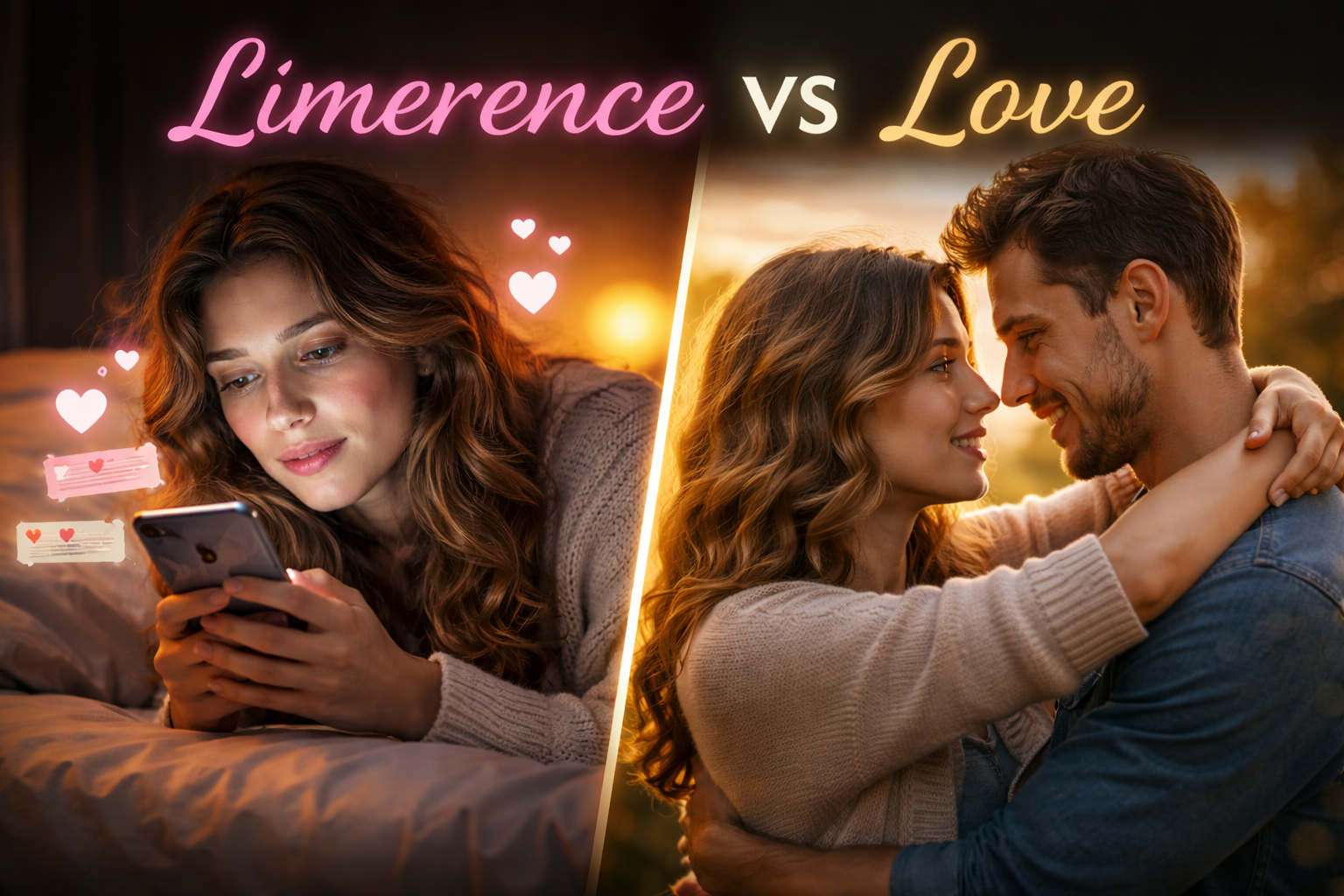
Limerence vs Love… Have you ever found yourself caught in a whirlwind of emotions, where the mere thought of someone sends your heart racing and your mind spiraling? Picture this: you’re scrolling through your phone, and you see their name pop up. Suddenly, your stomach flips, and a rush of excitement floods your senses. But as the days turn into weeks, you can’t help but wonder-am I in love, or is this just an infatuation that borders on obsession?
The line between limerence and love can often feel blurred, leaving you questioning the nature of your feelings. Is it that intoxicating craving for connection, or the comforting warmth of a secure attachment? Join us as we unravel the intriguing dynamics of these two emotional experiences, helping you understand the difference and perhaps, discover what you truly seek in your relationships.
Limerence vs. Love: Obsessive Craving vs. Secure Attachment
The Evolutionary or Psychological Reason Behind It
Limerence and love stem from distinct psychological and evolutionary backgrounds. Limerence is often characterized as an intense, overwhelming infatuation, which can lead to obsessive thoughts and behavior. This phenomenon is believed to have evolved as a mechanism to promote mating and reproductive success. The rush of dopamine associated with limerence can create an exhilarating feeling that mimics the effects of addiction.
On the other hand, love, particularly secure attachment, develops over time through mutual trust, respect, and emotional support. Psychologists suggest that secure attachment arises from a stable and healthy relationship environment, allowing individuals to feel safe and valued. This attachment style fosters long-term bonds and emotional stability, contrasting sharply with the fleeting nature of limerent feelings.
Real-Life Examples or Famous Case Studies
Many famous personalities have experienced the dichotomy between limerence and love. One notable case is that of John Keats, the Romantic poet, who had a profound but tumultuous infatuation with Fanny Brawne. Their relationship exemplified the intense emotional highs and lows associated with limerence, highlighting the differences between temporary obsession and lasting love.
In contrast, the enduring love story of Barack and Michelle Obama showcases secure attachment. Their relationship, built on mutual respect and deep understanding, has been characterized by stability and partnership, illustrating how secure attachment can foster resilience in relationships.
5 Actionable Coping Mechanisms or Takeaways
- Self-awareness: Recognize the signs of limerence versus love. Are your feelings based on obsession or genuine connection?
- Focus on emotional regulation: Practice mindfulness and stress management techniques to help control obsessive thoughts.
- Establish boundaries: Set personal boundaries to safeguard your emotional well-being and avoid unhealthy attachments.
- Seek support: Engage in open conversations with friends or a therapist to gain perspective on your feelings.
- Invest in self-care: Prioritize activities that promote self-love and personal growth, helping you build a secure sense of self.
Did You Know? Research suggests that limerence can last anywhere from a few months to a few years, but it often fades as individuals move toward more secure attachment styles.
Conclusion
The key distinction between limerence and love lies in the shift from an obsessive craving for connection to a secure and nurturing attachment that fosters mutual growth and understanding.
Have you ever experienced the intense emotions of limerence, and how did it compare to the deeper fulfillment of secure love?
Limerence vs Love
At first, limerence and love can feel almost impossible to separate because both can involve longing, excitement, tenderness, and a strong desire for closeness. Both can fill your thoughts. Both can make a person feel emotionally alive. Both can bring hope, anticipation, and a sense that something deeply meaningful is happening. That is why so many people mistake one for the other, especially in the early stages of intense attraction. But over time, the difference becomes clearer. Limerence tends to revolve around uncertainty, fantasy, and emotional dependency. Love tends to grow through reality, reciprocity, and steadiness.
One of the simplest ways to understand the difference is this: limerence is usually driven by craving, while love is strengthened by trust. Limerence asks, “Do they want me back? What does this mean? Why did they not text?” Love asks, “How can we care for each other well? Are we safe, honest, and growing together?” In limerence, the other person often becomes a source of emotional survival. In love, the other person becomes a partner in a shared emotional life. That distinction changes everything.
What Limerence Usually Feels Like
Limerence often begins with an emotional intensity that feels electrifying. The person becomes mentally central. You replay interactions, search for hidden meaning, and feel powerful emotional highs from small signs of interest. A text message can feel euphoric. A delay in response can feel devastating. You may imagine future scenarios in great detail, assign deep significance to brief moments, and become preoccupied with whether the other person feels the same. The emotional system becomes highly reactive, almost as though your well-being depends on their attention.
This is part of why limerence can feel addictive. It often involves intermittent reward. Sometimes you receive warmth, hope, attention, or ambiguity that keeps the fantasy alive. Other times you feel distance, uncertainty, or silence. That unpredictability can strengthen the obsession instead of weakening it. The mind begins chasing reassurance the way it chases relief. The result is not peaceful connection but an ongoing state of emotional suspense.
What Love Usually Feels Like
Love can be passionate, exciting, and deeply emotional too, but it usually becomes more grounding rather than more destabilizing over time. Real love does not remove uncertainty from life entirely, but it tends to reduce relational chaos rather than intensify it. When love is secure, the relationship becomes a place of emotional rest as well as emotional depth. You may still miss the person, desire them, and think about them often, but your sense of self does not collapse every time their attention shifts.
Healthy love makes room for reality. You see the other person as a full human being, not as a symbolic answer to all your unmet needs. Their imperfections become visible. Their boundaries matter. Your own needs matter too. Love includes care, desire, patience, effort, and vulnerability, but it is less likely to feel like emotional freefall. It tends to build steadiness instead of dependence on uncertainty.
The Role of Fantasy in Limerence
Limerence often thrives on what is imagined rather than what is actually shared. The person may become emotionally huge in your mind even if the real relationship is limited, inconsistent, or barely formed. You might build entire emotional worlds around a few moments of eye contact, a brief period of intense messaging, or one unusually vulnerable conversation. The internal story grows quickly. The real person may not even know the scale of the role they have come to occupy in your inner life.
This does not mean the feelings are fake. The emotions are very real. But the emotional intensity is often attached not only to the person, but to what they represent. They may symbolize rescue, belonging, validation, healing, excitement, or proof that you are finally lovable. Once someone begins carrying those meanings, the attachment can become much more about your emotional projection than about mutual relationship. Love can involve idealization at first too, but love deepens by tolerating reality. Limerence often resists reality because reality threatens the fantasy structure that keeps the obsession alive.
The Role of Reality in Love
Love becomes more substantial when it survives real life. It is tested by time, routine, boundaries, conflict, disappointment, and ordinary days. It is easy to feel intoxicated by someone at a distance. It is harder to build something honest with them over time. Love is willing to be shaped by that harder process. It includes attraction and desire, but it also includes listening, repair, patience, and the ability to keep seeing the other person clearly even when the initial intensity settles.
In real love, the relationship becomes more than a source of emotional stimulation. It becomes a living bond that requires reciprocity. You are not just hungry for contact. You are building trust. You are learning how to hold each other’s needs, limits, vulnerabilities, and growth. Love can still feel intense, but the intensity becomes less about panic and more about presence.
How Uncertainty Feeds Limerence
Uncertainty is one of the main fuels of limerence. When a person is unavailable, inconsistent, ambiguous, emotionally unpredictable, or difficult to fully access, the mind can become even more fixated. This is why limerence often develops around crushes, unavailable partners, emotionally distant people, ex-partners, or situations where full mutual commitment never quite arrives. The uncertainty creates a constant mental loop. You keep trying to decode the relationship because it never settles into something secure enough to rest inside.
This can be especially powerful for people with anxious attachment patterns or histories of inconsistent care. The longing becomes familiar. The waiting becomes emotionally charged. The hope-and-disappointment cycle starts to feel like proof of deep feeling, when in reality it may be reinforcing an unstable bond. Love does not require constant ambiguity to stay alive. In fact, love usually becomes stronger when clarity increases.
How Security Changes the Emotional Experience
Secure love does not eliminate longing or attraction, but it changes their emotional texture. Instead of living in constant suspense, you begin to feel safer. You know where you stand more often. Communication feels less like decoding a puzzle and more like building understanding. Conflict still happens, but it is not always interpreted as total emotional disaster. The relationship begins to regulate rather than dysregulate your nervous system.
This is one reason people sometimes confuse secure love with a lack of chemistry. If someone is used to limerence, stability may initially feel less intoxicating. It may even feel boring or emotionally muted compared with the highs and lows of obsession. But over time, many people discover that security allows a deeper form of intimacy. When the mind is not constantly fighting for reassurance, there is more room for tenderness, friendship, sexual depth, honesty, and mutual care.
How Your Body Responds in Limerence
Limerence often has a strong physiological component. The body becomes highly reactive to the person’s presence, attention, or absence. You may feel adrenaline surges when they text, nausea when they seem distant, sleeplessness after interactions, restlessness when waiting, and obsessive energy when trying to understand what they feel. Your emotional life begins to orbit around cues from them. Small changes in contact can create disproportionate physical reactions because your nervous system has started treating the connection as highly important and unstable.
That bodily intensity can be mistaken for proof of true love. People often say, “I have never felt this strongly before, so it must be real love.” But intensity alone does not prove health or compatibility. Sometimes intensity is the nervous system reacting to uncertainty, longing, and unmet attachment needs. Love can absolutely affect the body, but secure love usually becomes less physically destabilizing over time rather than more.
How Your Body Responds in Love
Love often feels safer in the body. There may still be desire, excitement, and emotional depth, but the relationship does not constantly trigger panic and relief cycles. You are more able to rest, eat, sleep, think about other things, and function in the rest of your life. The person matters deeply, but your body does not stay trapped in constant alarm around whether the bond will disappear. This difference is subtle but important. Love supports regulation. Limerence often disrupts it.
Of course, early love can still involve butterflies and nervousness, especially when the relationship is new. But if time passes and the dominant state remains obsession, insecurity, emotional withdrawal from the rest of life, and constant fear of losing access, that is a sign you may be dealing more with limerence than with mature love.
Does Limerence Ever Become Love?
Sometimes it can, but not automatically. A limerent beginning does not doom a relationship, and many real relationships start with intense attraction. The question is whether the bond matures. Does fantasy give way to reality? Does mutual trust develop? Do both people show up consistently? Does the connection become more balanced, grounded, and reciprocal over time? If so, what began as limerence may gradually soften into genuine love.
But if the relationship stays fueled by distance, mixed signals, emotional deprivation, and obsessive hope, then limerence may continue without becoming love at all. The passage of time alone does not transform obsession into secure attachment. There has to be a shift in how the relationship functions and in how each person engages with reality.
Common Signs You May Be in Limerence
There are several signs that point more strongly toward limerence than love. You may spend hours analyzing messages, fantasizing about future scenarios, checking for signs of interest, or feeling emotionally shattered by small shifts in attention. You may feel more attached to the possibility of the relationship than to the actual relationship you have. You may ignore incompatibilities because the fantasy matters more than the fit. You may feel euphoric when noticed and devastated when ignored. You may also struggle to focus on other parts of life because the emotional fixation takes up so much space.
Another clue is that your self-worth may begin rising and falling based on how desired you feel by the person. In that state, the bond stops being only about connection and starts becoming a way of regulating identity and value. That is heavy pressure for any relationship to carry.
Common Signs You May Be in Love
Love usually includes desire and emotional investment, but it also includes respect for the other person’s reality. You are interested in who they actually are, not only in what they make you feel. You care about their well-being, not just their availability. You can tolerate their imperfections without collapsing into idealization or disillusionment. The relationship supports more honesty over time, not less. You feel more yourself around them, not more fragmented.
Love also tends to expand life rather than shrink it. It may become an important part of your world, but it does not require abandoning your identity, values, friendships, or emotional balance. In secure love, connection feels meaningful and precious, but not constantly like an emergency.
Attachment Styles and Why They Matter
Attachment style plays a big role in how limerence and love are experienced. People with anxious attachment may be especially vulnerable to limerence because they are highly sensitive to emotional inconsistency and may equate longing with love. They often feel most activated when connection is unstable, so limerent dynamics can feel strangely familiar. People with avoidant attachment may also experience limerence, especially at a distance, because fantasy can feel safer than real vulnerability. Obsessing over an unavailable person may be easier than building a mutual relationship that requires emotional openness.
Secure attachment does not mean never feeling infatuated or vulnerable. It means having a stronger ability to stay grounded, reality-based, and emotionally responsive without becoming consumed by uncertainty. When people become more secure, they often stop mistaking emotional chaos for deep love.
Why Limerence Can Be So Hard to Let Go Of
Limerence is difficult to release because it often gives the mind several things at once: hope, stimulation, fantasy, meaning, and escape from emptiness. The person becomes a private emotional universe. Letting go can feel like losing not only them, but the imagined future, the emotional highs, and the version of yourself that existed in relation to them. That is why people often return mentally to limerent attachments long after they know the situation is not healthy.
The attachment may also persist because it is feeding unresolved needs. If the person symbolizes approval, rescue, or worth, then letting go can force a painful confrontation with deeper emotional hunger. Healing usually involves seeing those needs clearly rather than continuing to outsource them to an unstable attachment.
Five Practical Ways to Tell the Difference
1. Look at the emotional pattern. If the bond is dominated by uncertainty, obsession, fear of losing access, and constant mental preoccupation, limerence is more likely. If it is becoming steadier, more mutual, and more reality-based, love is more likely.
2. Ask whether you know the real person. Are you relating to who they actually are, or to what they symbolize in your inner life?
3. Notice your body state. Are you mostly regulated, safe, and grounded with them, or are you cycling through euphoria and distress?
4. Check reciprocity. Is the relationship mutual, consistent, and supported by both people, or are you living mostly on hope and interpretation?
5. Observe whether your life expands or narrows. Love tends to support fuller living. Limerence often makes the rest of life feel dimmer and less important.
How to Move From Obsession Toward Healthier Love
If you recognize limerence in yourself, the goal is not to shame the feeling. The longing is real. The ache is real. The attachment often formed for understandable reasons. But you can start loosening its grip by shifting attention from the fantasy bond to your actual emotional needs. That may mean reducing contact, stopping repetitive checking behaviors, challenging idealization, and noticing how much of the connection lives in imagination rather than mutual reality.
It also helps to strengthen your life outside the attachment. Reconnect with routines, friendships, body care, creativity, therapy, rest, and self-respect. The less emotionally starved you are, the less likely you are to confuse intermittent attention with deep love. Secure love becomes easier to recognize when your nervous system no longer treats uncertainty as romance.
Why Secure Love Can Feel Unfamiliar at First
People who are used to limerence sometimes do not trust secure love immediately. A relationship that is calm, mutual, and available may feel less dramatic and therefore less compelling at first. The nervous system may miss the chase. It may miss the suspense. It may even interpret steadiness as lack of passion. But often that reaction says more about conditioning than compatibility. If your heart learned to equate longing with value, peace can feel strange before it feels good.
Given time, many people discover that security creates its own depth. There is space to breathe. Space to be known. Space to be imperfect. Space to grow attached without constantly fearing collapse. That may not feel like an emotional storm, but it often becomes something far more nourishing.
A More Honest Way to Define Love
Love is not the absence of intensity, but it is usually the presence of reality. It includes desire, tenderness, effort, and emotional importance, yet it does not require obsession to prove depth. It can survive ordinary life. It can hold imperfection. It allows two people to remain full human beings rather than turning one person into a source of constant emotional rescue. Love is not just how strongly you ache. It is how honestly, safely, and mutually you can connect.
Limerence can feel magical, devastating, thrilling, and unforgettable. But love is often quieter and stronger. It does not depend on guessing games to stay alive. It does not ask you to disappear into craving. It asks for presence, courage, honesty, and care. Once you feel the difference, it becomes much easier to understand what your heart is actually seeking.
When to Get Support
If you feel trapped in obsessive craving, cannot stop thinking about the person, or notice that the attachment is harming your mood, functioning, or self-worth, talking to a therapist can help. This is especially true if the dynamic repeats across relationships. Support can help you understand the attachment wound, emotional hunger, or self-worth struggle beneath the limerence so that you can move toward relationships that feel more secure and reciprocal. You do not have to wait until the obsession falls apart on its own. Understanding the pattern is often the first real step toward love that feels steadier, safer, and more honest.