

Nazca Lines: 11 Mind-Blowing Theories About Who Made Them
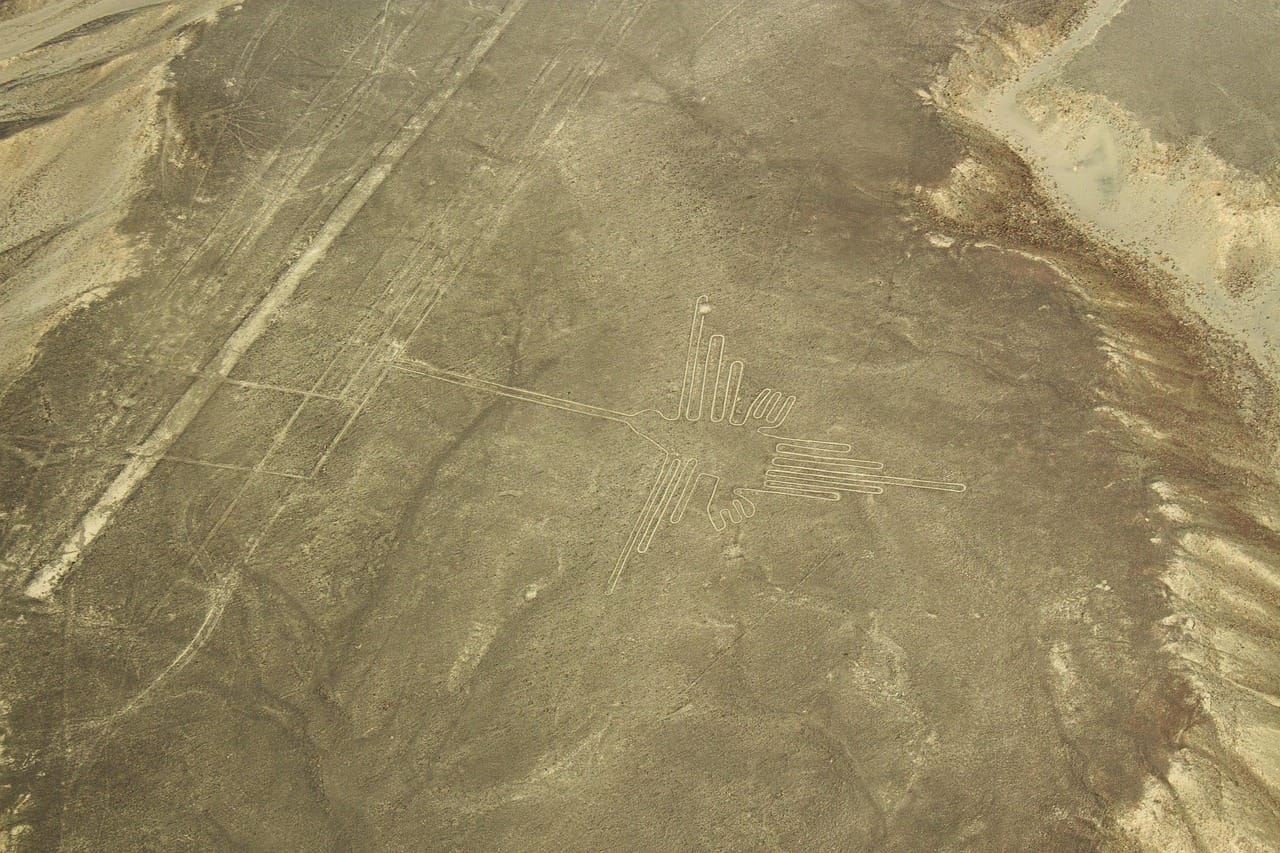
Did you know that ancient artists etched colossal geoglyphs into the arid Peruvian desert, visible only from the sky? The Nazca Lines, a series of intricate designs carved into the earth, have puzzled historians and archaeologists for decades. Who were the creators of these enigmatic figures-spanning from simple shapes to massive animals-and what purpose did they serve? As we delve into the mystery of the Nazca Lines, we uncover a world where art, astronomy, and ancient cultures intertwine, challenging our understanding of human ingenuity. Join us on a journey to unravel one of history’s greatest enigmas.
The Mystery of the Nazca Lines and Who Made ThemThe Nazca Lines, an astonishing collection of geoglyphs etched into the arid plains of southern Peru, have puzzled historians, archaeologists, and travelers for centuries. Spanning an area of nearly 1,000 square kilometers, these massive designs depict various shapes, including animals, plants, and geometric figures. But who created them and why? Let’s dive deeper into this fascinating enigma.
What Are the Nazca Lines?The Nazca Lines are a series of large ancient geoglyphs located in the Nazca Desert, about 250 miles south of Lima, Peru. They were first discovered in the 1920s by pilots flying over the region. Here are some key facts about the Nazca Lines:
Several theories surround the identity of the creators of the Nazca Lines, primarily attributing them to the Nazca civilization. Here’s a closer look at the proposed creators and their motivations:
| Theory | Description | |
| Nazca Culture | The most widely accepted theory is that the Nazca people, an ancient civilization that thrived in the region, created these lines as part of their religious practices. | |
| Astronauts | Some fringe theories suggest that extraterrestrial beings (aliens) created the lines as landing strips or markers. | |
| Geological Activity | Another theory posits that the lines were naturally formed by geological processes, although this is less widely accepted. | |
| Ritual Paths | Some believe the lines served as ritual pathways, leading to religious sites, with the designs acting as guides for ceremonial processions. |
Understanding why the Nazca Lines were created is as perplexing as their origins. Various theories attempt to explain their purpose:
In recent years, technological advancements have led to new discoveries regarding the Nazca Lines. Satellite imagery and drone technology have allowed researchers to uncover previously unseen geoglyphs, revealing the extent of this ancient art form. The following points highlight ongoing efforts to study and preserve these fascinating structures:
The Nazca Lines continue to captivate the imagination of people around the world. While the exact reasons behind their creation remain shrouded in mystery, the combination of art, spirituality, and the ingenuity of the Nazca civilization is undeniably impressive. As researchers continue to explore this ancient wonder, we can only hope to unravel more secrets of the Nazca Lines while ensuring their preservation for future generations to marvel at. Who knows what else lies hidden in the sands of time?
In conclusion, the Nazca Lines remain one of the most intriguing archaeological enigmas of our time, captivating researchers and enthusiasts alike with their massive geoglyphs etched into the Peruvian desert. While theories abound regarding their purpose-ranging from astronomical calendars to religious rituals-the true origins and meanings behind these ancient creations continue to spark debate. Who were the ingenious minds that crafted these monumental designs, and what messages did they intend to convey to future generations? We invite you to share your thoughts and theories in the comments below!
How the Nazca Lines Were Made Without Flight
The most persistent misconception is that the Nazca Lines require aerial viewing to create, as if the artists needed to see the whole design from the sky in order to draw it accurately. But large-scale ground art can be built with surprisingly simple tools: stakes, ropes, measuring steps, and a plan that scales up from smaller reference points. The Nazca did not need airplanes. They needed patience, organization, and a method.
One plausible technique is grid scaling. A small design can be sketched on cloth, pottery, or wood, then expanded onto the ground by dividing it into squares and reproducing each square at a larger scale. Another technique is anchor-point geometry: fixed stakes define key corners, curves are created with rope as a compass, and straight lines are pulled taut for long distances. When the surface layer of dark stones is moved aside, the lighter soil beneath creates strong contrast-an effect that can remain visible for centuries in an arid environment.
This matters because it reframes the mystery. The question isn’t “How could they do this?” The question becomes “Why was it worth doing on this scale?”
What the Desert Preserved and What It Didn’t
The Nazca Desert is an unusually forgiving archive. In many climates, wind, rain, and vegetation erase surface markings quickly. Here, low rainfall and stable conditions helped preserve the lines. But preservation is also selective. The desert can keep a line visible while erasing the human context around it-temporary structures, wooden markers, textiles, and perishable offerings.
That selective preservation is why the Nazca Lines feel eerie. You can see the designs, but you can’t easily see the people making them. Archaeology must reconstruct intention indirectly: through nearby settlements, pottery iconography, water infrastructure, and ritual sites connected to the landscape. The lines are the visible outcome, not the full system that gave them meaning.
Nazca Lines and the Water Question
In an extremely dry region, water is not just a resource-it’s a spiritual obsession. One of the strongest interpretive frameworks treats the Nazca Lines as part of a ritual landscape tied to water, fertility, and survival. If a community believes water is governed by powerful forces-mountains, deities, ancestors-then ritual becomes a technology for negotiating with those forces.
Under this view, the geoglyphs are not “art for viewing” so much as “marks for doing.” They may have functioned as routes for processions, spaces for ceremonies, or offerings etched into the earth itself. Large shapes could be symbolic petitions: animals associated with fertility, transformation, or the movement between worlds. Straight lines could guide ritual movement across the desert, turning walking into a performative act that activates the landscape.
This framework also explains why visibility from the air is not required. The participants didn’t need an aerial vantage. They needed a sacred stage on the ground.
Ritual Pathways: The Lines as Choreography
The “ritual path” theory becomes more convincing when you consider how many lines are straight and how many connect or converge. Straight lines are excellent for processional movement. They create directed space: you enter, walk, turn, return. In many ritual traditions worldwide, walking a prescribed route is not a convenience-it is the ritual. The body becomes a clock, a prayer, a social bond.
Some geoglyphs also include long corridors or trapezoids that feel less like images and more like built spaces. These could have served as gathering areas, performance zones, or controlled routes where a community’s collective movement became visible at ground level-even if the full design was only aesthetically grasped from above.
In that sense, the Nazca Lines might be closer to architecture than illustration: an environment designed to produce repeated ceremonial behavior.
Astronomy: What Alignments Can and Can’t Prove
Claims that the Nazca Lines are an astronomical observatory often focus on alignments: lines pointing toward solstice sunrise, lunar positions, or notable stars. The challenge is statistical. With a vast number of lines pointing in many directions, some will align with something by chance. The question is whether the alignments cluster in meaningful ways that exceed coincidence and connect clearly to Nazca cultural practice.
A stronger version of the astronomy argument doesn’t say “every line is a star map.” It says that timekeeping mattered for agriculture and ritual, and some lines may have been placed to mark seasonal changes or to coordinate ceremonies with celestial events. That is plausible without turning the entire site into a literal calendar.
The safest approach is hybrid interpretation: celestial observation may have influenced certain orientations, while water rituals and processions provided the primary social function.
Who Made Them: Labor, Organization, and Social Meaning
Attributing the Nazca Lines to the Nazca culture is the mainstream position, but that label hides complexity. “Nazca” is not a single person or even a single town; it’s a network of communities that shared styles, rituals, and regional identity. Large-scale geoglyph production implies organized labor, planning, and leadership-whether religious specialists, local elites, or communal councils.
The lines may also represent repeated creation across generations rather than a one-time project. A landscape can accumulate sacred markings the way a city accumulates monuments. Some designs could be earlier, some later, and their meanings could shift over time while the practice remains continuous.
That long-term accumulation model helps explain diversity: animals, plants, abstract geometry, and massive straight lines can coexist if they emerged under different social needs-petitioning for water in one era, demonstrating communal unity in another, marking ritual routes as populations moved.
Competing Theories and Why “Aliens” Persists
The extraterrestrial theory survives because it offers a clean, dramatic answer: only non-human intelligence could create something visible from the sky. But the premise is unnecessary. Large land art can be engineered from the ground, and the Nazca had the social capacity and time to do it. The alien story is less about evidence and more about modern psychology: we struggle to respect ancient ingenuity unless it comes with a spectacular technological narrative.
More plausible “competing” theories are not alien versus human. They are function-based: water ritual landscape, processional routes, territorial markers, social integration symbols, and partial astronomical orientation. These can overlap. A sacred landscape can be used for multiple purposes depending on season, political stability, and ritual needs.
New Discoveries and What They Change
Modern imaging has revealed additional geoglyphs beyond the most famous figures, expanding the sense that the desert was an active cultural canvas. Each new find adds nuance: more variety in imagery, more evidence of different design traditions, and more reason to think of the Nazca Lines as a distributed system rather than a single “message.”
New discoveries also shift the conversation toward preservation. The lines are vulnerable to vehicle tracks, unmanaged tourism, and development pressures. The greatest danger is not that we won’t solve the mystery, but that we’ll damage the evidence faster than we can study it.
Practical Takeaways: How to Think About the Nazca Lines Like a Researcher
- Start with method: Ask how ground-based surveying and scaling makes the designs feasible without flight.
- Prioritize environment: In an arid region, water anxiety can shape religion, art, and public behavior.
- Assume multiple phases: Long-lived traditions produce layered meanings and diverse styles.
- Be cautious with alignments: Alignment claims need statistical strength and cultural corroboration.
- Separate spectacle from function: “Visible from the sky” is a modern perspective; ritual participants lived on the ground.
The more you treat the lines as a living landscape practice, the less they look like a puzzle and the more they look like a civilization speaking in the only medium that could last.
Nazca Lines as a Blueprint for Human Imagination Under Pressure
The Nazca Lines are often framed as an intellectual riddle, but they may be best understood as a survival response made beautiful. In harsh environments, societies develop elaborate symbolic systems to manage uncertainty. Rituals coordinate cooperation. Shared sacred projects create unity. Public art anchors identity to place, turning the landscape into a memory device and a social contract.
Seen this way, the Nazca Lines are not irrational. They are communal engineering-engineering of meaning, commitment, and hope. The desert becomes a public text, written in lines that outlast any spoken prayer.
And that is why the mystery endures. Not because the Nazca were unknowable, but because they were intensely human: turning necessity into symbolism, and symbolism into something large enough for time to notice.
FAQ
How could the Nazca Lines be made without being seen from the air?
Using ground-based surveying methods like stakes and ropes, plus scaling techniques such as grids or anchor-point geometry, large designs can be constructed accurately without aerial viewing.
Are the Nazca Lines definitely made by the Nazca people?
The strongest consensus attributes them primarily to Nazca culture, though the landscape may include contributions across different communities and periods within the broader regional tradition.
Were the lines meant to be seen by gods in the sky?
It’s possible that visibility had symbolic meaning, but many interpretations focus on ground-level function-ritual walking routes and ceremonial spaces-rather than aerial spectatorship.
Do the Nazca Lines form an astronomical calendar?
Some lines may align with celestial events, but because there are so many lines, some alignments can occur by chance. Strong claims require patterns that exceed coincidence and match cultural evidence.
Why are there so many animal figures?
Animals often carry ritual and symbolic meaning related to fertility, water, transformation, and the relationship between humans and the natural world, especially in challenging environments.
How have new technologies changed what we know?
High-resolution imaging and aerial mapping have revealed additional geoglyphs and improved site models, supporting the idea of a complex, multi-phase landscape tradition.
What threatens the Nazca Lines today?
Vehicle damage, unmanaged tourism, development pressures, and erosion of protective policies can harm the fragile surface markings.
What is the most plausible purpose overall?
Many researchers favor a combination of ritual landscape use-processions and ceremonies-often tied to water concerns, with possible secondary astronomical and social functions.
Even now, the Nazca Lines resist a single explanation because they were likely used repeatedly, by different groups, for different needs. That layered purpose-ritual, social cohesion, and environmental negotiation-may be the real message the desert was meant to preserve.