

Non-Toxic Air Fryer: 11 Safe Picks and Buying Checklist
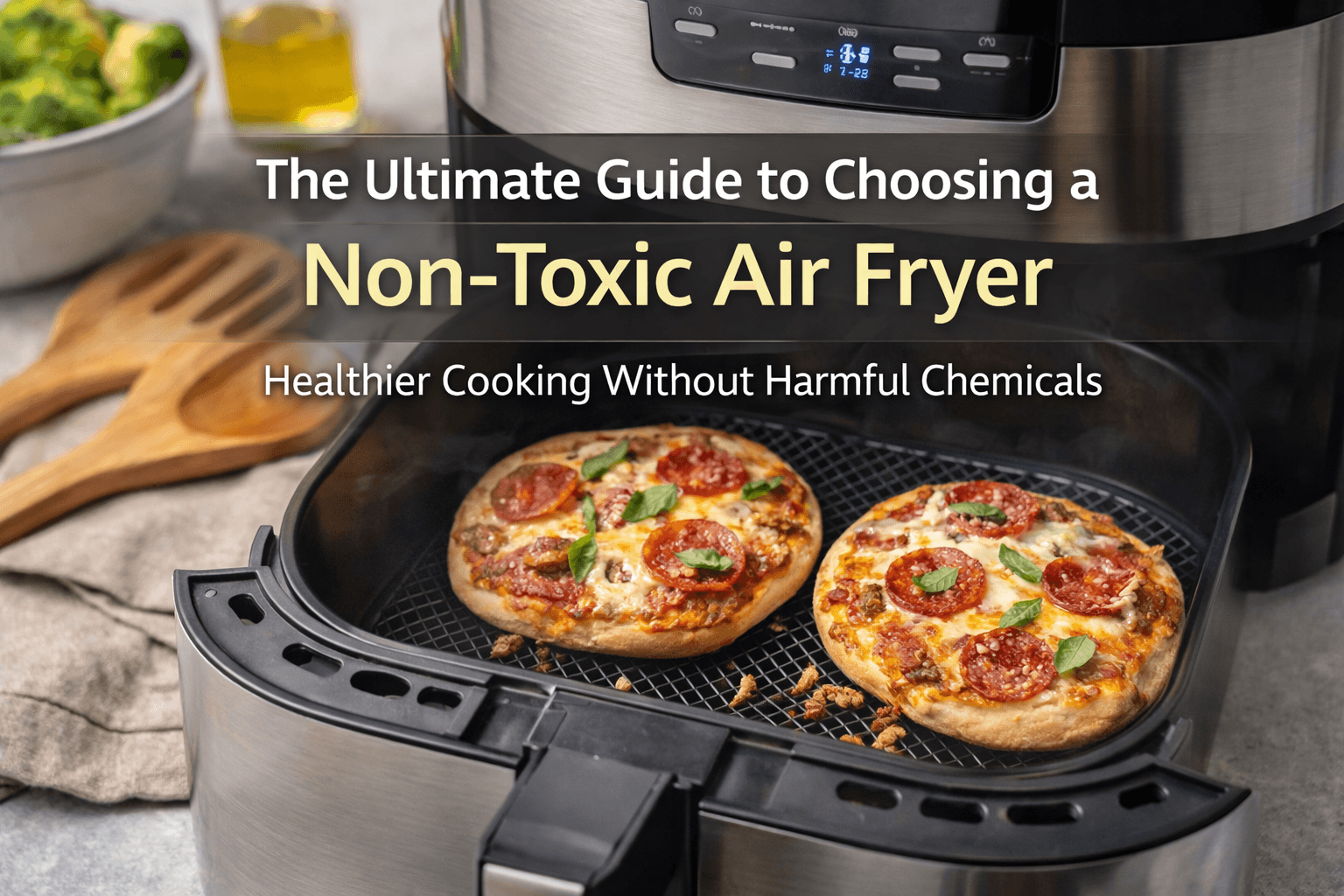
Non-Toxic Air Fryer… For many home cooks, the air fryer has become a kitchen superhero
Choosing the wrong model could mean exposing your food (and family) to toxic substances like PFAS “forever chemicals,” BPA, phthalates, and more. Fortunately, truly non-toxic air fryers are available, and with the right tips, you can pick one that delivers guilt-free cooking.
Air fryers work by rapidly circulating hot air, creating that crispy finish without immersing food in oil. This efficiency can save energy compared to heating up a full oven. For example, a small air fryer heats up in minutes and can roast or bake without preheating a huge stove. This means less electricity use and faster meal prep, making it greener and cheaper to operate. Of course, this efficiency only matters if the appliance itself is safe. By understanding the materials inside and following a few simple guidelines, you can enjoy the convenience of an air fryer without worrying about harmful chemicals leaching into your meals.
What Are the Risks in Conventional Air Fryers? Many popular air fryers on the market today use PTFE (a common “Teflon” non-stick coating) on their baskets and trays. PTFE is technically PFOA-free nowadays (PFOA being the old toxic chemical phased out years ago), but PTFE itself belongs to the PFAS family
Fortunately, cooking enthusiasts and health experts have sounded the alarm about these issues. To choose a non-toxic air fryer, you should avoid these harmful substances altogether. Here’s a quick rundown of what to watch for:
- PFAS/PFOA (Perfluorinated substances): Often used in non-stick coatings (even if they’re labeled “PFOA-free”), these chemicals are very persistent in the environment. Look for baskets and pans labeled explicitly PFAS-free or choose models without Teflon at all.
- PTFE (Teflon): A brand name for a type of PFAS-based coating. Avoid any appliance coated with Teflon or similar PTFE materials.
- BPA (Bisphenol A): Common in hard plastics and resins. Many small appliances use BPA-containing plastic handles or lids. BPA can leach into food, especially with heat. Look for BPA-free certifications or minimize plastic parts altogether.
- Phthalates: These are chemicals added to plastics to make them flexible. They’ve largely been replaced in many products, but they can still be hidden in coatings or components. Steer clear of any cookware that lists “phthalates” or “plasticizers.”
- Dubious ceramic coatings: Some brands avoid PFAS by using ceramic non-stick. But be cautious: ceramic coatings aren’t always transparent. They may contain undisclosed nanoparticles or wear down (scratching can reveal aluminum underneath). If you choose ceramic-coated cookware, make sure the base metal is safe (e.g. stainless steel interior) and that the brand discloses their coating materials.
In short, truly non-toxic air fryers will often be labeled PFAS-free and BPA-free. Some will even advertise PTFE-free, PFOA-free, and phthalate-free construction. But don’t trust marketing buzzwords alone. If a company provides full material disclosures or third-party certifications, that’s a good sign. Your safest bet is a model with a stainless steel basket or a glass cooking chamber, since these avoid toxic coatings entirely.
- Stainless Steel Baskets: Steel is durable and easy to clean, with no toxic coating needed. Many newer air fryers come with a removable stainless steel basket or tray. This means you get the non-stick ease (food slides out) without any PTFE or PFAS. Steel components also stand up better to metal utensils and won’t chip like ceramic might.
- Glass Chamber or Oven-Style Air Fryers: Some devices use a glass jar or open oven design instead of a closed coated basket. These models (often marketed as “air fryer ovens” or “countertop convection ovens”) let you see the food cook and use glass or stainless baskets. For example, some popular toaster-oven style air fryers have a glass bowl and a fan above. These eliminate the need for any sprayed-on coating. If you find a trusted brand with a glass or metal chamber, that’s a great non-toxic choice.
- Ceramic Non-Stick Coating (with caution): A growing number of brands now advertise PFAS-free ceramic coatings. These may be marketed as “PFTE-free,” “PFOA-free,” or just “ceramic non-stick.” A good example is cookware from companies known for ceramic lines (like GreenPan or Our Place). However, remember ceramic coatings can contain undisclosed compounds. Always verify that the base of the air fryer is stainless steel or glass in case the ceramic wears off.
Safety Checklist: To ensure your new air fryer really is non-toxic, use this mini-checklist when shopping or inspecting a model:
- Is it labeled PFAS-free or PTFE-free? Look for terms like “100% PFOA & PFAS free” or “no Teflon.” If unclear, check the manufacturer’s website or manual.
- BPA/Plastic-Free Parts: If you see plastic handles or containers, check if they are BPA-free. Better yet, choose models with minimal plastic (some are mostly stainless steel). Also watch out for plastic digital control panels near the heat; metal knobs or buttons are safer.
- Transparent Material Disclosure: The most trustworthy brands will tell you exactly what coatings and plastics they use. If all you see is flashy marketing (PFTE-free, etc.) without details, be skeptical. If they won’t answer whether there’s any PFAS at all, put it back on the shelf.
- Look for Reputable Brands: Some cookware makers have a reputation for safer materials. Brands like GreenPan, Calphalon, or Stasher (which make non-toxic cookware) sometimes expand into air fryers. Glassware and stainless steel are also safe bets (e.g. Cuisinart’s stainless models or BigBoss glass air fryers). Research reviews and brand FAQ for specifics.
- Check Customer Reviews: Sometimes buyers will note “no toxic smell” or “my kids love them, no issues.” While anecdotal, it can hint at quality. Conversely, if many users complain about coating flaking or burning off, move on.
Choosing Materials: Glass, Steel, or Ceramic?
Glass Air Fryers: These are basically mini convection ovens with a glass bowl. They often come with a stainless rack for placing food. Since glass is inert and won’t leach, you can safely cook anything. The downside is they tend to be larger and take up more counter space. A big plus: you can see your food cooking, just like in a regular oven. If you want super-peace-of-mind, a glass-bowl air fryer is a great option
Stainless Steel Basket/Drawer: This is the most common design for traditional air fryers. It looks like a small toaster oven drawer with holes or a wire rack for air circulation. When shopping, check what’s inside that basket. If it’s stainless steel (often silver-colored or polished metal), that’s ideal. If it’s black or colored, it might have a coating. Many manufacturers now offer stainless steel baskets. They might still put a silicone grip on the handle (which is fine if it’s BPA-free), but the cooking surface should be steel. Stainless is easy to clean and long-lasting
Uncoated Non-Stick (Hard-Anodized Metal): Some high-end models use hard-anodized aluminum without any additional non-stick coating. Hard-anodized metal is more durable than normal aluminum and resists corrosion, but it’s still aluminum. It’s generally considered safe if the anodized layer is intact. However, if the surface ever gets scratched through, it could reveal raw aluminum, which is less desirable in cookware. For this reason, fully stainless or glass is usually preferred for total safety.
Ceramic-Coated: As mentioned, ceramic-coated baskets are promoted as PTFE-free. They use materials like silica and titania in a glassy coating. On the plus side, they are generally free of PFAS and give a slick surface. But remember, “ceramic” can still contain unknown substances. If you choose ceramic-coated, pick one where the manufacturer explicitly states “PFAS-free, BPA-free, no heavy metals.” Also choose models where you can safely use wooden or silicone utensils (to avoid scratching). When done, inspect the ceramic coating regularly
Tips for Using Any Air Fryer Safely
Even with the safest air fryer, you should still use good kitchen practices:
- Avoid Overheating: Never heat an empty basket or set the fryer above recommended temperatures (usually 400-450°F max). Overheating any non-stick surface can cause fumes.
- Ventilate When Cooking: Even if there are no PFAS, cooking oils (or grease from meat) can smoke. Keep a vent or window open, or use it under a range hood.
- Don’t Scrape with Metal: Use wooden or silicone utensils on ceramic or coated surfaces. If you have a stainless steel basket, metal tongs and forks are fine. But if there’s any coating, treat it gently.
- Clean Thoroughly: Wash your air fryer basket and tray after each use. Old food residue can trap unwanted chemicals. Soaking to remove grease will help keep the cooker performing safely.
- Regularly Inspect: If your basket’s coating ever shows wear or bubbling, it may be degrading. Stop using it and check your warranty or replacement options.
By following these guidelines, you not only maintain your air fryer in top shape, but you also ensure that your food stays free from unwanted toxins.
Benefits of Going Non-Toxic
Switching to a non-toxic air fryer means peace of mind every time you cook. You can confidently make family meals without worrying about invisible health hazards. Plus, many non-toxic models have other perks:
- Durability: Stainless steel and glass usually last longer than plastic-coated products. You’ll likely use them for many years.
- Better Clean-up: Without sticky chemical coatings, food is less likely to embed permanently. You often can remove the basket and pop it in the dishwasher (check the manual).
- No “Weird” Smells: Some gaspas from overheated Teflon or plastic can be unpleasant. A non-toxic fryer should only smell like food, not artificial chemicals.
- Eco-Friendliness: PFAS chemicals are persistent pollutants. Using PFAS-free cookware helps reduce environmental contamination. Many eco-minded buyers see non-toxic appliances as part of a greener lifestyle.
Importantly, you can still enjoy all the tasty benefits of an air fryer
Conclusion
Air fryers are here to stay, revolutionizing home cooking. By now, you have a roadmap to buying one that’s safe and healthy. Remember: always double-check materials before purchasing. Look for certified PFAS-free and BPA-free labels, prefer stainless steel or glass cooking surfaces, and read user reviews to avoid hidden pitfalls. With the right pick, you can indulge in delicious air-fried meals that are good for you and your family
How to Choose a Truly Non-Toxic Air Fryer (Without Falling for Marketing)
Many brands use labels like “PFOA-free” or “non-stick safe,” but those phrases can be misleading. A non-toxic air fryer should reduce exposure risk by using inert cooking surfaces and minimizing plastics near heat. To shop confidently, focus on what the food touches and what gets hot during cooking.
Start With the Cooking Surface
- Best: stainless steel basket/tray, stainless rack, glass chamber.
- Good (with caution): ceramic coating from a brand that clearly states PFAS-free, no heavy metals, and provides material details.
- Avoid: PTFE/Teflon-style coatings or any listing that includes “PTFE” in specs, manuals, or FAQs.
Then Check What’s Near the Heat
Even if the basket is metal, some models place plastic close to the heating element or use plastic-lined interiors. Prefer designs where hot air flows over metal or glass, not plastic surfaces.
- Look for minimal internal plastic and a heat shield that is metal.
- If the handle has a grip, silicone is generally preferable to unknown plastics.
- A control panel on the outside is normal, but avoid models where plastic components sit directly above the cooking cavity.
Questions to Ask Before You Buy
If a product page doesn’t provide clear answers, check the manual PDF or the brand’s FAQ. If information is still unclear, treat that as a red flag.
- Is the cooking basket 100% stainless steel or coated?
- Does the brand explicitly state PFAS-free and PTFE-free (not just “PFOA-free”)?
- Are any food-contact parts made of plastic? If yes, are they clearly stated as BPA-free?
- Is there any mention of “non-stick,” “PTFE,” “fluoropolymer,” or “Teflon-like” in the materials list?
- Does the brand sell replacement baskets/trays (useful if a part wears out)?
Non-Toxic Accessories That Upgrade Any Air Fryer
Even if you already own an air fryer, you can often reduce risk by switching what touches the food. Accessories also make cleanup easier and can extend the life of your basket.
- Stainless steel racks: great for layered cooking and airflow.
- Stainless steel skewers: for kebabs and vegetables without plastic.
- Unbleached parchment liners: reduce sticking and make cleanup quick (use only if your model allows it and never preheat with parchment alone).
- Silicone tongs/spatulas: prevent scratching if you use a ceramic-coated basket.
- Glass prep bowls: mix oils and spices without plastic containers.
How to Use a Non-Toxic Air Fryer Safely Over Time
Material safety is only half the equation. Daily habits matter too. These practices help keep any air fryer cleaner, safer, and longer-lasting.
Avoid “Dry Heating” and Extreme Temps
Do not run the unit empty for long periods. Avoid pushing past the manufacturer’s maximum temperature. Overheating increases wear, smoke, and residue buildup-especially on any coated part.
Ventilation Still Matters
Even without PFAS, hot oils and fats can smoke. Use your range hood, open a window, or cook in a ventilated area to reduce indoor air pollution.
Clean Gently but Thoroughly
- Let it cool, then wash the basket after each use.
- For stainless steel, soaking warm water with mild soap usually works.
- For stubborn grease, use baking soda paste and a non-abrasive sponge.
- Avoid harsh scraping on ceramic coatings to prevent premature wear.
What If You Already Own a Non-Stick Air Fryer?
You don’t need to panic, but you should be practical. Risk increases when the non-stick surface is scratched, flaking, or frequently overheated.
- If the coating is scratched or peeling, stop using that basket and look for a replacement.
- If replacement parts aren’t available, consider switching to a stainless or glass model for peace of mind.
- Use parchment liners to reduce direct contact with the coating (only if safe for your air fryer type).
- Never use metal utensils on coated baskets.
If you notice a persistent “chemical” smell, smoke at normal temperatures, or visible coating degradation, treat that as a clear sign to upgrade.
Simple Non-Toxic Air Fryer Meals That Work Great in Steel or Glass
Stainless steel and glass can cook beautifully-you may just need a slightly different approach to prevent sticking. These meals are easy and forgiving.
Crispy Roasted Vegetables
- Toss broccoli, zucchini, carrots, or Brussels sprouts with a small amount of oil, salt, and spices.
- Cook in a single layer, shaking halfway through.
- Finish with lemon juice or parmesan for extra flavor.
Juicy Chicken Thighs
- Season with salt, pepper, garlic, and paprika.
- Cook skin-side down first, then flip for crisping.
- Let rest 5 minutes to keep juices in.
Salmon With a Crisp Edge
- Brush lightly with oil and season.
- Cook until flakes easily, avoiding overcooking.
- Serve with a simple yogurt-dill sauce.
FAQ: Non-Toxic Air Fryer Buying and Safety
Is “PFOA-free” the same as “PFAS-free”?
No. “PFOA-free” only means one older PFAS chemical is not used. You still want explicit language that the cooking surface is PFAS-free and PTFE-free.
Are ceramic-coated air fryers always safe?
Ceramic can be a safer alternative to PTFE if it’s truly PFAS-free and the brand discloses materials clearly. But ceramic coatings can wear over time, so choose reputable brands and inspect the surface regularly.
Is stainless steel harder to clean?
Not necessarily. A quick soak usually removes grease, and baking soda paste helps with stubborn spots. Many people find stainless easier long-term because there’s no coating to baby or replace.
Do glass air fryers cook as crisply as basket models?
Yes, they can. They’re essentially compact convection ovens. Crispiness depends more on airflow, temperature, and spacing than on the basket material.
Final Checklist Before You Click “Buy”
- Food-contact surfaces are stainless steel or glass (preferred).
- No mention of PTFE/Teflon/fluoropolymer anywhere in product details.
- Plastic is minimal and clearly labeled BPA-free when present.
- Replacement parts are available and customer support is responsive.
- Reviews don’t mention coating flaking, strong chemical smells, or early wear.
Closing Thoughts
A non-toxic air fryer is absolutely possible-you just have to shop with materials in mind. Prioritize stainless steel or glass, treat ceramic coatings carefully if you choose them, and avoid vague “PFOA-free” claims without PFAS/PTFE clarity. With the right model and good habits, you can keep the crispy convenience you love while making your kitchen a safer place for everyday cooking.