

Phantosmia and Stress: 10 Reasons You Smell Smoke or Perfume
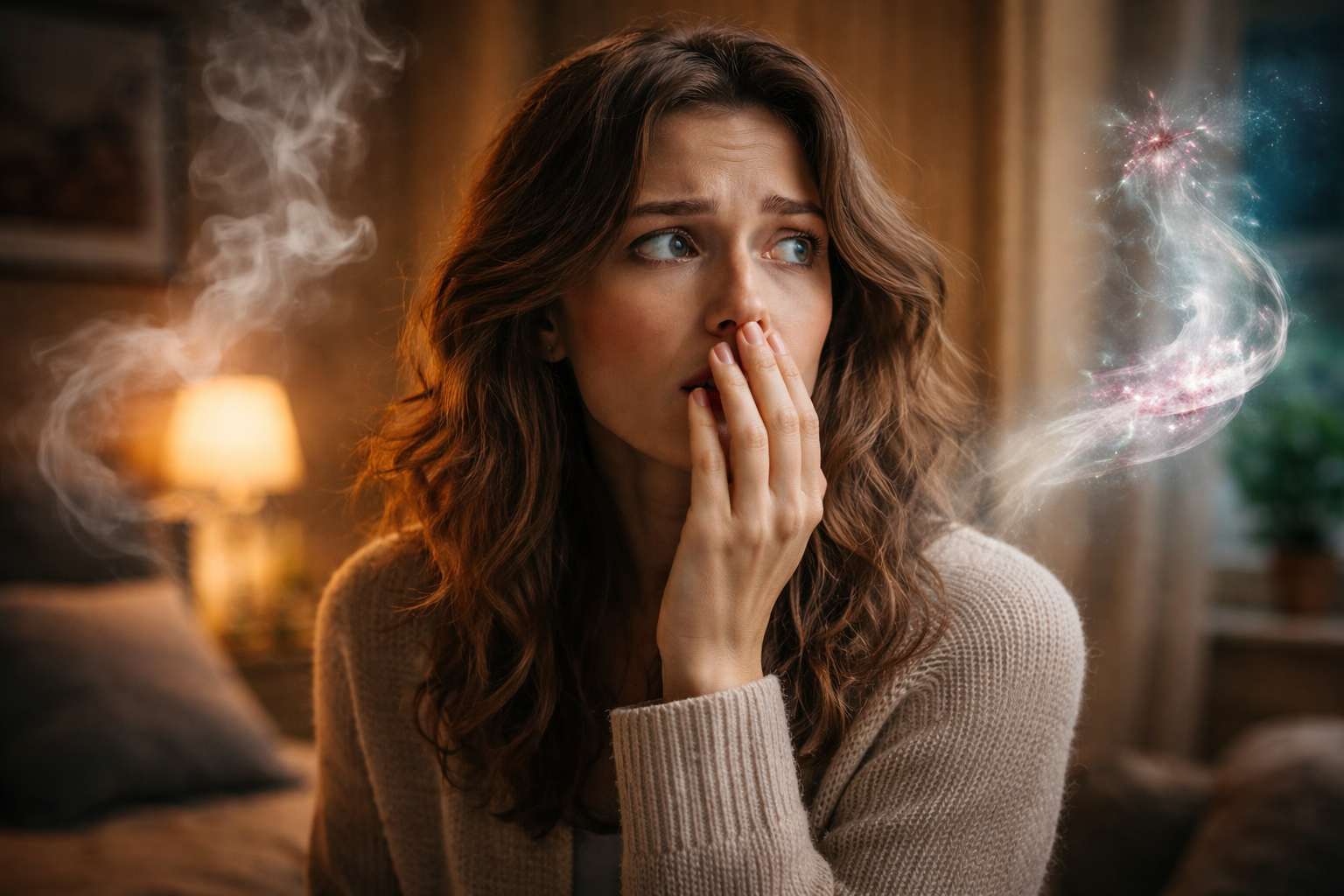
Phantosmia and Stress… Have you ever been going about your day, only to be suddenly jolted by the unmistakable scent of smoke or a floral perfume wafting through the air, even though there’s nothing around you? In that fleeting moment, a wave of confusion washes over you-your heart races, your mind races, and you can’t help but wonder: Am I losing my mind? You’re not alone in this unsettling experience.
Many people find themselves grappling with mysterious odors that seem to come from nowhere, often triggered by stress, anxiety, or other underlying factors. In this blog post, we’ll explore the intriguing phenomenon of phantosmia and its connection to your emotional state, helping you understand what your senses might be trying to tell you.
Understanding Phantosmia and Its Connection to Stress
The Evolutionary or Psychological Reason Behind Phantosmia
Phantosmia, the phenomenon of smelling odors that aren’t present, can often be linked to psychological factors, including stress and anxiety. From an evolutionary perspective, heightened senses were crucial for survival, allowing our ancestors to detect danger, such as smoke from a fire or the scent of predators. In modern life, however, chronic stress can lead to sensory misinterpretations, including phantom smells.
Research suggests that stress can alter brain chemistry and function, impacting how we perceive sensory information. This misperception may trigger olfactory hallucinations, wherein the brain creates smells that do not exist in the environment, potentially as a way to alert us to perceived threats, even when they are not present.
Real-Life Examples or Famous Case Studies
One notable case is that of a woman who reported smelling roses constantly for several months. After extensive testing, doctors found no physical cause, attributing her phantosmia to significant life stressors, including job loss and a family illness. Similarly, a famous case study involved a soldier who began experiencing phantom smells of smoke after returning from combat. Therapists associated these experiences with post-traumatic stress disorder (PTSD), highlighting the psychological roots of phantosmia.
5 Actionable Coping Mechanisms for Phantosmia
- Practice Mindfulness: Engaging in mindfulness techniques can help ground your thoughts and reduce stress levels, potentially alleviating phantom smells.
- Stay Hydrated: Dehydration can exacerbate sensory disorders. Ensure you drink enough fluids throughout the day.
- Avoid Triggers: Identify and reduce exposure to known stressors that may contribute to your symptoms, whether they are environmental or psychological.
- Seek Professional Help: Consulting with a psychologist or psychiatrist can provide strategies to manage stress and address underlying issues related to phantosmia.
- Practice Relaxation Techniques: Incorporate breathing exercises, yoga, or meditation into your daily routine to help lower stress levels and improve overall well-being.
Did You Know?
Phantosmia can sometimes be a precursor to neurological conditions such as Parkinson’s disease or epilepsy, making it essential to consult a healthcare professional if you experience persistent phantom smells.
In summary, experiencing phantom smells like smoke or perfume, often linked to stress, highlights the intricate connection between our senses and mental health.
Have you ever experienced phantom smells in stressful situations, and how did it affect you?
Phantosmia and Stress
Phantosmia can feel deeply unsettling because smell is tied so closely to memory, threat detection, and emotion. When a person suddenly smells smoke, perfume, burning toast, chemicals, or something rotten without any clear source, the experience often feels more intrusive than a passing thought. Smell enters awareness quickly and emotionally. Unlike a strange idea that can be reasoned through, a phantom odor can feel immediate, physical, and impossible to ignore. That is why many people react with fear the first time it happens. They do not simply notice an odd sensation. They feel as though their environment, body, or mind may be sending a warning that they cannot decode.
Stress often makes this reaction worse. The body is already scanning for danger when stress is high, so a phantom smell does not arrive in a neutral environment. It arrives in a nervous system that is already alert, tense, and sensitive to irregular signals. Once the smell appears, the brain starts asking urgent questions. Is there a fire? Is something burning? Am I sick? Am I imagining things? That mental scramble increases adrenaline, and the increased adrenaline can make the whole experience feel more vivid. In this way, phantosmia is not only about the smell itself. It is also about the body state in which the smell is experienced.
What Phantosmia Actually Is
Phantosmia is the perception of a smell that is not coming from an external source. In simple terms, the nose and brain register an odor that the environment is not producing. People often describe phantom smells as smoke, perfume, gas, rotting food, metal, chemicals, sewage, burning rubber, or something sour and hard to name. The smell may last a few seconds, return in waves, or linger for long periods. Sometimes it affects one nostril more than the other. Sometimes it appears during stress, illness, migraines, or sensory overload. In other cases, it seems to happen without a clear pattern at first.
This is different from merely misidentifying a real smell. With phantosmia, there may be no external trigger at all. That does not mean the experience is fake. It means the smell perception is being generated internally rather than by something in the room. Understanding this distinction helps reduce self-doubt. Many people worry that because others cannot smell what they smell, the experience must mean they are losing touch with reality. More often, it means the sensory system is under strain or interpreting signals in an unusual way.
Why Stress Can Trigger Phantom Smells
Stress affects the brain far beyond mood. It changes attention, memory, muscle tension, digestion, sleep, and sensory processing. The olfactory system, which handles smell, is strongly connected to brain areas involved in emotion and memory. This is one reason smells can trigger vivid memories so quickly. It is also one reason emotional strain can influence smell perception. When stress is chronic, the brain may become more reactive to internal signals and more likely to interpret ambiguous sensory information as meaningful.
Think of stress as a volume amplifier. It does not always create new sensations out of nowhere, but it can make subtle sensory noise louder. A tiny internal fluctuation that would normally be filtered out may suddenly become noticeable. If the nervous system is already tense, that signal may be interpreted as a clear smell. Once the brain labels it, the experience can become self-reinforcing. The person notices the smell, worries about it, and becomes more vigilant. Increased vigilance then makes more small sensory irregularities noticeable. The loop grows stronger not because the person is imagining it, but because stress has made the whole system less stable.
Why Smoke and Perfume Are Common Phantom Smells
Certain smells show up repeatedly in reports of phantosmia because they carry strong emotional importance. Smoke signals danger. Perfume signals human presence, memory, or intimacy. Chemical and rotten odors also stand out because the brain treats them as important. The sensory system is more likely to generate or emphasize smells that matter. If a smell would have helped our ancestors detect fire, contamination, or another person nearby, it makes sense that the brain treats that category as urgent.
This helps explain why phantom smells often feel specific rather than abstract. People do not usually say they smell a vague neutral odor. They say they smell burning, roses, cigarettes, gas, or spoiled food. These are scents loaded with emotional and survival relevance. When the nervous system is under stress, it may be especially prone to producing sensations in categories the brain already treats as meaningful.
How Anxiety Changes Sensory Perception
Anxiety does not only create racing thoughts. It changes the body’s relationship to sensation. Breathing patterns shift. Muscles tighten. Attention narrows. The mind becomes more alert to anything unusual in the environment or body. A harmless smell, a memory trace, or even a change in airflow may suddenly get magnified. If a person has recently worried about fire, illness, or contamination, the brain may become even more likely to notice or generate smell-related alarms.
Anxiety can also change what happens after the smell appears. Instead of brushing off the experience, the person may start checking the room, asking others if they smell it, replaying the moment in their mind, or searching for explanations online. These reactions are understandable, but they can lock the symptom into consciousness. The more tightly attention grips the odor, the more persistent and frightening it can seem. In this way, anxiety may not always be the original cause, but it often becomes a powerful multiplier.
The Link Between Smell, Memory, and Emotion
Smell is unique among the senses because of how directly it connects with emotional memory. A certain odor can instantly bring back a childhood home, a hospital room, a loved one’s perfume, a kitchen fire, or a stressful event that happened years ago. Because of this close link, stress-related phantom smells may sometimes be tied to memory networks rather than only to current sensory glitches. The brain may be under strain and activating emotional material that includes smell associations.
This does not always mean trauma is involved, but sometimes it does. A person who once lived through a fire may notice phantom smoke during stressful periods. Someone who associates a floral perfume with grief or longing may smell that scent during emotionally intense times. These associations can be conscious or unconscious. The important point is that smell is rarely only about smell. It often carries emotional weight, and stress makes those emotional pathways easier to activate.
Other Non-Psychological Reasons to Keep in Mind
Although stress can play a major role, it is wise not to assume every phantom smell is purely emotional. Sinus infections, allergies, migraines, nasal polyps, recent viral illness, head injury, medication changes, seizures, and other neurological or ear, nose, and throat issues can sometimes affect smell perception. Some people notice phantosmia after a cold or after COVID-related smell disruption. Others notice it alongside migraines or severe nasal congestion. That is why persistent or new phantom smells deserve medical attention, especially if they continue, worsen, or come with other symptoms.
The most balanced approach is not panic and not dismissal. It is curiosity plus appropriate care. Stress may be involved, but ruling out medical causes is sensible when symptoms are frequent or unfamiliar. Once serious causes are excluded, many people feel less afraid, and that alone can reduce the intensity of the experience.
Common Patterns People Notice
Phantosmia often follows patterns, even when those patterns are not obvious at first. Some people notice phantom smells when they are exhausted, dehydrated, overstimulated, or recovering from a panic attack. Others notice them during grief, conflict, or long periods of suppressed stress. Some get them in quiet rooms when the mind finally slows down enough to notice internal sensations. Others get them during headaches, before sleep, or when waking suddenly in the night.
Tracking patterns can be very helpful. The smell may not be random at all. It may cluster around missed meals, poor sleep, hormonal changes, screen-heavy days, or emotionally overwhelming weeks. Recognizing these links gives a person more leverage. The symptom starts to look less like a mystery and more like a signal that the system is overloaded.
What Makes the Experience Feel So Scary
One reason phantosmia can feel frightening is that smell is hard to fact-check quickly. If you see something strange, you can often look again and reassess. If you hear a sound, you can pause and listen for its source. Smell is less precise. It enters experience in a diffuse way. You may scan the room and still feel uncertain. That uncertainty leaves space for catastrophic thinking. The mind fills in gaps with worst-case possibilities such as fire, poison, neurological illness, or mental instability.
The smell also feels intimate because it seems to come from inside awareness itself. There is no distance between you and the odor. It is simply there, and that immediacy can make it feel deeply convincing. Even when a person intellectually knows phantosmia exists, the body may still react as if the danger is real. That is why reassurance often needs to happen on both a rational and a physical level.
How to Respond in the Moment
If a phantom smell appears, the first step is to stay practical. Check for a real source once in a calm, reasonable way. Look around for something burning, leaking, or spoiled. Ask another person if they notice anything if someone is nearby. If there is clearly no source and this has happened before, shift the goal from solving the smell to calming the body. Take a slower breath. Relax your jaw and shoulders. Sip water. Ground yourself by naming what you can see, hear, and touch in the room. This helps prevent the experience from escalating into a full fear spiral.
It also helps to avoid repetitive checking. Repeatedly sniffing the air, searching every corner, and asking yourself whether the smell is still there can keep the nervous system activated. A single careful check is useful. Endless checking feeds alarm. If the symptom passes, let it pass without building a larger story around it in the moment.
Five Practical Coping Strategies
1. Reduce baseline stress. Daily nervous system care matters. Sleep, hydration, regular meals, less caffeine, movement, and recovery time can all make the sensory system less reactive.
2. Keep a symptom log. Write down when the smell happened, what it smelled like, how long it lasted, your stress level, sleep quality, medications, headaches, and anything unusual that day. Patterns often appear after a few entries.
3. Use grounding instead of panic. When a smell appears, orient to the present rather than immediately assuming the worst. Focus on solid, visible details around you.
4. Avoid symptom obsession. Searching constantly for explanations, testing your sense of smell repeatedly, or scanning for signs of disaster can make the experience more dominant.
5. Seek medical advice when appropriate. Persistent, new, or worsening phantom smells deserve professional evaluation so that physical causes can be considered and ruled out if needed.
When Phantosmia May Be Linked to Trauma
For some people, phantom smells are tied to traumatic memory. A person with combat trauma may smell smoke or burning during stressful moments. Someone who lived through a kitchen fire may notice burning odors during panic. A person linked to grief may smell a deceased loved one’s perfume when emotions become intense. In these cases, the smell may function almost like a sensory flashback. The brain is not only stressed. It is also reactivating memory networks associated with threat or loss.
These experiences can feel especially powerful because smell bypasses the kind of slow verbal processing people use to talk themselves down. The odor hits first, and explanation comes later. Therapy can be very helpful in these cases, especially when the smell is clearly tied to trauma reminders, grief, or panic cycles. Understanding the connection can reduce shame and make the experience less isolating.
What Recovery Usually Looks Like
Improvement often comes gradually rather than all at once. A person may first notice that the smells still happen but feel less frightening. Then the episodes become shorter or less frequent. Over time, they may appear only during highly stressful periods rather than randomly. This kind of progress matters. The goal is not always immediate elimination. Often it is reduced fear, better pattern recognition, and quicker recovery.
For many people, once medical concerns are addressed and stress becomes more manageable, phantosmia loses much of its power. The smell may still appear occasionally, but it no longer triggers the same sense of doom. It becomes a cue to rest, ground, or check in with stress levels rather than a sign that something catastrophic is happening.
A Balanced Way to Think About Phantom Smells
If you smell smoke, perfume, or another odor that is not there, it does not automatically mean you are losing your mind. Phantosmia can happen for many reasons, and stress is one of the most common amplifiers. The experience is real even when the source is internal. That distinction is important. You are not inventing it on purpose. Your sensory system is generating a signal that deserves calm attention rather than immediate panic.
The most helpful mindset is steady curiosity. Notice the smell. Check once for real-world causes. Observe patterns. Support the nervous system. Get medical advice if the symptom is persistent or new. When fear goes down and understanding goes up, the experience usually becomes much easier to manage. What once felt like a mysterious threat can begin to look like a meaningful clue about how much strain your body and mind are carrying.
When to Get Support Sooner Rather Than Later
If phantom smells are making daily life harder, it is worth reaching out before the problem feels overwhelming. You do not need to wait until symptoms become severe. Support can help if the smells trigger panic, keep you from sleeping, cause repeated checking, or make you afraid to be alone. A doctor can review causes, while a therapist can help with stress, anxiety, trauma, and the fear loops that often grow around the symptom. Early help does not mean the situation is extreme. It means you are treating your sensory and emotional health seriously. For many people, reassurance, an evaluation, and stress-focused coping tools make the experience feel far less frightening and manageable over time.