

Sharks Existed Before Trees: 9 Astonishing Facts About Earth’s Ancient Timeline
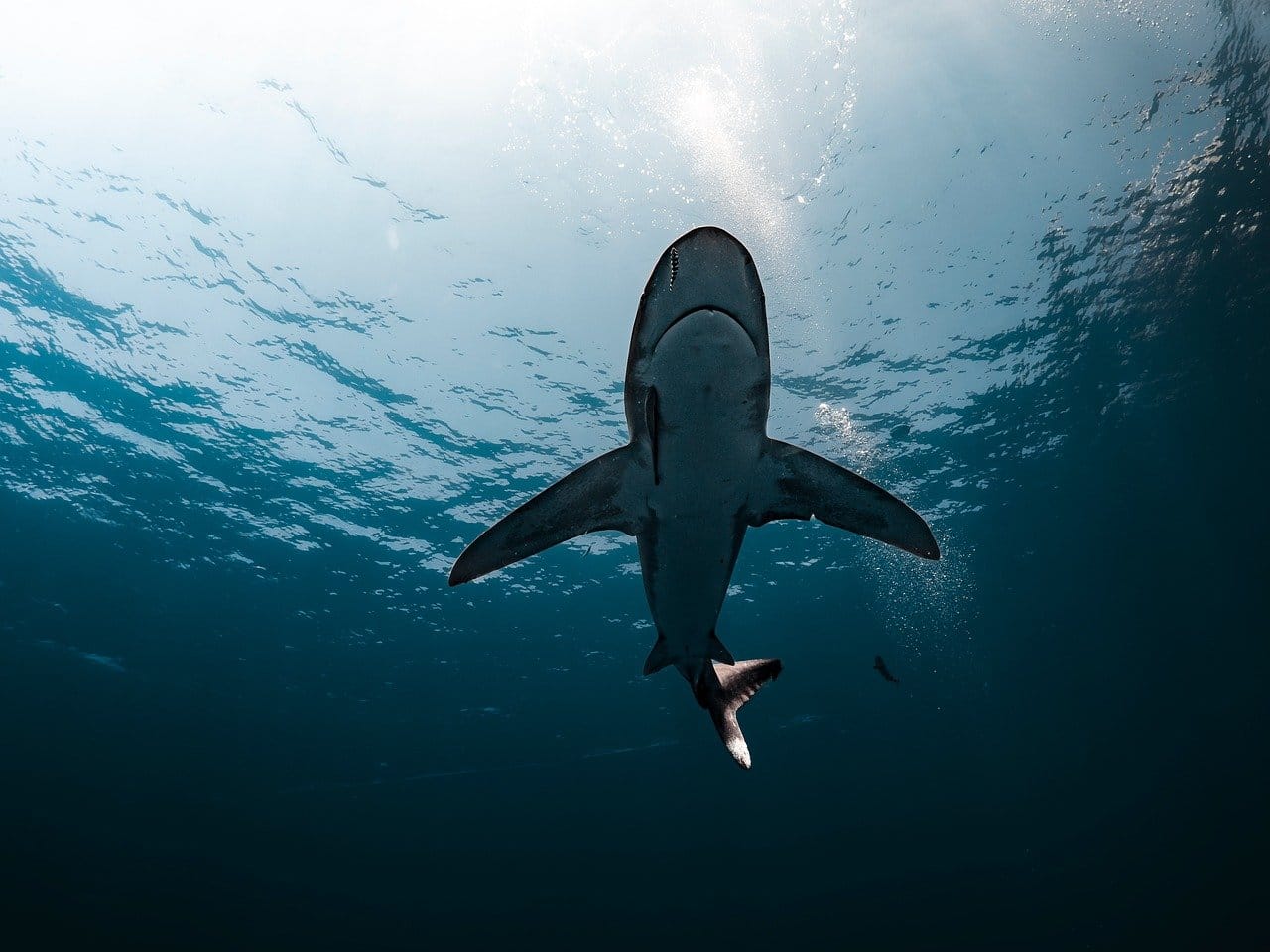
Sharks Existed Before Trees… Did you know that sharks have been gliding through Earth’s oceans for over 400 million years, while the first trees only began to sprout around 350 million years ago? Imagine a world where these ancient predators ruled the seas long before the land was adorned with towering forests. This astonishing timeline not only challenges our understanding of evolution but also highlights the resilience and adaptability of life on our planet. Dive into the depths of history as we explore the fascinating journey of sharks and their incredible existence long before the first whispers of leaves rustled in the breeze.
Sharks Existed Before Trees: A Fascinating Journey Through TimeWhen we think of the history of life on Earth, we often consider iconic species that have shaped our planet’s ecosystems. Sharks, for instance, have prowled the oceans for over 400 million years, while trees, which we often associate with ancient forests, didn’t appear until much later in the geological timeline. This intriguing fact raises questions about the evolutionary journey of these magnificent creatures and the environments they inhabited. Let’s dive into the fascinating world where sharks roamed the seas long before trees adorned the land.
The Timeline of Life on EarthTo understand the significance of sharks existing before trees, we need to take a closer look at the timeline of Earth’s history. Here’s a breakdown of significant milestones:
| Time Period | Sharks | Trees | |
| Cambrian Period (541-485 million years ago) | First sharks appear (early ancestors) | No trees yet, only simple plants like algae | |
| Devonian Period (419-359 million years ago) | Sharks thrive; some become apex predators | First trees emerge towards the end of this period | |
| Carboniferous Period (359-299 million years ago) | Sharks continue to evolve | Extensive forests of trees like Lepidodendron and Calamites |
It’s fascinating to juxtapose these two ancient entities. Let’s explore some key differences and similarities:
| Feature | Sharks | Trees | |
| Origin | Over 400 million years ago | Approximately 390 million years ago | |
| Habitat | Marine environments | Terrestrial environments | |
| Reproduction | Oviparous, ovoviviparous, and viviparous methods | Seed reproduction | |
| Structure | Cartilaginous skeletons | Rigid structure with cellulose | |
| Role in Ecosystem | Apex predators, maintaining marine balance | Primary producers, supporting ecosystems |
The fact that sharks existed before trees is a testament to the resilience and adaptability of life on Earth. While sharks continue to face environmental challenges today, their long history reminds us of the intricate connections between different life forms and ecosystems. Whether you are a marine enthusiast or a lover of lush forests, appreciating the ancient lineage of these species can deepen your understanding of our planet’s biological tapestry. So next time you encounter a shark or stroll through a forest, remember the ancient dance of life that connects them both!
In conclusion, the fascinating fact that sharks have been around for over 400 million years, predating the emergence of trees by approximately 100 million years, highlights the incredible resilience and adaptability of these ancient creatures. This timeline not only reshapes our understanding of evolutionary history but also emphasizes the diverse ecosystems that existed long before modern flora. What are your thoughts on the implications of this timeline for our understanding of marine life and its evolution?
Sharks Existed Before Trees and That Changes How We Imagine Earth’s History
At first, the fact sounds impossible. Trees feel ancient. Sharks feel ancient. But most people instinctively imagine forests coming first, as though the land must have already been full of towering trunks and deep green canopies long before large predators were moving through the seas. In reality, Earth tells a stranger story. Sharks were already evolving in ancient oceans tens of millions of years before the first true trees began to reshape life on land. That timeline forces us to reimagine the planet in a way that feels almost unreal.
Picture an Earth where the oceans already held early shark ancestors, but the land was not yet covered in forests. There were no pine woods, no vast oak canopies, no leafy jungles in the modern sense. The continents were far more barren and unfamiliar. Simple plant life existed, but the world as we know it had not yet taken shape. This means sharks belong to a chapter of Earth history so deep that they predate not only trees, but entire landscapes most humans instinctively associate with “ancient nature.”
That is what makes this fact so powerful. It does not just tell us something about sharks. It tells us something about time itself. The age of life on Earth is so vast that even things we call ancient are not ancient in the same way. Some lineages reach so far back that they seem almost beyond imagination, and sharks are among the most extraordinary examples of that endurance.
The Ocean Became Complex Before Land Looked Familiar
One reason this fact surprises people is that we often think of land as the main stage of life. Human life is land-based, so our imagination naturally centers forests, mountains, and terrestrial animals. But for much of Earth’s history, the most important evolutionary drama was happening in the oceans. Long before the continents supported familiar forests, marine ecosystems were already growing more complex, competitive, and diverse.
Early shark ancestors emerged in a world where ocean life had already been experimenting with many body plans. Fish lineages were diversifying, invertebrates were abundant, and predator-prey relationships were becoming more sophisticated. The sea was not primitive in the simple sense. It was already a dynamic arena of adaptation and survival. Sharks entered that arena early and proved astonishingly effective within it.
Meanwhile, life on land lagged behind in structural complexity. Plants were beginning to make progress, but forests had not yet transformed the continents. Soil systems, deep root networks, and tall woody trunks were still in the future. This means the story of sharks is tied to an ocean world that was biologically rich before terrestrial ecosystems reached their later grandeur.
What Early Sharks Were Really Like
When people hear that sharks existed before trees, they often picture a great white shark cruising through primeval seas. That image is dramatic, but it is not accurate. The earliest sharks were not identical to modern ones. Over hundreds of millions of years, shark lineages changed, diversified, and adapted in ways both subtle and dramatic. Some ancient species looked more familiar, while others had forms that would seem bizarre today.
What made them “sharks” in a broad evolutionary sense was not that they looked exactly like modern movie predators, but that they belonged to early branches of the cartilaginous fish lineage. Their skeletons were made of cartilage rather than bone, and they carried traits that would eventually connect them to the sharks we know today. Over immense spans of time, these lineages continued evolving, producing an extraordinary range of body shapes and ecological roles.
This is important because it reminds us that deep time is rarely a story of static creatures remaining unchanged. Sharks are ancient, but that does not mean one perfect shark design appeared and stayed frozen forever. Their resilience comes partly from their ability to evolve while preserving a highly successful core biology.
Why Sharks Survived When So Much Else Did Not
Few facts about sharks are more impressive than their survival record. Across hundreds of millions of years, Earth has experienced catastrophic mass extinctions, climate shifts, changing oceans, shifting continents, and ecological collapses. Entire lineages disappeared. Vast numbers of species vanished. Yet sharks, in one form or another, kept going.
This does not mean every shark lineage survived unchanged. Many ancient shark groups were lost. But as a broader evolutionary lineage, sharks endured. Their continued presence suggests extraordinary adaptability. They occupied multiple niches, evolved different feeding strategies, and proved capable of surviving under conditions that eliminated countless other organisms.
Part of that success may come from versatility. Sharks are not one thing. Across their history, they have included large predators, bottom-dwellers, filter feeders, deep-water species, reef specialists, and open-ocean hunters. This flexibility likely helped them persist through shifting planetary conditions. Survival over deep time rarely belongs to the strongest in a simple sense. It often belongs to the adaptable, and sharks have been masters of adaptation for an astonishing length of time.
The First Trees Changed the Planet Forever
While sharks were already ancient by the time trees emerged, the arrival of the first true trees was itself one of the most transformative events in Earth history. Trees did not simply add height to the landscape. They changed the chemistry, structure, and ecology of the continents. Their roots stabilized soils. Their trunks and branches created new habitats. Their presence altered carbon cycles, weathering patterns, and atmospheric processes.
The earliest trees were not identical to modern trees, but they represented a major shift in terrestrial life. Once plants grew taller and developed more complex structures, the land itself began to change. Forests created shade, organic accumulation, new microclimates, and new opportunities for other life forms. In that sense, trees helped build the kind of terrestrial world from which later ecosystems could grow.
This contrast is one reason the shark-versus-tree timeline is so striking. Sharks belong to an age before this massive environmental transformation on land. They originated in a world where forests had not yet become a defining planetary feature.
Sharks Existed Before Trees Because Evolution Does Not Follow Human Intuition
Human intuition about history is often shaped by visible familiarity. Trees seem foundational because they are everywhere in our mental image of nature. Oceans also feel ancient, but many people imagine marine predators as appearing after plants had already made land look rich and green. Evolution, however, does not organize itself around what seems emotionally basic to us. It follows opportunity, environment, and long chains of adaptation that often defy ordinary imagination.
The shark-before-tree timeline is a perfect example of that. It reminds us that the world did not build itself in the order that feels obvious. Complex marine predators could evolve long before forests spread across continents. The sea and the land were developing along different trajectories, at different rates, under different constraints. One became rich in mobile predator-prey systems while the other was still working toward the rise of tall woody plant life.
This is one of the joys of paleontology and deep-time thinking. It teaches us that reality is older, stranger, and less human-centered than our instincts suggest. Earth history is not arranged for intuitive storytelling. It is arranged by time, chance, pressure, and adaptation.
The Devonian World Was Not Yet a Modern Earth
Much of this story centers on the Devonian period, often called the “Age of Fishes,” when marine life flourished and major evolutionary developments unfolded. This was also the period when the earliest trees began to emerge. But even then, Earth was still deeply unlike the world we know now. The continents were arranged differently, the climate systems were different, and the ecosystems of both land and sea were still in evolutionary transition.
In the oceans, vertebrate life was becoming more diverse and competitive. Fish lineages were expanding, and shark ancestors were part of that larger transformation. On land, plants were beginning to grow more structurally complex, but the great forests that would later define the Carboniferous were still developing. The Devonian world was therefore a threshold world, one balanced between earlier simplicity and later ecological richness.
This is why sharks feel so astonishing in this context. They were already part of the story while the land itself was only beginning to build the structures that would eventually make forests possible. They belong to the early chapters of complexity.
Why This Fact Matters Beyond Trivia
It is easy to treat “Sharks existed before trees” as just a fun surprise fact, but it actually carries deeper significance. It helps people understand the scale of evolutionary time. Human beings struggle to think clearly about millions of years, let alone hundreds of millions. Surprising comparisons help shrink that abstraction into something emotionally graspable. When you realize sharks predate trees, deep time stops being a number and starts becoming a shock.
This kind of realization matters because it changes how we think about life’s resilience and fragility. Sharks are not just old. They are survivors from almost unimaginably distant eras. Trees are ancient too, but their arrival belongs to a later stage of planetary development. Comparing the two reveals how layered Earth history really is.
It also deepens our respect for living lineages. Modern sharks are not relics in a simplistic sense. They are present-day representatives of a lineage with roots stretching into a world profoundly unlike our own. To look at a shark is, in a small way, to look across an immense evolutionary distance.
The Strange Humility of Deep Time
Facts like this have a humbling effect. Humans tend to experience history through civilizations, monuments, written records, and cultural memory. Even the oldest human stories are recent compared with the age of sharks. Even forests that feel primeval to us are young compared with the lineage of these ocean predators. Deep time strips away the illusion that our familiar world is the baseline for everything.
There is something almost spiritual in that perspective. Sharks moved through the oceans before forests spread widely across continents, before dinosaurs, before mammals, before birds, before flowers in their modern forms, and unimaginably long before humans ever appeared. Their story makes the age of the planet feel less like a scientific number and more like a vast reality stretching far beyond ordinary comprehension.
This humility is one of the gifts of natural history. It reminds us that life is older, tougher, and stranger than our daily concerns usually allow us to remember.
Sharks and Trees as Symbols of Two Different Worlds
In a symbolic sense, sharks and trees represent two different stages of Earth becoming the planet we know. Sharks belong to the ancient mastery of the seas, to a world where marine ecosystems were already full of evolutionary experimentation and predatory sophistication. Trees belong to the reshaping of land, to the long transformation of continents into complex, rooted, oxygen-rich habitats that would support later terrestrial diversity.
Putting them together in one fact makes both more meaningful. Sharks are not just old predators. Trees are not just ancient plants. Each belongs to a different revolutionary phase of Earth history. The fact that one clearly predates the other helps us see how the planet did not arrive all at once. It assembled itself in layers.
This layered story is one of the most beautiful things about evolution. First one system becomes complex, then another, and together they build the biosphere step by step over unimaginable spans of time.
Modern Sharks Are Ancient, but Also Vulnerable
There is a sobering side to all of this wonder. Sharks survived natural upheavals that lasted hundreds of millions of years, but many modern shark species are now under serious pressure from human activity. Overfishing, habitat destruction, climate change, pollution, and finning have placed numerous shark populations at risk. A lineage ancient enough to predate trees now faces threats unfolding in the briefest instant of geological time.
This contrast should provoke reflection. It is astonishing that sharks endured planetary crises beyond human imagination, only to become vulnerable during the era of human industrial power. Their deep history makes their present vulnerability even more tragic. These are not just animals in a general sense. They are survivors of almost the entire visible drama of complex life on Earth.
Understanding their age can therefore strengthen conservation ethics. When we protect sharks, we are not merely protecting one group of marine animals. We are protecting one of the most enduring evolutionary stories on the planet.
Why People Love This Fact So Much
There is a reason this fact spreads so easily. It compresses deep time into a single memorable comparison. It takes two familiar things, sharks and trees, and places them in an order that feels impossible at first. That moment of disbelief is what makes it memorable. It shocks the imagination into a new understanding.
People love facts that reveal the world to be bigger and stranger than expected. “Sharks existed before trees” does exactly that. It turns evolutionary history from an abstract textbook topic into something almost cinematic. You can suddenly imagine ancient oceans filled with predators while the land waits for forests that do not yet exist. That image stays with you.
And that is the best kind of scientific fact: one that is accurate, surprising, and powerful enough to permanently change how you picture the world.
Final Thoughts
Sharks Existed Before Trees is one of the most mind-bending truths in natural history because it reveals just how deep and strange Earth’s timeline really is. Sharks trace their lineage back more than 400 million years, while the first true trees appeared much later, around 350 to 390 million years ago. That means ancient sharks were already part of Earth’s story before forests transformed the continents.
This fact matters because it expands our sense of time, evolution, and life’s resilience. It shows that the ocean was already a place of powerful, adaptive predators long before the land looked anything like the green world we know today. It reminds us that Earth did not become familiar all at once. It became itself gradually, through layers of astonishing change.
The next time you see a shark in a documentary, an aquarium, or a photograph, remember what you are really looking at. You are looking at a lineage so old that it swam through the seas before the first true trees ever rose from the land. Few facts capture the grandeur of deep time better than that.