

Signs Someone is Lying Over Text Messages: 21 Red Flags
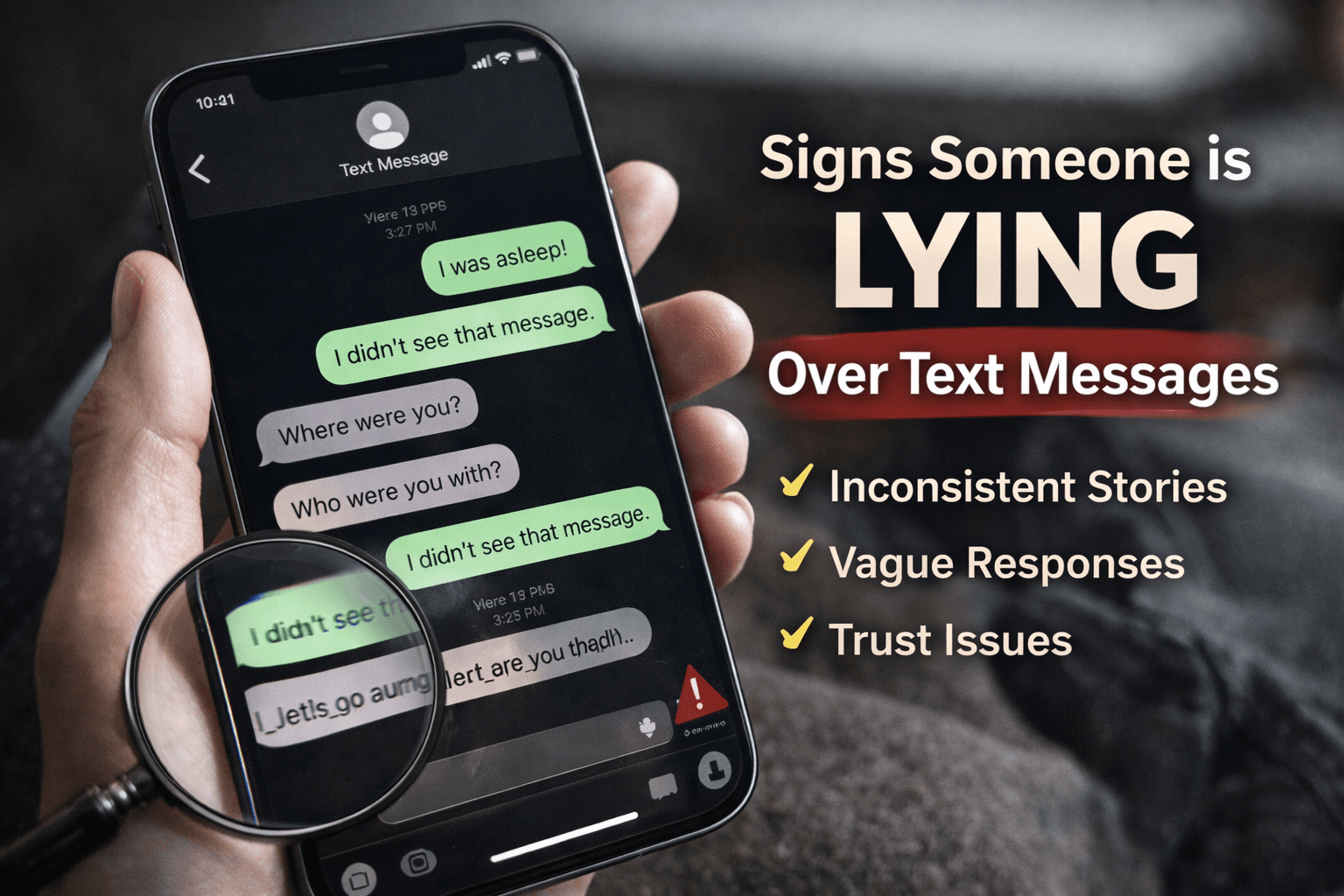
Signs Someone is Lying Over Text Messages… Did you know that nearly 70% of people admit to lying in text messages? In a world where communication is often reduced to emojis and abbreviations, spotting deception can feel like an uphill battle. But what if you could decode the hidden messages behind the screen? Understanding the subtle signs of a lie could save you from heartbreak, betrayal, or missed opportunities. Whether it’s a suspicious change in texting habits or a vague response, being aware of these red flags can empower you to navigate the murky waters of digital communication with confidence.
Signs Someone is Lying Over Text MessagesIn our increasingly digital world, text messages have become a primary means of communication. However, discerning truth from deception through a screen can be challenging. Here are some key signs that might indicate someone is lying to you via text messages.
1. Inconsistencies in Story DetailsOne of the most telling signs of dishonesty is inconsistency. If someone’s story changes or if they provide conflicting information, you might want to dig a little deeper.
When someone is lying, they may overcompensate by using overly formal or complex language. This is often an unconscious effort to sound credible.
Timing can be telling. A delayed response may indicate that someone is crafting a lie rather than responding honestly.
Lying often creates a disconnect between what someone says and how they feel. Watch for signs of emotional inconsistency in their messages.
Liars often avoid direct questions and may change the subject to throw you off the scent.
| Sign of Deception | Description | |
| Inconsistencies | Conflicting details; changing stories | |
| Overly Formal Language | Unusual vocabulary; excessive detail | |
| Delayed Responses | Long wait times; one-word answers | |
| Emotional Disconnect | Lack of emotion; incongruent reactions | |
| Evasive Behavior | Avoiding direct answers; becoming defensive |
People have unique texting styles, and changes in these habits can signal deception.
While texting is a convenient way to communicate, it often lacks the non-verbal cues present in face-to-face interactions. By being aware of the signs of deception-such as inconsistencies, overly formal language, delayed responses, emotional disconnect, evasive behavior, and changes in texting habits-you can better navigate the murky waters of texting communication. Trust your instincts and don’t hesitate to ask for clarification if something feels off! Happy texting!
In conclusion, recognizing the signs of deception in text messages can be crucial for understanding the truth behind someone’s words. Indicators such as inconsistent details, vague responses, or overly defensive language often suggest that a person may not be being entirely honest. By being attentive to these cues, you can better navigate your conversations and relationships. What experiences have you had that helped you identify when someone was lying through text? Share your thoughts in the comments!
First, a Reality Check: Text “Lie Signs” Are Clues, Not Proof
Before you assume deception, remember that texting is a low-context channel. People text while working, commuting, tired, stressed, or distracted. Autocorrect, humor, and tone misreads can create false alarms. The most reliable approach is to look for patterns-repeated mismatches between what they say, how they say it, and what they do over time.
Instead of trying to “catch” someone, focus on clarity and consistency. Your goal is to protect yourself from confusion, not to become a detective.
21 Signs Someone May Be Lying Over Text Messages
You already covered major signs like inconsistencies, delayed responses, evasiveness, and style changes. Below are additional high-signal patterns and how they usually show up in real conversations.
1) They Answer a Different Question Than You Asked
You ask something specific, and they respond with something adjacent. This can be avoidance: they steer away from the uncomfortable detail.
2) They Use “Truthiness” Phrases Too Often
Phrases like “Honestly,” “To be honest,” “I swear,” or “Trust me” can be normal-but heavy use can signal overcompensation, especially during critical details.
3) They Over-Explain Simple Things
When the explanation is long but the question was simple, it can be a sign they’re trying to sound convincing rather than clear. Watch for extra unrelated details.
4) Their Story Has No Verifiable Anchors
Not everyone shares specifics, but repeated vagueness can matter. If every timeline is fuzzy and every detail is “somewhere,” “later,” or “a friend,” it may be a tactic to avoid contradiction.
5) They “Clarify” Only After You Question Them
Honest people often volunteer context naturally. A pattern of adding key facts only after you push can signal reactive storytelling.
6) They Suddenly Become Unusually Nice
Some people soften you up with extra affection, compliments, or emojis when they feel guilty or want to reduce suspicion. This isn’t proof, but it’s a useful pattern to notice.
7) They Get Defensive Fast
Defensiveness can look like: “Why are you interrogating me?” “You never trust me,” or “You’re being crazy.” If simple questions trigger attacks, it can signal discomfort with the truth.
8) They Reverse the Roles (You Become the Problem)
A common move is shifting from your question to your character: “You’re insecure,” “You’re controlling,” “You’re always starting drama.” This can be a distraction from the original issue.
9) They Avoid Naming People, Places, or Times
Refusing to give any anchors (“I was out”) isn’t always lying, but if it happens repeatedly in situations where details are reasonable, it can be avoidance.
10) Their “Receipts” Feel Curated
If they suddenly send partial screenshots, cropped images, or selective proof, it can be real-or it can be carefully controlled. Curated evidence isn’t automatically false, but it’s not the same as transparent clarity.
11) They Disappear Right When Clarity Is Needed
They respond quickly to casual talk, but when you ask a direct question, the replies slow down or stop. This “selective silence” can be avoidance.
12) They Make Promises to Talk Later-Then Never Do
“I’ll explain later” can be valid once. Repeatedly postponing the same explanation can signal they’re buying time or hoping the topic dies.
13) Their Emotion Doesn’t Match the Topic
For serious topics, a strangely casual tone can indicate distance. For neutral topics, intense anger can be a deflection. Look for emotional mismatch.
14) They Use Extreme Absolutes
“I never do that,” “I always tell you everything,” “No one would ever…” Absolutes are often used to shut down nuance and reduce follow-up questions.
15) They Answer With Questions
Constantly responding with questions (“Why would I do that?” “Who told you that?”) can be a way to delay, redirect, or gather information to craft a story.
16) Their Timeline Keeps Shifting
Small time mistakes happen. But if the order of events keeps changing-especially after you ask clarifying questions-be cautious.
17) They “Misunderstand” You Repeatedly
Sometimes people genuinely misunderstand. But if someone consistently claims confusion to avoid answering (“That’s not what you asked”), it may be deliberate fog.
18) They Use Humor to Avoid Answers
Jokes can be normal. But if every direct question gets a meme, laughing emoji, or playful dodge, it can be avoidance disguised as charm.
19) Their Texting Style Changes Only Around One Topic
A general style change can be mood, stress, or busyness. A style change that shows up only when you ask about one specific issue can be more meaningful.
20) They Try to End the Conversation Quickly
“Can we drop it?” “I’m done talking about this.” “Goodnight.” Sometimes boundaries are healthy. But if they repeatedly end conversations exactly when you request clarity, it can be evasive.
21) Their Actions Don’t Match Their Texts
This is the strongest signal. Promises, explanations, and reassurance mean little if behavior stays inconsistent. If their actions contradict their words repeatedly, you don’t need perfect proof-you need boundaries.
The “Pattern Test”: How to Tell Deception From Miscommunication
Use this quick test to stay grounded:
- Is it consistent? Does the same issue repeat across days/weeks?
- Is it specific? Do they get vague only in certain areas?
- Is there repair? Do they clarify calmly when asked?
- Do actions align? Do they follow through after the conversation?
Miscommunication tends to improve with clarification. Deception tends to create more confusion, more defensiveness, and more shifting stories.
Common Innocent Reasons People “Look Like They’re Lying” Over Text
These can mimic deception, so check them before assuming intent:
- Anxiety: nervous people over-explain or delay replies.
- Privacy: some people are vague because they value boundaries.
- Conflict avoidance: they dodge because they fear arguments.
- Multitasking: delays happen when people are busy or driving.
- Language differences: formal tone can be cultural or non-native style.
What to Do If You Suspect Someone Is Lying Over Text
Instead of escalating, use a calm, structured approach that invites clarity and protects your self-respect.
Step 1: Ask One Clear Question
Keep it simple. Avoid stacking multiple questions. Example: “Where were you between 7 and 9?” or “Did you meet them, yes or no?”
Step 2: Ask for One Anchor
Request one verifiable detail without sounding like an interrogation: “What time did you leave?” or “Who were you with?” If they’re honest, anchors are usually easy.
Step 3: Name the Mismatch, Not the Accusation
Try: “Earlier you said X, now it’s Y. I’m confused-can you clarify?” This is harder to dismiss than “You’re lying.”
Step 4: Watch the Response Style
Healthy signs: calm clarification, willingness to repair, consistent details. Warning signs: attacks, blame-shifting, changing topics, refusing all clarity.
Step 5: Set a Boundary if Confusion Continues
If you’re repeatedly left uncertain, you don’t need to argue forever. You can say: “I need honesty and clarity to feel safe. If we can’t do that, I’m stepping back.”
Scripts You Can Copy-Paste
- Clarify gently: “I’m confused-your details changed. Can you explain?”
- Ask for a direct answer: “Is that a yes or a no?”
- Stop the deflection: “We can talk about my feelings after you answer the question.”
- Address defensiveness: “I’m not attacking you. I’m asking for clarity.”
- Set a boundary: “If we can’t talk honestly, I’m going to pause this conversation.”
How to Protect Yourself in Digital Communication
If you’re repeatedly dealing with deception or confusion, it may help to shift channels. Some topics are too emotional for text.
- Move serious topics to voice: tone and timing add context you can’t see in text.
- Summarize agreements: “Just to confirm, we agreed on…”
- Don’t debate forever: repeated circular texting drains clarity and increases stress.
- Trust patterns over promises: reliability is behavior, not reassurance.
FAQ
Is delayed texting always a sign of lying?
No. People delay for many reasons. It becomes more suspicious when delays appear only around certain questions or topics and are paired with evasive answers.
Do liars use more words or fewer words?
Both can happen. Some over-explain to sound credible. Others become brief to avoid traps. Look for inconsistencies and avoidance patterns rather than word count alone.
Should I confront them directly?
If you do, focus on clarity and impact instead of accusation. “Your story changed, and it’s affecting trust” is more productive than “You’re lying.”
Conclusion
Signs someone is lying over text messages are best read as patterns: inconsistent details, evasive answers, selective silence, defensiveness, and behavior that doesn’t match words. Use calm questions, ask for simple anchors, and watch how they respond to clarity requests. If confusion becomes a repeated feature of your relationship, the most powerful move isn’t catching every lie-it’s setting boundaries that protect your peace.
The “Trust Ladder” in Texting: Where Lies Usually Show Up
Most deception over text happens in predictable zones: availability (“I was asleep”), social situations (“I’m with family”), money (“I’ll pay you back tomorrow”), and relationship boundaries (“I didn’t see that message”). These areas matter because they affect trust, not just facts. When you know where lies often appear, you can focus on clarity instead of obsessing over every sentence.
A helpful mindset is to separate low-stakes lies (often conflict avoidance) from high-stakes lies (those that change choices, consent, safety, or commitment). A vague excuse about being busy is annoying. A lie that hides cheating, finances, or major decisions is a serious breach.
How Honest People Text When They’re Confused
One of the best ways to detect deception is to recognize healthy confusion. Honest people can be unclear without being evasive. Their answers tend to include these qualities:
- They try to clarify: “Let me explain what I meant.”
- They stay respectful: they don’t attack you for asking.
- They accept accountability: “I should have said that differently.”
- They offer a next step: “Want to call so it’s clearer?”
When you see these patterns, it often means the issue is miscommunication, not deception.
When to Stop Investigating and Start Deciding
Endless texting analysis can turn you into someone you don’t want to be-anxious, hypervigilant, and stuck. If the same confusing situation keeps repeating, the most powerful move is to stop trying to prove intent and start deciding what you need to feel safe.
- If they clarify and repair: trust can grow.
- If they deflect and attack: trust usually erodes.
- If behavior stays inconsistent: your boundary matters more than their explanation.
You don’t need perfect certainty to protect yourself. You need enough clarity to choose what’s healthy.
Quick Boundary Examples (Short and Effective)
- For repeated vagueness: “I need a clear answer, not hints.”
- For defensiveness: “I’m asking a question, not accusing you.”
- For disappearing: “If you can’t talk now, tell me when you can.”
- For ongoing trust issues: “I can’t continue like this without honesty and consistency.”
Boundaries don’t force truth, but they prevent you from living in constant uncertainty. If someone values the relationship, they’ll usually respond with more clarity and respect-not more fog.