

There is a Country Where Mosquitoes Do Not Exist: 9 Amazing Facts About Iceland’s Bite-Free Mystery
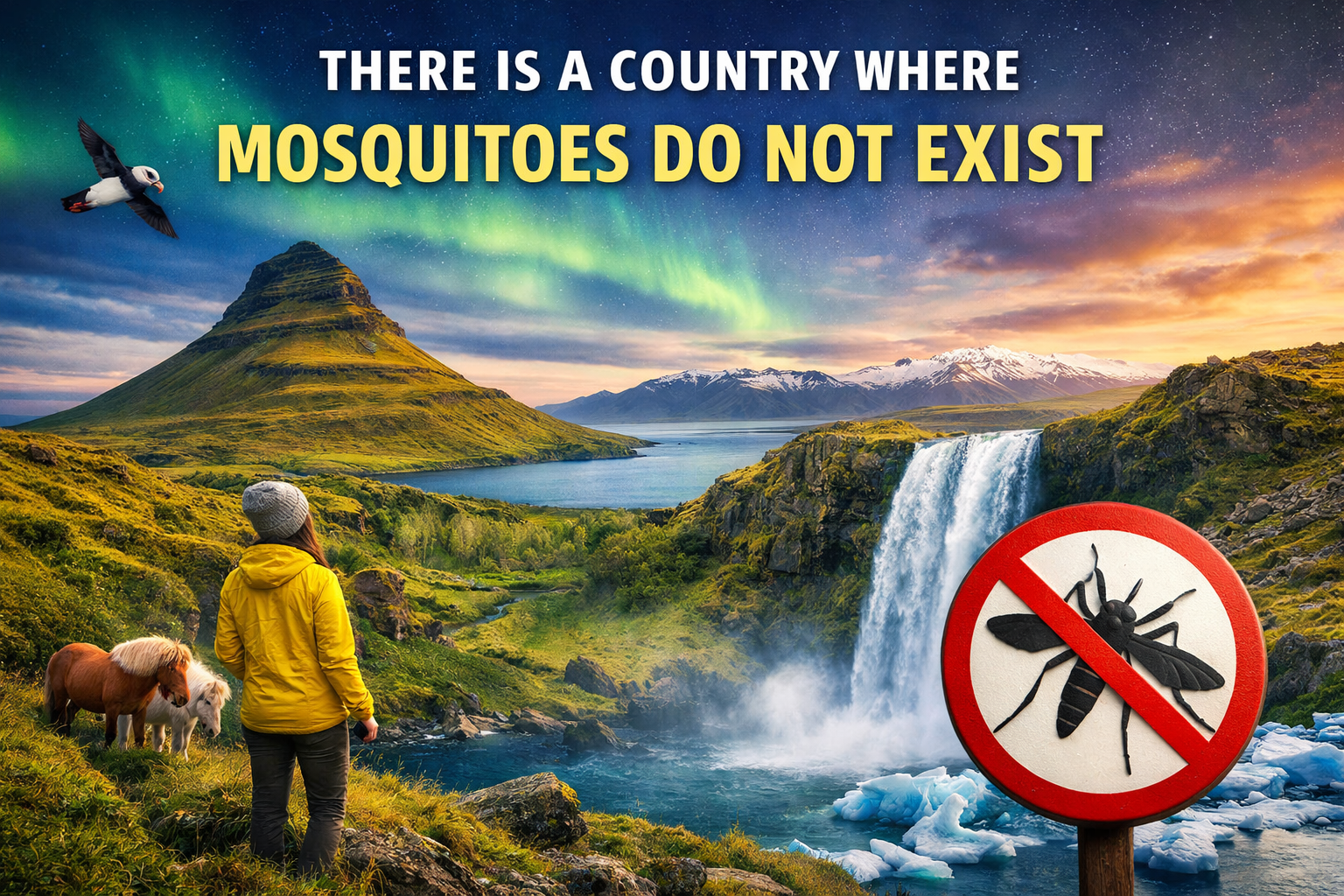
There is a Country Where Mosquitoes Do Not Exist… Imagine a place where the buzz of mosquitoes is nothing more than a distant nightmare-where summer evenings are spent outdoors without the fear of itchy bites or the threat of disease. Shockingly, such a paradise exists! Nestled in the heart of nature, this country boasts an ecosystem so unique that it has managed to keep these pesky pests at bay. Join me as we explore this enchanting land, uncovering the secrets behind its mosquito-free status and the vibrant life that flourishes in its absence. Welcome to a world where tranquility reigns supreme!
There is a Country Where Mosquitoes Do Not ExistImagine a vacation where you can enjoy the great outdoors without the incessant buzzing of mosquitoes or the fear of itchy bites ruining your fun. While it may sound like a dream, there is indeed a country where mosquitoes do not exist: Iceland! This unique feature not only makes Iceland a haven for travelers but also offers intriguing insights into the ecological and climatic factors that contribute to this phenomenon.
Why Are There No Mosquitoes in Iceland?The absence of mosquitoes in Iceland can be attributed to several environmental factors:
To further illustrate the uniqueness of Iceland’s mosquito-free status, here’s a comparison with a few popular travel destinations known for their mosquito problems.
| Feature | Iceland | Florida | Thailand | |
| Mosquito Presence | None | High | High | |
| Climate | Cool, temperate | Warm, humid | Tropical | |
| Outdoor Activities | Hiking, hot springs | Beaches, theme parks | Beaches, jungles | |
| Best Travel Season | Summer (June-August) | Year-round, peak in summer | November-February | |
| Unique Flora/Fauna | Unique volcanic ecosystems | Diverse wetlands | Rich biodiversity |
Living without mosquitoes has a positive impact not only on the quality of life for residents but also on public health. Mosquitoes are known vectors for numerous diseases, including malaria, dengue fever, and Zika virus. In Iceland, the absence of these pests contributes to a lower risk of such diseases, making it a healthier environment for both locals and tourists.
How to Enjoy Iceland Without MosquitoesIf you’re planning a trip to this enchanting island, here are some tips to enjoy your mosquito-free experience:
Iceland stands out as a remarkable destination where nature enthusiasts can revel in the beauty of the outdoors without the annoyance of mosquitoes. From its stunning landscapes to its unique wildlife, the country offers a plethora of experiences that are both enjoyable and relaxing. So, if you’re looking for a place to escape the buzzing of mosquitoes while exploring breathtaking scenery, Iceland should be at the top of your travel list!
In conclusion, the existence of a country without mosquitoes highlights the potential for unique ecosystems and human experiences free from these often bothersome insects. This intriguing reality raises questions about the factors contributing to such a phenomenon and how it impacts the local environment and lifestyle. What do you think would be the pros and cons of living in a mosquito-free country?
There is a Country Where Mosquitoes Do Not Exist and That Makes It Feel Almost Unreal
For many people, mosquitoes are simply part of life. They buzz around lakes, invade campsites, ruin quiet evenings, and leave behind itchy reminders that nature is not always gentle. In warm climates especially, they are so common that people rarely stop to imagine a world without them. That is exactly why the idea feels so extraordinary. There is a Country Where Mosquitoes Do Not Exist, and that alone is enough to make it seem like a small paradise hidden inside the modern world.
The fascination goes beyond comfort. A place without mosquitoes sounds cleaner, calmer, and somehow more peaceful than the environments many people know. It suggests summer evenings without bites, hikes without swatting, and nights without the familiar high-pitched buzz around your ears. For travelers, that sounds luxurious. For scientists, it sounds like an ecological puzzle. How can one country escape something so widespread across the planet?
This is what makes Iceland’s reputation so compelling. It is not just beautiful because of glaciers, volcanoes, waterfalls, black sand beaches, and northern lights. It is also intriguing because of what seems to be missing. In a world filled with these tiny flying pests, Iceland feels like an exception to a rule most people assumed was universal.
Why Mosquitoes Thrive in Most Places
To understand why Iceland stands out, it helps to remember how mosquitoes usually survive. These insects need more than warm weather. They depend on a very specific biological rhythm. They require standing or slow-moving water for breeding, suitable temperatures for development, and environmental stability that allows eggs, larvae, and adults to complete their life cycles successfully. In places where these conditions repeat reliably, mosquito populations can explode.
Mosquitoes are especially successful because they are adaptable. They can breed in ponds, puddles, marshes, containers, and many forms of trapped water. They are small enough to take advantage of tiny habitats and persistent enough to return season after season. This is why they seem almost impossible to avoid in many countries. They do not need much to flourish. They only need enough warmth, enough water, and enough continuity to reproduce.
That last part is crucial. Continuity matters. A mosquito population depends on environmental conditions staying favorable long enough for the life cycle to complete. If the climate keeps shifting too sharply or unpredictably, that cycle becomes much harder to sustain. This is where Iceland begins to look very different from most of the world.
The Climate of Iceland Disrupts the Mosquito Life Cycle
Iceland’s climate is one of the main reasons mosquitoes have such difficulty establishing themselves there. The country experiences cool temperatures, rapid weather changes, and seasonal patterns that do not provide the stable breeding conditions mosquitoes often need. Even when there is water available, the broader climate does not always cooperate in the way mosquito development requires.
One of the most important challenges is the freeze-thaw pattern. The weather can shift in ways that interrupt the life cycle at critical moments. Mosquito eggs and larvae are vulnerable to timing. If water freezes, thaws, and changes again before development is complete, the system becomes unreliable. That unreliability is a major disadvantage for insects that depend on predictable breeding windows.
This does not mean Iceland is lifeless or barren. Quite the opposite. It supports birds, marine life, vegetation, and many other forms of life beautifully adapted to its conditions. But adaptation works both ways. The same climate that supports unique northern ecosystems may create just enough disruption to keep mosquitoes from becoming established in the way they do elsewhere.
There is a Country Where Mosquitoes Do Not Exist Because Geography Matters Too
Climate alone is not the whole story. Iceland’s geographic isolation also matters. As an island in the North Atlantic, it is naturally separated from the continental landmasses where mosquito populations are far more widespread. This physical separation makes it harder for species to migrate and establish themselves, especially if the environment they arrive in is already difficult for them to survive.
Islands often develop unusual ecological patterns because distance creates barriers. Some animals arrive easily, while others do not. Some species thrive once they land, while others fail because the conditions do not support long-term reproduction. In Iceland’s case, isolation works together with climate to make mosquito colonization especially difficult.
This combination is what makes the country so unusual. It is not just cold, and it is not just remote. It is both at once. The sea separates it, and the climate filters what can persist there. Together, these factors create an ecological gate that mosquitoes seem unable to pass successfully.
Water Exists in Iceland, But Not in the Right Way for Mosquitoes
At first glance, it might seem strange that Iceland lacks mosquitoes because water is everywhere. The country is famous for waterfalls, glacial rivers, geothermal pools, rain, wetlands, and dramatic landscapes shaped by water. But not all water creates the same opportunities for insect breeding. What matters is not just quantity, but timing, stability, and habitat structure.
Many mosquito species need calm or standing water with a breeding window long enough to support their development. Iceland’s environment often works against this. Water may move too quickly, drain too efficiently, freeze too often, or fail to remain stable enough across the right temperature range. The volcanic geology and shifting climate patterns create conditions that may look wet, but are not necessarily mosquito-friendly in the practical sense.
This is another reason Iceland fascinates people. It shows that ecological suitability is more complex than simple assumptions like “more water means more mosquitoes.” Nature is more precise than that. The details of temperature, terrain, water movement, and seasonal timing matter enormously.
What a Mosquito-Free Summer Feels Like
For travelers from mosquito-heavy regions, the experience of being outdoors in Iceland can feel strangely liberating. You can walk near water, sit outside in the evening, hike through open landscapes, or pause to admire a waterfall without immediately reaching for insect repellent or swatting at your skin. That absence can feel almost as noticeable as a presence because people are so used to adjusting their behavior around mosquitoes.
A mosquito-free environment changes the emotional texture of outdoor life. It allows relaxation in places where people might otherwise stay guarded or uncomfortable. Camping, sightseeing, and wildlife watching all feel more serene when you are not distracted by constant biting insects. This is one reason the fact has become so appealing in travel conversations. It is not merely quirky. It translates directly into experience.
There is also something psychologically powerful about realizing how much background stress mosquitoes create in everyday life. Once they are absent, people suddenly notice the relief. Quiet nature feels quieter. Stillness feels more complete. The landscape seems to invite you in without the usual penalty of bites.
The Public Health Side of the Story
Mosquitoes are not only annoying. In many parts of the world, they are major carriers of disease. Their role in transmitting illnesses has made them one of the most consequential animals in human history. This means that a country without mosquitoes is not just more comfortable. It may also be insulated from certain mosquito-borne disease risks that affect other regions.
This does not mean Iceland is free from all public health concerns, of course. Every country has its own environmental and medical realities. But the absence of mosquitoes removes one important category of worry. For residents and visitors alike, that absence changes the relationship between humans and the landscape. The outdoors feels less hostile in one very specific and familiar way.
That makes the mosquito-free status even more interesting. It is not merely a travel convenience. It is also an ecological and health-related distinction that shapes how people experience the environment and think about risk.
Why This Fact Captures the Imagination
Some facts become popular because they are useful. Others spread because they feel like fantasy. The idea that there is a country where mosquitoes do not exist belongs to the second group. It sounds too good to be true, especially to anyone who has spent humid nights fighting off bites or trying to sleep while listening for that unmistakable whine near the ear.
The reason it spreads so easily is that it offers a kind of environmental wish fulfillment. People are used to compromising with nature. They accept beautiful lakes with mosquitoes, warm forests with mosquitoes, evening gardens with mosquitoes. The idea of keeping the beauty and losing the pest feels almost magical. Iceland becomes not only a real place, but a symbol of ecological relief.
This emotional response matters because it shows how strongly mosquitoes shape human memory and imagination. A country without them feels memorable not only because it is unusual, but because it directly touches one of the most universally annoying parts of outdoor life.
Iceland’s Beauty Is Bigger Than the Mosquito Fact
As memorable as the mosquito-free reputation is, it should not overshadow the larger wonder of Iceland itself. The country is compelling because it feels geologically alive. Volcanoes, glaciers, lava fields, geysers, cliffs, and black sand beaches all combine to create a landscape that seems almost unfinished in the best possible way. It feels like a place where Earth is still actively shaping itself.
That dramatic beauty makes the mosquito fact even stronger. The country is not merely comfortable. It is visually astonishing too. Travelers do not go there only to avoid bites. They go because Iceland combines ecological rarity with unforgettable scenery. The absence of mosquitoes becomes one more layer in a place already full of unusual contrasts: fire and ice, darkness and glowing summer light, violent geology and quiet open space.
This combination is why the country has such a strong hold on imagination. It offers wonder in multiple forms at once, and the mosquito-free status adds a strangely personal sense of ease to that larger awe.
Could This Ever Change?
Any discussion of unique ecological conditions eventually leads to a bigger question: are they permanent? Environments change. Climate patterns shift. Human movement increases. Species travel in ways they did not before. That means ecological exceptions are never entirely frozen in time. What is absent now is not always guaranteed to remain absent forever.
This gives Iceland’s mosquito-free reputation a subtle fragility. It is remarkable precisely because it depends on specific conditions holding in place. If those conditions change enough, ecological patterns could shift too. That possibility makes the story even more interesting because it reminds us that nature is dynamic. What feels like a permanent national trait may actually be the result of a delicate balance between temperature, geography, and time.
Even without speculating too far, this idea deepens appreciation. Rare ecological realities are worth noticing not only because they are pleasant, but because they are unusual enough to deserve care and attention.
The Broader Lesson Hidden Inside This Fact
The deeper lesson in all of this is that ecosystems are shaped by fine details most people rarely think about. A small insect’s absence can reveal enormous truths about climate, breeding cycles, geography, water systems, and biological constraints. What looks like a travel fun fact is actually an ecological case study.
That is part of what makes nature so endlessly interesting. A simple question like “Why are there no mosquitoes here?” unfolds into a layered explanation involving weather, isolation, water, and evolutionary limitation. The world is full of such hidden complexity. Things are often not the way they are for one reason, but for many reasons working together.
Iceland’s mosquito-free status is therefore more than a curiosity. It is a reminder that every environment is a system, and sometimes the most surprising part of a system is what never managed to take hold there at all.
Final Thoughts
There is a Country Where Mosquitoes Do Not Exist, and that fact continues to amaze people because it feels like a direct challenge to one of the most familiar annoyances of life on Earth. Iceland stands out not just because it is beautiful, but because its climate, geography, and ecological conditions appear to keep mosquitoes from becoming established in the way they have almost everywhere else.
What makes this so fascinating is that it joins comfort with science. A mosquito-free country sounds like paradise to travelers, but it also reveals the precise ways ecosystems are shaped by temperature, isolation, water dynamics, and biological timing. What seems miraculous at first turns out to be a rare but understandable environmental outcome.
The next time someone says there is no place on Earth free from mosquitoes, Iceland offers a remarkable exception. It is a reminder that nature still contains surprises capable of delighting us, confusing us, and making the world feel just a little more magical than we expected.