

11 Terrifying Facts: What Would Happen If Earth Entered a Black Hole
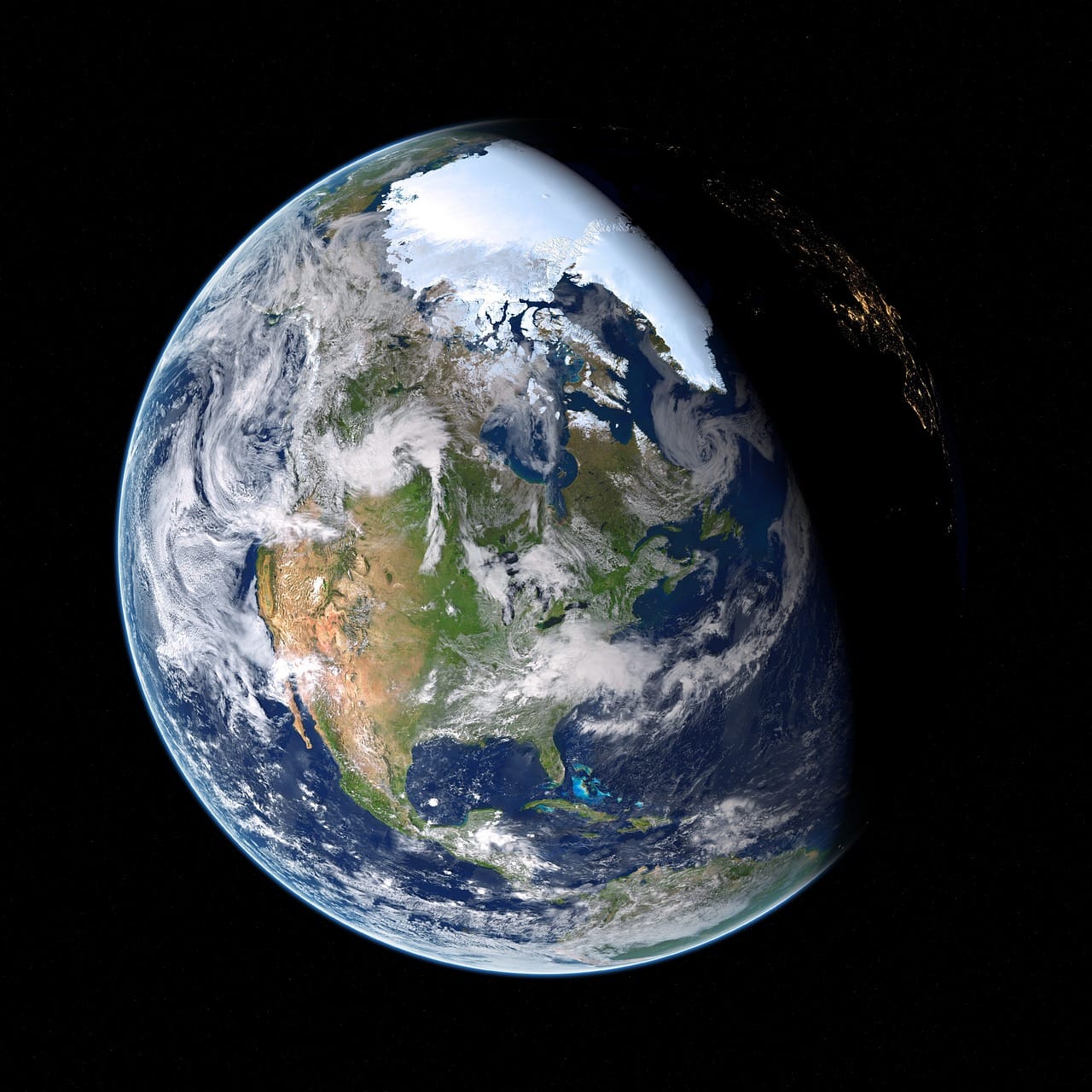
What Would Happen If Earth Entered a Black Hole… What if one day, without warning, Earth found itself teetering on the edge of a black hole? Imagine a force so powerful that it could warp time and space, pulling our planet into an abyss of unknown. As gravity stretches and tears at the very fabric of our world, what would become of life as we know it? Would we experience the end of days or a surreal journey through the cosmos? Join us as we delve into the mind-bending possibilities of what might happen if Earth were to cross the event horizon of a black hole.
What Would Happen If Earth Entered a Black Hole?The concept of Earth being pulled into a black hole is a fascinating yet terrifying thought experiment that stirs the imagination. Black holes, with their immense gravitational pull, are regions in space where the gravitational force is so strong that nothing, not even light, can escape from them. But what would actually happen if our planet found itself on a collision course with one of these cosmic enigmas? Let’s explore the science behind this scenario and the potential outcomes.
The Basics of Black HolesBefore we dive into the hypothetical scenario, let’s understand what a black hole is:
If Earth were to approach a black hole, several stages would unfold:
1. Tidal Forces: As we get closer to the black hole, the difference in gravitational pull between the side of Earth facing the black hole and the side facing away would create immense tidal forces. This effect is known as “spaghettification.”
2. Distortion of Time: Due to the effects of general relativity, time would appear to slow down drastically for observers outside the black hole, while those on Earth would experience time normally until they crossed the event horizon.
3. Atmospheric Effects: The gravitational pull would strip away the atmosphere, causing violent storms and extreme weather changes on Earth.
4. Final Moments: As we cross the event horizon, the final moments would be surreal. The light from stars and galaxies would be distorted, creating a mesmerizing display known as gravitational lensing.
Let’s summarize these stages in the table below:
| Stage | Description | |
| Tidal Forces | Extreme gravitational pull causing spaghettification of Earth | |
| Time Distortion | Time slows down drastically for observers outside the black hole | |
| Atmospheric Effects | Stripping of the atmosphere and extreme weather changes | |
| Final Moments | Distorted light display from stars and galaxies as we cross the horizon |
Spaghettification is a term that might sound amusing, but it describes a very serious phenomenon. As Earth approaches the black hole, the difference in gravitational pull from the top to the bottom of the planet would cause it to stretch and elongate, much like spaghetti. This process would lead to the disintegration of Earth into streams of matter, which would spiral into the black hole.
Life on Earth Before the Event HorizonBefore we meet our fate, what would life on Earth be like as we approach a black hole?
If Earth were to enter a black hole, the outcomes would be catastrophic but also awe-inspiring:
The idea of Earth entering a black hole is a mind-bending thought experiment that allows us to consider the limits of our universe and the laws of physics. While the prospect of being swallowed by a black hole is terrifying, it also highlights the incredible complexities of cosmic phenomena. So, the next time you gaze up at the stars, remember that there’s more to the night sky than meets the eye-somewhere out there, black holes are waiting, silently and majestically, in the vastness of space.
In conclusion, if Earth were to enter a black hole, the consequences would be catastrophic, leading to extreme gravitational forces that would ultimately tear the planet apart. The journey into the black hole would not only result in the destruction of our planet but would also create a profound and unsettling shift in our understanding of physics and the universe. What are your thoughts on the implications of such an event, and how do you think humanity would cope with the knowledge of an impending black hole encounter?
What Would Happen If Earth Entered a Black Hole: First, Earth Would Probably Die Before the Horizon
If you want the most physically honest version of this scenario, you have to separate two ideas: “crossing the event horizon” and “Earth remaining Earth long enough to cross it.” For most realistic black holes, our planet wouldn’t stay intact until the dramatic threshold moment. Tidal forces, orbital energy loss, and heating from the surrounding environment would likely destroy Earth on the way in. The event horizon would still be there, but by the time we reached it, we’d be a stream of debris, plasma, and vapor rather than a recognizable world.
That doesn’t make the thought experiment less interesting. It makes it sharper. The real horror isn’t a single instant of falling into darkness-it’s a sequence of escalating physical insults: tides that crack the crust, gravity gradients that tear apart the mantle, atmospheric stripping, and then heating so intense that oceans become superheated vapor long before the final plunge.
Two Very Different Black Holes, Two Very Different Endings
The details hinge on black hole mass. A small stellar-mass black hole has a relatively small event horizon and extremely steep gravity gradients near it. A supermassive black hole has a much larger event horizon, and its tidal gradients at the horizon can be comparatively gentle. That single difference changes the “movie” completely.
- Stellar-mass black hole: Earth is torn apart far outside the horizon. Spaghettification is brutal and early.
- Supermassive black hole: Earth could, in principle, cross the horizon with less immediate stretching at that exact boundary, but it still faces extreme heating and tidal disruption deeper in.
People often hear “supermassive” and assume safer. It isn’t safe. It’s just different. The gentler horizon tides don’t cancel the broader catastrophe of being dragged toward a region where spacetime curvature becomes lethal.
The Real First Step: Our Orbit Would Become a Death Spiral
Earth doesn’t usually plunge straight in like a dropped coin. Unless it begins already aligned on a direct collision trajectory, the approach would likely involve spiraling or orbiting as gravitational interactions bleed energy. The closer the orbit, the faster it decays. In many cases the end state is a tightening spiral that converts orbital energy into heat via tidal flexing and interactions with surrounding material.
That means the “approach phase” could be the longest and most painful part. The horizon might be far away in time, but Earth would already be transforming into something uninhabitable. If we were caught in a close orbit, we’d experience escalating gravitational gradients that constantly squeeze and stretch the planet. This is similar in concept to how tidal forces heat some moons, but scaled to an apocalyptic extreme.
Tidal Forces: How a Planet Actually Gets Shredded
Spaghettification is often described as stretching a body into a noodle. For a planet, the process is more like a progressive structural failure driven by differential gravity. The side of Earth closer to the black hole feels a stronger pull than the far side. At first, this manifests as tides-mass redistributes, the crust flexes, and internal stresses build. Then cracks propagate. Plate boundaries become fault lines under impossible loads. The mantle begins to deform on timescales far shorter than geology was built for.
As the gradient steepens, Earth can cross a tidal limit where self-gravity can no longer hold it together. At that point, the planet breaks into large fragments. Those fragments continue to stretch, collide, and heat, turning into rubble, then molten streams, then plasma. The “planet” becomes a ring of debris spiraling inward.
Atmosphere and Oceans: Stripped, Boiled, Then Ionized
Even before Earth disintegrates, the atmosphere becomes unstable. Pressure gradients and winds would become extreme as gravity varies across the planet. But the bigger issue is retention. The atmosphere is only weakly bound compared to the solid Earth; it can be peeled away by tidal effects and by heating.
The oceans are next. As tidal heating rises and incoming radiation increases, surface water heats, then boils, then becomes a dense steam envelope. That steam can be stripped or ionized, depending on the environment. The sky turns into a thick, hot shroud that blocks visible light while trapping heat. The last breathable air is gone long before any “event horizon moment.”
The Hidden Assassin: The Accretion Disk Environment
A black hole itself doesn’t emit light, but the material falling into it often does. If Earth approaches a black hole that is actively feeding, it may be surrounded by an accretion disk: a swirling structure of superheated gas and plasma. Accretion disks can shine intensely across the electromagnetic spectrum, including X-rays. That radiation environment can sterilize surfaces, ionize atmospheres, and heat planetary material violently.
In other words, you don’t need to cross the event horizon to be killed. A hungry black hole can cook you from the outside. The approach becomes less like falling into a dark pit and more like diving toward a cosmic furnace that happens to have an invisible center.
Time Dilation: What Outside Observers Would See vs. What We’d Feel
Here’s the relativity twist that makes this scenario so famous. To distant observers, clocks near the horizon appear to slow down. Light from Earth would become increasingly redshifted and dim as we approach the event horizon. To an external telescope, Earth might seem to freeze near the boundary, fading as its signals stretch into longer wavelengths and lower energies.
But from our perspective on Earth, if we were still alive-which is unlikely by then-time would feel normal locally. You wouldn’t feel your own clock slowing. You’d feel gravity gradients, heating, and structural failure. Relativity’s “frozen at the horizon” view is what distant watchers infer from the signals they receive, not what the falling world experiences.
Crossing the Event Horizon: Would There Be a “Moment”?
For a sufficiently massive black hole, the horizon is not a physical barrier. Locally, you wouldn’t hit a wall or see a line in space. You’d cross a point where escape becomes impossible, but nothing necessarily looks special at that exact instant. The real drama is in what happens next: every possible future path points inward.
If Earth were somehow intact at horizon crossing, you might still see the universe outside in a warped way due to intense gravitational lensing. Light paths curve. The sky could appear distorted into arcs and rings. But again, the planet’s physical survival would be the limiting factor, not the visual spectacle.
Inside the Horizon: The Endgame of Tidal Stretching
Once inside, the direction toward the center is not merely a direction in space-it becomes the unavoidable direction of your future. In many descriptions, “falling inward” is as inevitable as moving toward tomorrow. This is where the metaphor of time and space swapping roles becomes useful: you can no more avoid the center than you can avoid the passage of time.
Tidal forces continue to increase as you move inward. For stellar-mass black holes, the stretching becomes fatal well before any hypothetical “inner journey” could be experienced. For supermassive black holes, you could pass the horizon before the worst tides hit, but deeper in, the gradients become extreme and the structure of matter cannot survive. Eventually, any remaining coherence-planetary, molecular, even atomic-would be overwhelmed.
Competing Speculations: Wormholes, Bounces, and Why They Don’t Save Earth
Popular science sometimes suggests black holes might connect to wormholes or other universes. Even if such structures exist in some theory, they are not benign escape tunnels for a planet. Maintaining a traversable wormhole typically requires exotic conditions not known to exist in nature. And any “bounce” scenario in quantum gravity, where collapse leads to a new expanding region, would not preserve Earth as an intact traveler. The planet’s information and matter would still be shredded, heated, and rearranged long before any speculative transition could occur.
So the honest statement is: black-hole-as-portal ideas are interesting for cosmology, but they do not offer a survivable path for Earth. The journey would be a destruction process, not a voyage.
Practical Takeaways: What This Thought Experiment Really Teaches
- Mass matters: small black holes shred you earlier; supermassive ones may allow horizon crossing before the worst tides-while still guaranteeing destruction deeper in.
- Earth dies before the headline moment: heating, tides, and atmospheric loss likely end habitability well before the event horizon.
- Accretion disks are lethal: an active black hole can irradiate and cook a planet long before it gets close.
- Time dilation is perspective-dependent: outsiders see signals slow and redshift; locals still experience their own time normally.
- Portals don’t rescue planets: wormhole speculation does not change the physics of tidal disruption and heating.
In the end, the most mind-bending part isn’t that a black hole could swallow Earth. It’s that the “swallowing” is not a single gulp. It’s a drawn-out, physics-driven dismantling of a world-layer by layer-until the concept of Earth no longer applies.
FAQ
Would Earth be pulled in instantly?
Not necessarily. Unless on a direct collision trajectory, Earth would likely spiral inward, losing orbital energy, with destruction escalating as it approaches.
Would we feel anything at the event horizon?
For a supermassive black hole, the horizon itself might not feel like a boundary. But Earth’s environment would likely be lethal long before, due to tides and heating.
Would we see the universe distort as we approach?
Yes, extreme gravitational lensing could warp the appearance of stars and galaxies, producing arcs and bright rings.
Would Earth be spaghettified like a person?
The same tidal principle applies, but a planet would undergo cracking, fragmentation, and progressive disruption into debris and plasma rather than a single “noodle.”
Is a supermassive black hole safer than a stellar-mass one?
Only at the horizon in terms of tidal gradients. Overall, it’s still fatal because tides and curvature become extreme deeper in, and accretion environments can be lethal.
Could Earth survive by orbiting the black hole instead of entering it?
Only at a sufficiently distant, stable orbit. Close orbits face intense tides and, if the black hole is active, severe radiation from the accretion disk.
Would an outside observer see Earth cross the horizon?
They would see Earth appear to slow and fade due to redshift and time dilation effects, rather than witnessing a clean “crossing moment.”
Could a black hole send Earth to another universe?
Highly speculative theories exist, but they do not imply a survivable transit for a planet. Earth would be destroyed by tidal forces and heating first.