

Why Space Is Cold: 9 Surprising Reasons the Vacuum Still Freezes You
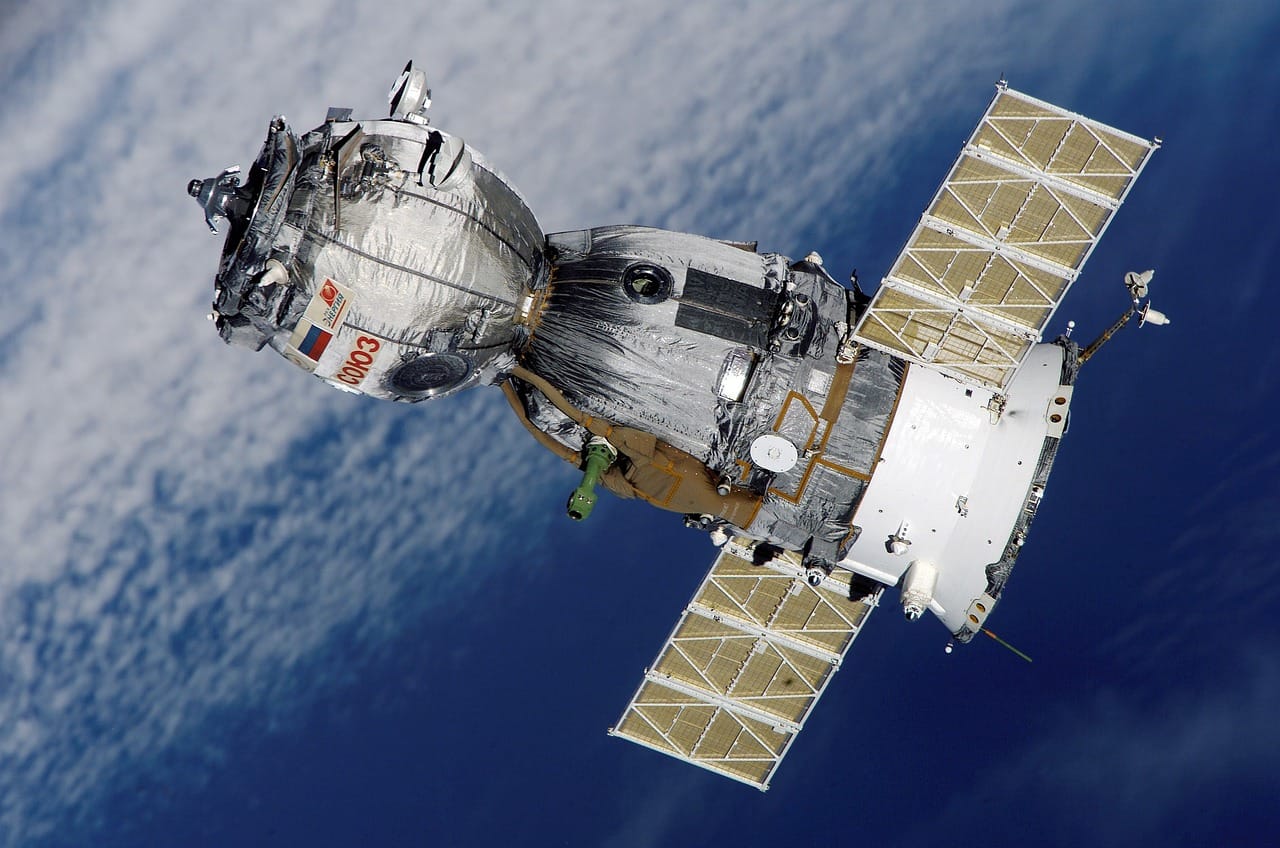
Why space is cold… Did you know that the vastness of space is not as empty as it seems? Despite its near-total vacuum, where sound cannot travel and light dances across billions of stars, it feels chillingly cold-averaging around -270 degrees Celsius! But why does this infinite expanse, with its seemingly sparse matter, have such a frigid temperature? Join us on a journey to unravel the paradox of a universe filled with energy yet devoid of warmth, exploring the mysteries of cosmic temperature, the nature of emptiness, and what it truly means to feel cold in the void of space.
Why Does Space Feel Cold but is Almost Empty?When we think of space, our minds often conjure images of vast, dark expanses filled with twinkling stars and distant galaxies. But what’s fascinating about space is not just its beauty, but also the paradox of temperature and emptiness. How can something as vast as space feel so cold when it is almost devoid of matter? Let’s dive into the science behind this intriguing phenomenon!
The Nature of SpaceTo understand why space feels cold, we first need to explore what space actually is.
Despite this background radiation, the lack of matter in space significantly affects how we perceive temperature.
Why Does Space Feel Cold?The sensation of coldness in space can be attributed to several factors:
To give you a clearer picture of how temperature varies in different environments, here’s a simple comparison table:
| Environment | Temperature Range | Particle Density | |
| Space (near Earth) | ~2.7 K (cosmic background) | Extremely low (few atoms) | |
| Earth’s Surface | 0 °C to 30 °C | High (many molecules) | |
| Inside a Star | Millions of K (fusion) | Extremely high (dense) | |
| On the Moon | -173 °C to 127 °C | Low (but not empty) |
While space itself can be incredibly cold, it’s important to highlight that this coldness is relative.
In summary, space feels cold due to its vast emptiness and the nature of heat transfer in a vacuum. While it may seem paradoxical, the lack of particles means that there is minimal heat to feel. The universe is a place full of wonders and mysteries, and understanding why space feels cold enhances our appreciation for the cosmos. So next time you gaze up at the night sky, remember that the coldness of space is just one of its many fascinating features!
In conclusion, space feels cold primarily because it lacks matter to conduct heat and has a low temperature due to the vast distances between stars and galaxies. Despite being almost empty, the limited presence of particles means there is little to retain or transfer warmth, leading to the perception of coldness in the vast vacuum of space. What are your thoughts on how the emptiness of space affects our understanding of temperature and energy?
Temperature Isn’t “How Cold It Feels”
The biggest source of confusion is that temperature and heat transfer are not the same thing. Temperature describes the average kinetic energy of particles. Heat transfer describes how energy moves between objects. In air on Earth, these two concepts blend together because air molecules are everywhere-constantly colliding with your skin, carrying energy to and from you. In space, that molecular “middleman” is missing.
So when people say “space is -270°C,” they’re usually pointing to the baseline radiation environment dominated by the cosmic microwave background. But you don’t “feel” a number like that the way you feel a winter day. What you feel is how fast your body (or a spacecraft) gains or loses energy. In a vacuum, you can’t lose heat by convection, and you can’t lose much by conduction. You mainly lose heat by radiation-infrared light emitted from your surface.
The Real Thermostat of Space: Radiation
In a vacuum, radiation becomes the primary highway for heat. Any object above absolute zero emits infrared radiation. If it emits more energy than it absorbs, it cools. If it absorbs more than it emits, it heats. That balance is called radiative equilibrium, and it depends on factors you can’t ignore: surface color, reflectivity, emissivity, orientation, and whether you’re in sunlight or shadow.
This is why “space is cold” is both true and incomplete. Space isn’t actively sucking heat from you the way cold air does. Instead, space is not giving you heat back through surrounding matter, and it provides a clear path for your heat to leak away as radiation.
Put differently: on Earth, your body is surrounded by a thermal crowd. In space, you’re on a silent stage with only one exit door for heat-infrared emission.
Why Sunlight Can Cook You While Space Is “Freezing”
If space were simply “cold,” sunlight wouldn’t be such a problem. But sunlight in orbit is intense, and in a vacuum there’s no breeze to carry extra heat away. In direct sunlight, a surface can absorb energy rapidly, especially if it’s dark and has high absorptivity. In shadow, the same surface can radiate energy away and cool quickly.
This is the paradox that makes space feel alien: temperature extremes happen because the environment doesn’t buffer you. On Earth, air, weather, and oceans smooth out thermal spikes. In space, you can move a meter from sun to shade and change your energy balance dramatically.
That’s why spacesuits and spacecraft are engineered like thermal machines rather than simple “jackets.” They must handle both heating and cooling, sometimes within the same orbit.
The Cosmic Microwave Background: The “Cold Glow” That’s Everywhere
The cosmic microwave background (CMB) is often described as the universe’s leftover heat from the Big Bang, and it sets a kind of baseline radiative bath. But it’s not a warm blanket-its energy density is extremely low compared to nearby heat sources like the Sun, Earth, or even the astronaut’s own body.
That means the CMB is a background “floor,” not a practical heater. Your body radiates far more energy than it receives from the CMB. In deep space, far from stars, that makes the CMB relevant conceptually-but the dominant story remains the same: you cool or heat based on your local radiation environment.
“Empty” Doesn’t Mean “Nothing”: Why Vacuum Still Isn’t a Thermal Friend
Even though space is nearly empty, it’s not perfectly empty. There are still particles: sparse atoms, solar wind, and cosmic rays. But the density is so low that collisions with your body are negligible for everyday heat transfer. You can’t rely on those particles to warm you up or cool you down in a meaningful way.
On Earth, a cold day feels cold because moving air carries away the warm boundary layer your skin creates. In space, there is no boundary layer to strip away. If you were insulated from radiation, you could actually hold heat surprisingly well. That’s counterintuitive but critical: vacuum is not an aggressive freezer. Radiation is.
What Happens to a Human Body: The “Cold” You’d Experience Isn’t the First Problem
It’s tempting to imagine instant freezing, but exposure to vacuum introduces multiple lethal issues that compete with temperature. With no external pressure, bodily fluids can begin to boil at body temperature, and gas expansion becomes a major hazard. Meanwhile, cooling by radiation is real, but it’s not the fastest mechanism in the first seconds compared to pressure-related trauma.
The key takeaway for “why it feels cold” is still valid, though: once pressure problems dominate, your long-term thermal fate in shadow is cooling through radiation. In sunlight, heating can become dangerous too. The vacuum doesn’t choose one; your orientation and environment do.
Why Spacecraft Need Thermal Control, Not Just Insulation
Spacecraft are built to manage energy like a budget. They absorb solar radiation, reflect some of it, radiate heat away, and generate internal heat from electronics. Without active thermal control, temperatures can swing wildly between orbital day and night.
That’s why you see reflective blankets and carefully chosen surface coatings. They aren’t there for style. They tune absorptivity and emissivity-how much energy the craft takes in and how efficiently it can radiate heat away. Radiators, heat pipes, and coolant loops move heat from hot components to surfaces designed to dump that heat into space as infrared radiation.
In a vacuum, “getting rid of heat” can be harder than staying warm. You can’t just turn on a fan and blow heat away. You must radiate it.
The Clean Answer to the Paradox
Space feels cold because there is almost nothing to transfer heat to you by contact, and because anything warm loses energy by radiating infrared into a vast environment that doesn’t send much back. The “emptiness” isn’t what makes space cold; it’s what makes space thermally unforgiving. Without matter, there’s no cushioning. Only radiation-and radiation is a one-way leak if you’re not absorbing enough energy to replace what you emit.
Practical Takeaways
- Temperature measures particle motion, not comfort. In vacuum, comfort is about energy balance, not air temperature.
- You can’t rely on conduction or convection. In space, radiation dominates heating and cooling.
- Sun vs shadow is everything. The same object can overheat in sunlight and freeze in shade.
- Spacecraft “thermal design” is survival. Controlling emissivity and absorptivity is as important as propulsion.
- Vacuum isn’t a fast freezer by itself. The main heat-loss path is infrared radiation.
FAQ
Is space actually -270°C everywhere
That number is close to the cosmic microwave background temperature, but local temperatures vary dramatically depending on sunlight, nearby planets, and what an object absorbs and radiates.
Why can’t heat travel in space the way it does on Earth
Because there’s almost no matter for conduction or convection. Heat transfer happens mainly through radiation.
Would you freeze instantly in space
No. Cooling by radiation takes time, and other vacuum hazards become critical first. Long-term in shadow, you would cool primarily by radiating heat away.
Why do astronauts get hot in sunlight
Sunlight can add energy faster than the suit can radiate it away, especially without air to carry heat off the surface.
What sets the baseline “temperature” of deep space
The cosmic microwave background provides a faint universal radiation field, but it’s a weak heat source compared to stars and planets.
Why do spacecraft have shiny thermal blankets
They control how much radiation the spacecraft absorbs and how efficiently it emits heat, helping prevent extreme temperature swings.
Can space be “hot” and “cold” at the same time
Yes. In sunlight a surface can heat up significantly, while nearby shaded surfaces can cool rapidly, because the vacuum doesn’t equalize temperatures.
What’s the simplest way to explain the paradox
Space feels cold because there’s almost no matter to deliver heat to you, and warm objects lose heat mainly by radiating it away into a vast environment that doesn’t return much energy.
The “Cold” of Space Is Really the Absence of Thermal Negotiation
On Earth, temperature feels like a shared agreement between you and the environment. Air molecules constantly collide with your skin, and that collision traffic creates a fast negotiation: you warm the air, the air cools you, and the result is a sensation you can intuit. In space, that negotiation is gone. Your body (or a spacecraft) can only “talk” to the environment through radiation, which is slower, directional, and heavily dependent on what you’re facing.
This is why the same astronaut can be dangerously warm on the sunlit side of an orbit and dangerously cold in shadow even though the “space temperature” hasn’t changed. The surroundings aren’t a thermostat. They’re a stage with spotlights and dark corners. Radiation makes it possible to gain energy quickly from a bright source and lose energy steadily into darkness.
Radiation Cooling: Why Your Heat Leak Doesn’t Need Air
Even in a perfect vacuum, a warm object emits infrared radiation. The rate of that emission rises sharply with temperature, which means cooling is not linear. A hotter object radiates disproportionately more energy, so it cools faster at first and then slows as it approaches a new equilibrium. That “fast-then-slow” behavior is part of why people misjudge vacuum cooling-they imagine a steady freeze, but radiative cooling is more like a curve that changes shape as the object cools.
Another important detail: radiative cooling depends on emissivity, which is how effectively a surface emits infrared. A shiny metallic surface can have low emissivity, meaning it radiates heat poorly and can retain heat longer. A matte black surface typically has higher emissivity, meaning it dumps heat more efficiently. This is exactly why spacecraft thermal coatings matter. You’re not just decorating a satellite; you’re choosing how it speaks infrared to the universe.
Why Shadow Is So Brutal in Orbit
In sunlight, you have a dominant incoming energy source. In shadow, that source vanishes, and your energy budget becomes mostly outgoing. You still receive some radiation from nearby bodies-like Earth’s reflected sunlight and infrared emission-but if you are far enough away or oriented poorly, those inputs may be small compared to what you radiate away.
This is the overlooked reason space “feels” cold: the most dangerous thermal situation is often not deep space at 2.7 K, but being in a shadowed region where your heat loss continues while your heat gain collapses. The vacuum doesn’t chill you by contact. It gives your heat a clear escape route while denying you the usual sources of replacement.
It also helps explain why astronauts and satellites can’t rely on passive insulation alone. Insulation slows energy movement, but it doesn’t generate energy. In prolonged shadow, an object can still cool below safe limits unless it has internal heat generation or an engineered way to absorb external radiation.
Earth Orbit Isn’t “Deep Space”: Nearby Objects Heat You Too
“Space is cold” is truest in the emptiest regions, far from stars and planets. But near Earth, the thermal environment includes multiple radiation sources: direct sunlight, reflected sunlight from Earth, and infrared emission from Earth itself. Those sources can be significant and can sometimes be the difference between manageable cooling and a deep chill.
This is why orbiting spacecraft have thermal models that treat the environment like a rotating radiation puzzle. As the craft moves, different surfaces see the Sun, see Earth, or see empty sky. The craft is constantly sliding between energy inputs and outputs, and the temperature of each component depends on how those view factors change over the orbit.
“Feeling Cold” Is a Human Brain Shortcut That Breaks in Vacuum
Humans evolved to interpret cold mostly through skin sensors and air movement. Wind chill works because moving air increases convective heat loss. In vacuum, there is no wind chill. So the intuition “vacuum must be the coldest possible” is emotionally compelling but physically incomplete.
If you could magically remove all other hazards and just ask how quickly a human body loses heat in vacuum, the answer is “by radiation,” and the rate depends on exposed surface properties and how much incoming radiation exists. In sunlight, a body can absorb energy. In shadow, it radiates energy away. The body doesn’t feel a cold breeze; it simply leaks heat into darkness.
That’s why the correct mental image is not “space is a freezer.” It’s “space is a place where your thermal balance is fragile.” Without air, you lose the buffering that makes Earth temperature feel stable and predictable.