

Wombat Poop is Cube-Shaped: 9 Weird Facts About Nature’s Strangest Droppings
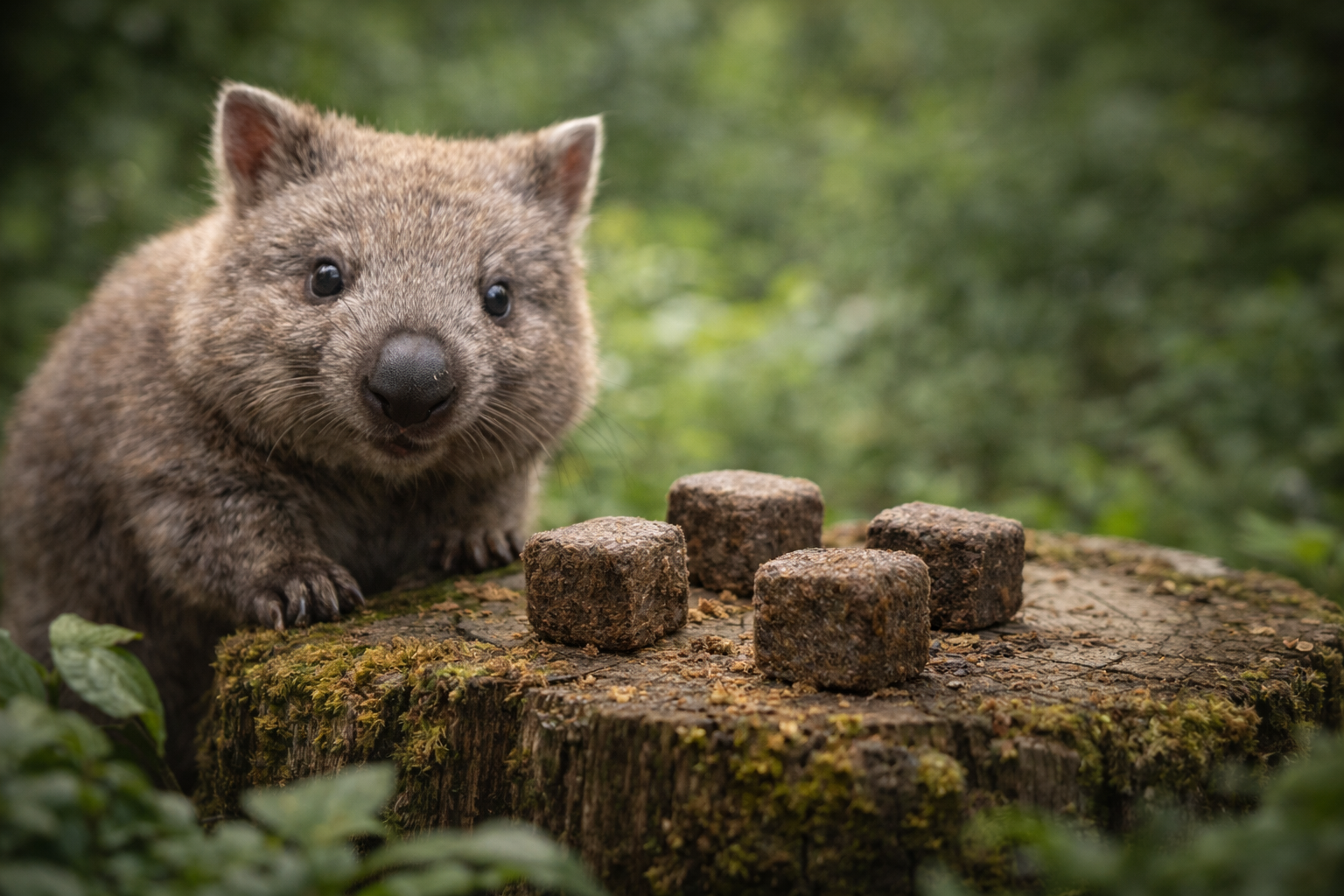
Wombat Poop is Cube-Shaped… Did you know that one of nature’s most adorable marsupials produces poop that is not only unique but also shaped like cubes? That’s right-wombat droppings defy the conventional round shape we expect from most animals. This quirky phenomenon has baffled scientists for years, leading to fascinating insights into the anatomy and behavior of these charming creatures. Join us as we delve into the science behind this cubic curiosity and explore what it reveals about the remarkable world of wombats. Prepare to be amazed by the intersection of nature’s whimsy and scientific wonder!
The Fascinating World of Wombat Poop: Why It’s Cube-ShapedWhen you think of unique animal characteristics, wombats might not be the first creatures that come to mind. But did you know that these adorable marsupials produce cube-shaped poop? Yes, you read that right! This peculiar trait has intrigued scientists and animal lovers alike. In this blog post, we’ll explore why wombat poop is cube-shaped, how it compares to the droppings of other animals, and what this means for the wombat’s lifestyle.
Why is Wombat Poop Cube-Shaped?Wombats are native to Australia and are known for their sturdy, stocky bodies and unique behavior. But the real conversation starter is their feces. The cube shape of wombat poop is not just a quirky trait; it serves several practical purposes:
The cube shape of wombat poop is attributed to the elasticity of the intestines. As the feces are formed, they undergo a unique shaping process that results in the square edges. Research suggests that the intestines contract in different ways at various points, creating the distinctive shape.
To better understand this phenomenon, let’s compare wombat poop with that of other animals.
Comparison of Animal Poop Shapes| Animal | Shape | Purpose of Shape | |
| Wombat | Cube | Stays in place for territorial marking | |
| Elephant | Round | Rolls away, spreads seeds | |
| Rabbit | Pellets | Lightweight and easy to excrete | |
| Dog | Logs | Varies based on diet, easy to clean up | |
| Cat | Clumps | Compact for easy disposal |
Wombat poop is not just an oddity; it also plays an important role in the ecosystem. The nutrient-rich feces contribute to soil health, providing essential nutrients for plants. The cube shape allows for a slow release of nutrients, enriching the ground over time. This, in turn, supports the diverse flora and fauna in their habitats.
ConclusionWombat poop is a prime example of how nature can produce unique adaptations that serve practical purposes. From its cube shape to its role in marking territory and enriching ecosystems, wombat poop is not just a funny fact; it’s a window into the fascinating lives of these remarkable creatures. The next time you find yourself discussing animal poop, you’ll have a fun and informative story to share about the cubic wonders of wombat feces!
In conclusion, the unique cube-shaped poop of wombats is a fascinating aspect of their biology that serves important purposes in marking territory and attracting mates. This peculiar characteristic sets them apart in the animal kingdom and highlights the wonders of nature’s adaptations. What do you find most interesting about wombat poop or other unusual animal traits? Share your thoughts in the comments!
Wombat Poop is Cube-Shaped and Scientists Found Out Why
At first, the fact sounds like something invented for a children’s nature book or a strange internet meme. But it is completely real: wombat poop is cube-shaped. In a world where most animal droppings come in pellets, clumps, or elongated forms, the wombat stands alone with one of the most unusual digestive outcomes in the entire animal kingdom. What makes this even more fascinating is that the cube shape is not random. It is the result of a highly specialized biological process that appears to help wombats survive in their environment.
For years, the idea puzzled both animal lovers and scientists. How could something soft and biological come out in sharp-edged cubes instead of the rounded forms we expect? The answer lies in the wombat’s extraordinary intestines, which shape the feces in a way that no other known animal seems to do. This means the cube is not a novelty. It is a functional adaptation created by anatomy, digestion, and the demands of life in the wild.
That is what makes wombat poop so much more interesting than a funny wildlife fact. It reveals how evolution can produce deeply practical solutions in forms that seem completely bizarre to human eyes. Once you understand why the cubes exist, they stop looking silly and start looking ingenious.
Why Wombats Need Such Strange Droppings
Wombats are sturdy marsupials native to Australia, and much of their lives revolve around conserving energy, defending territory, and surviving in often dry, demanding conditions. They are mostly solitary animals that rely heavily on scent to communicate with one another. Because they do not move in large visible groups like many herd animals, scent marking becomes especially important. Their droppings help tell other wombats where one animal’s territory ends and another’s begins.
This is where the cube shape becomes useful. Round droppings roll away easily, especially on uneven ground, slopes, rocks, or logs. Cubes, by contrast, are much more likely to stay where they are placed. That stability matters when an animal wants its scent marker to remain in a visible, elevated, or strategic location. A cube can sit on a log, rock, or mound without immediately tumbling away.
In other words, wombats are not producing cubes by accident. Their bodies are creating a shape that works well for communication. The poop stays put, and the message stays where it is supposed to be. That is a remarkably effective use of waste in the service of territory and survival.
The Intestinal Secret Behind the Cube
The most fascinating part of this story is how the shape is formed. Wombats do not have square-shaped anus openings, and the cubes are not molded at the very end of the process the way many people first imagine. Instead, the shaping happens in the intestines. Research suggests that the final sections of the wombat digestive tract have varying elasticity and muscular contractions in different regions. This causes the fecal matter to be compressed unevenly as it dries and moves through the bowel.
As the material loses moisture and becomes firmer, these differences in intestinal tension create edges and flat sides. By the time the feces are expelled, they have taken on the now-famous cube form. This is extraordinary because it shows that the body is using soft tissue mechanics to produce a geometric result. Nature is effectively engineering packaging through peristalsis and tissue elasticity.
This makes wombats unique in a very literal sense. Scientists know of no other animal that produces poop in this way. The cube is therefore not just rare. It is one of the most distinctive examples of digestive specialization in mammals.
Wombat Poop is Cube-Shaped Because Moisture Matters
Another major reason for the cube shape lies in the wombat’s need to conserve water. Wombats live in environments where moisture can be limited, and like many animals adapted to dry regions, they are extremely efficient at extracting as much water as possible from their food before waste leaves the body. Their digestive process is slow and thorough, allowing plant material to ferment and dry out significantly before excretion.
This drying process is part of what makes the cube possible. Wetter feces would be too soft to hold such a distinct shape. But because wombat droppings become dense and compact during their long journey through the intestines, they are able to maintain flat faces and edges instead of collapsing. The body is not only making poop more economical in terms of water loss. It is also making it strong enough to serve a second purpose as a durable territorial marker.
That combination is what makes the adaptation so elegant. Water conservation and communication work together. The wombat saves precious moisture and produces a form of waste that is unusually useful once it is outside the body.
Why Cube-Shaped Poop Helps With Territory
Wombats often place their droppings on raised surfaces such as rocks, logs, and mounds. These spots make the scent easier for other wombats to detect, almost like placing a sign on a visible post rather than dropping it into grass. If the droppings were round, many of them would roll away quickly, especially from elevated or uneven places. The cube shape solves that problem beautifully.
Because cubes are more stable, wombats can effectively “stack” their scent messages in useful locations. This gives their territorial marking system a level of reliability that round droppings would not offer. What looks absurd to humans is actually perfect for the wombat’s lifestyle. A little geometry goes a long way when your survival depends on your signals staying put.
This is also one reason the adaptation captures so much imagination. It feels almost too clever to be true. Yet nature is full of such solutions, where a tiny change in form creates a major improvement in function. The wombat’s cube-shaped poop is one of the best examples of this principle in the animal world.
Wombats Are Already Weird in the Best Way
The cube-shaped poop fact becomes even more delightful when placed alongside the rest of wombat biology. Wombats are already unusual animals. They are burrowing marsupials with powerful bodies, backward-facing pouches that help keep dirt out while digging, and strong rear ends reinforced by cartilage that can help them defend themselves in tunnels. They are cute, but they are also built like compact underground machines.
This matters because the poop fact is not an isolated oddity. It fits a broader pattern: wombats are animals full of specialized, sometimes surprising adaptations. Everything about them reflects a life spent digging, conserving resources, protecting territory, and navigating harsh environments. The cube-shaped poop is just the most famous example because it is the easiest one for humans to laugh at and remember.
Seen in that larger context, the cube is not strange because wombats are random. It is strange because wombats are exceptionally well adapted. Their bodies solve problems in ways that happen to look funny to us.
How Scientists Studied the Cube Mystery
One of the reasons this topic became so popular is that scientists genuinely did not know exactly how wombat poop became cube-shaped for a long time. The effect was obvious, but the mechanism remained unclear. Researchers eventually studied the intestines of wombats and compared how tension and elasticity varied across different sections of the bowel. Their findings suggested that the digestive tract itself was shaping the feces before it left the body.
This is a great example of science working on questions that sound silly but reveal something important. At first, asking why wombat poop is cube-shaped may seem like a novelty project. But the research tells us about soft tissue mechanics, animal adaptation, digestive physiology, and even potential ideas for manufacturing shapes without molding. Nature often solves engineering problems in elegant ways, and scientists learn by paying attention even to the oddest details.
That is one of the joys of biology. A funny question can turn into serious insight. Curiosity about cube poop opens the door to broader understanding about form, function, and evolution.
What This Says About Evolution
Evolution does not aim to make animals look normal to humans. It shapes bodies according to what works. The wombat’s cube-shaped poop is a perfect reminder of this. If a shape improves territorial marking and fits well with a water-conserving digestive system, then that shape can persist and become one of the animal’s defining traits. There is no requirement that evolution produce outcomes that seem elegant, beautiful, or intuitive from our point of view.
This makes the wombat such a useful example in understanding natural selection. Adaptations are often practical before they are understandable. Something that seems absurd from a distance may be highly effective when viewed in the context of the animal’s actual life. The cube works because the wombat’s world rewards stability, scent placement, and efficient digestion.
In that sense, wombat poop is a lesson in humility. Nature does not care whether we find a trait amusing. It only cares whether the trait helps the organism do what it needs to do.
The Ecological Value of Wombat Droppings
Like the droppings of many herbivores, wombat feces are not just waste. They also return nutrients to the environment. As they break down, they contribute organic material to the soil and become part of the nutrient cycle that supports plant growth and other forms of life. This means the famous cubes are part of the ecology of the landscape, not just a personal feature of the animal that made them.
Because wombats often place their droppings in specific visible locations, they may also influence how those nutrients are distributed. The cubes can accumulate in spots that become familiar markers, creating tiny repeated points of nutrient return in the habitat. While the main function is communication, the ecological side effect still matters. Nature rarely wastes an opportunity to reuse material in multiple ways.
This is another reminder that even the strangest animal traits often play more than one role. The cube is a territorial marker first, but it still participates in broader environmental processes. What seems like a curious detail is part of a whole living system.
Why People Never Forget This Fact
Some facts stay in the mind because they are important. Others stay because they are emotionally unforgettable. Wombat poop belongs to the second category, but then earns the first as well once people learn the science behind it. The phrase alone is enough to make someone stop and smile. But then the explanation reveals real evolutionary logic, and the fact becomes even better.
This combination of humor and intelligence is why the story spreads so well. It feels like the perfect nature fact: weird enough to be memorable, true enough to be satisfying, and scientific enough to teach something real. People may arrive for the absurdity, but they stay for the elegance of the explanation.
That makes wombat poop a wonderful ambassador for biology in general. It reminds people that the natural world is full of solutions stranger and smarter than fiction. If you look closely enough, even a pile of droppings can become a doorway into anatomy, ecology, and evolution.
Wombat Poop is Cube-Shaped and That Makes Wombats Even More Remarkable
It would be easy to dismiss the cube as a novelty and move on. But the more closely you look, the more remarkable it becomes. A wombat takes rough plant material, processes it slowly in a water-efficient digestive system, shapes it with specialized intestinal mechanics, and produces a stable territorial signal that does not roll away. That is not random. That is biological precision.
The cube shape shows that adaptation can happen in the most unexpected places. It also shows that animals we think of as simple are often full of hidden sophistication. Wombats may look sturdy and sleepy, but their bodies are carrying out processes that even human engineers find fascinating.
Once you understand that, the cube stops being merely funny. It becomes a small masterpiece of natural design.
Final Thoughts
Wombat Poop is Cube-Shaped because wombats have evolved a unique digestive system that dries, compresses, and shapes their feces in a way no other known animal does. That cube shape helps the droppings stay in place, making them more effective for territorial marking while also fitting the wombat’s need to conserve water in dry environments.
What seems like one of nature’s funniest facts turns out to be a deeply practical adaptation. It reflects the same thing many great evolutionary traits do: a perfect match between body design and environmental need. In the wombat’s case, that match just happens to come out looking like a tiny cube.
The next time someone mentions the strange world of animal adaptations, wombat poop deserves a place near the top of the list. It is weird, useful, unforgettable, and scientifically brilliant all at once.