

7 Truths About Microexpressions vs Nervoustics and What Body Language Is Actually Reliable
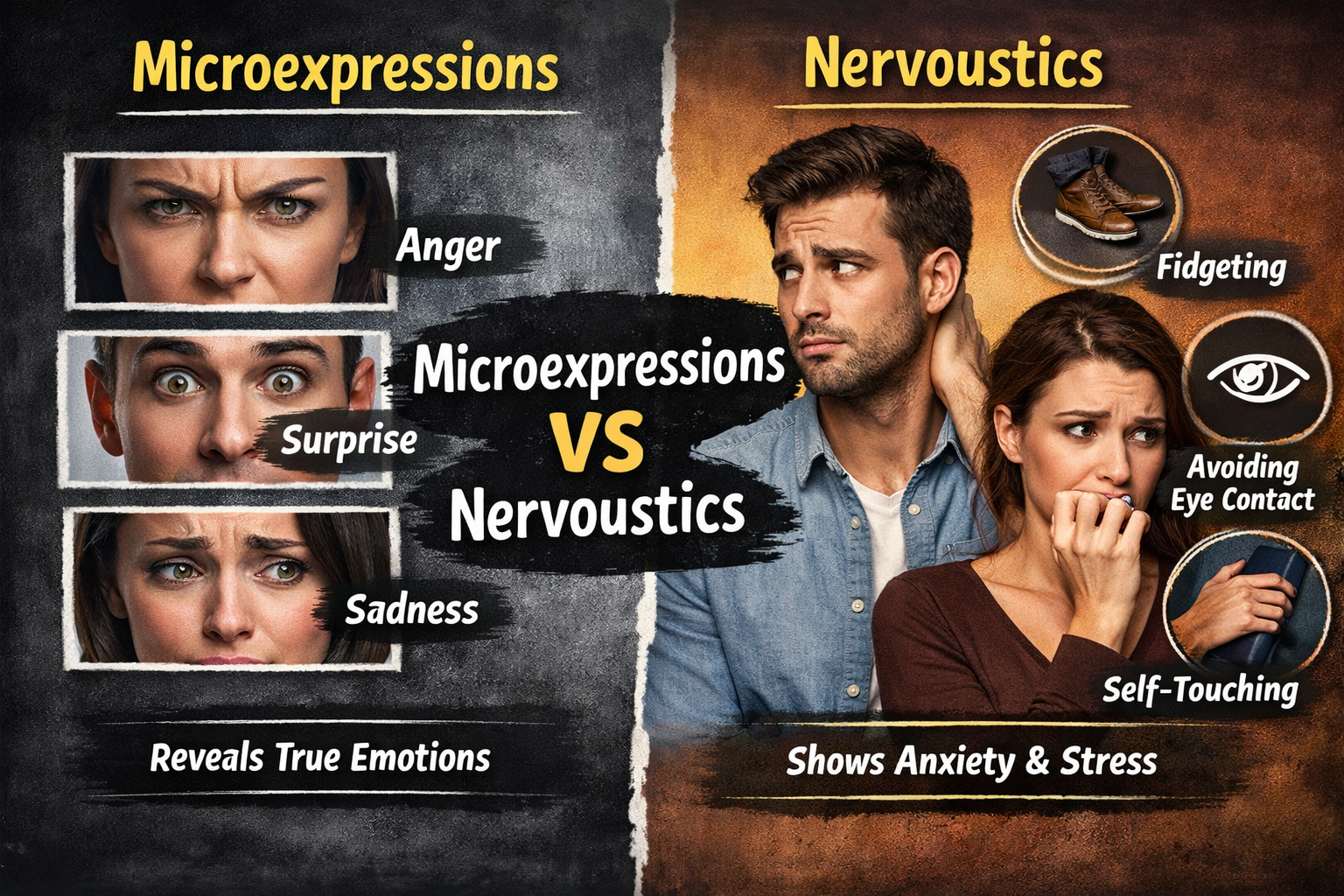
7 Truths About Microexpressions vs Nervoustics… Have you ever found yourself in a conversation, feeling that something just doesn’t add up? Perhaps your friend is smiling while their eyes dart nervously, or a colleague seems overly enthusiastic but can’t maintain eye contact. It’s moments like these that leave us questioning the authenticity of what we see and hear. In a world where communication often dances between words and unspoken cues, understanding the subtle differences between microexpressions and nervoustics can feel like deciphering a complex code.
Are we really equipped to interpret the silent language of the body, or are we merely guessing at the truth behind the surface? Join us as we delve into the intriguing realm of body language, exploring what truly lies beneath the façade and how to discern reliable signals from mere noise.
Microexpressions vs. Nervoustics: What Body Language is Actually Reliable
The Evolutionary or Psychological Reason Behind It
Body language has evolved as a crucial form of non-verbal communication that conveys emotions and intentions, often more effectively than words. Microexpressions, which are brief, involuntary facial expressions, reveal genuine feelings that a person might be trying to conceal. This phenomenon is rooted in our evolutionary history, where the ability to read emotions quickly could mean the difference between life and death. For instance, detecting fear or aggression in others can trigger survival instincts.
Nervoustics, on the other hand, refers to non-verbal cues associated with anxiety or discomfort, such as fidgeting or avoiding eye contact. These behaviors can signal a person’s emotional state but are not as reliable as microexpressions because they can stem from various causes, including social anxiety or nervousness, rather than a true reflection of their feelings.
Real-Life Examples or Famous Case Studies
Numerous studies and real-life scenarios illustrate the importance of understanding microexpressions over nervoustics. One notable case is the research conducted by Paul Ekman, a psychologist renowned for his work on emotions and facial expressions. His studies demonstrated that microexpressions can be universally recognized, transcending cultural barriers. For instance, during high-stakes negotiations, individuals skilled in reading microexpressions can gauge the sincerity of their counterparts, leading to more favorable outcomes.
Another example is the famous ‘Duchenne smile,’ which is characterized by the activation of both the lip muscles and the muscles around the eyes. This smile is a reliable indicator of genuine happiness, distinguishing it from a polite or forced smile often associated with nervoustics. In high-profile interviews, such as those conducted with celebrities or politicians, trained observers can detect microexpressions that reveal true emotions, providing deeper insights into the interviewee’s authenticity.
5 Actionable Coping Mechanisms or Takeaways
- Practice Observation: Regularly observe people’s facial expressions and body language. This enhances your ability to recognize microexpressions in real-time.
- Reflect on Your Own Body Language: Be conscious of your body language and how it may convey messages. This awareness can help you communicate more effectively.
- Engage in Active Listening: Focus not just on words spoken, but also on non-verbal cues. This holistic approach improves understanding and rapport.
- Manage Anxiety: Develop techniques to cope with nervousness, such as deep breathing or mindfulness, to minimize nervoustics during important interactions.
- Seek Feedback: After important conversations or presentations, ask trusted individuals for feedback on your body language and emotional expressions.
Did You Know? Microexpressions occur within a fraction of a second, lasting only 1/15th to 1/25th of a second, making them difficult to detect without focused training.
Why People Misread Body Language So Easily
One of the biggest mistakes people make with body language is assuming that every visible cue has a single fixed meaning. A person avoids eye contact, so we assume they are lying. Someone crosses their arms, so we assume they are defensive. Another person fidgets, so we assume they are hiding something. In reality, nonverbal behavior is far more context-dependent than popular culture suggests. The same gesture can mean anxiety, cold temperature, distraction, social discomfort, habit, or genuine emotional tension depending on the situation.
This is why the distinction between microexpressions and nervoustics matters. Microexpressions are brief, involuntary emotional flashes that may reveal what someone is feeling before they fully mask it. Nervoustics are broader signs of stress, discomfort, or self-regulation such as fidgeting, touching the face, shifting posture, or breaking eye contact. The problem is that people often treat both as equally reliable signs of truth. They are not. One may offer clues about emotion. The other often tells you only that the body is activated.
Why Nervousness Is Not the Same as Deception
A major source of confusion in reading body language is the assumption that nervous behavior means dishonesty. But many honest people look nervous when they feel judged, observed, pressured, socially exposed, or unsure of how they are being perceived. Anxious people may speak quickly, avert their gaze, laugh awkwardly, move their hands a lot, or struggle to sit still. None of those signals automatically mean they are hiding the truth. They may simply be uncomfortable in the interaction itself.
This matters because people are often terrible at detecting lies when they rely on broad body language myths. Nervousness can reflect personality, culture, neurodivergence, trauma history, power dynamics, or situational stress. A job interview, police questioning, public speaking event, or emotionally intense conversation can make even truthful people look suspicious if the observer is using the wrong framework. That is why body language should be interpreted as a set of probabilities, not as proof.
7 Truths About Microexpressions vs Nervoustics
1. Microexpressions Are About Emotion, Not Automatic Truth Detection
Microexpressions can sometimes reveal a flash of genuine feeling such as fear, anger, sadness, surprise, or contempt. But even when they are real, they do not automatically tell you why that emotion is present. A person may show fear because they are lying, because they are being judged, because they feel exposed, or because the topic itself is painful. The expression may reveal emotion, but it does not by itself explain the full story.
2. Nervoustics Often Reveal Activation More Than Meaning
Nervoustics are usually better interpreted as signs that the nervous system is activated. Fidgeting, tapping, self-touching, voice changes, posture shifts, and gaze aversion may suggest stress, discomfort, or excess arousal. What they do not reliably reveal is the exact cause of that stress. Someone can be nervous because they are guilty, but they can just as easily be nervous because they are shy, intimidated, tired, overstimulated, or afraid of being misunderstood.
3. Facial Cues Are Usually More Specific Than General Restlessness
Brief facial movements tend to be more emotionally informative than broad body agitation because the face is tightly connected to emotional expression. A fleeting look of disgust or contempt may tell you something more specific than someone merely shifting in their seat. That said, even facial cues still require context. No single expression should be interpreted in isolation.
4. Context Is More Reliable Than Any Single Cue
If you want to interpret body language well, context matters more than almost any individual signal. Who is speaking? What is at stake? How high-pressure is the moment? What is this person normally like? Are they speaking about something personal, risky, embarrassing, or emotionally loaded? A cue that looks suspicious in one setting may be perfectly normal in another. Without context, body language quickly turns into projection.
5. Changes in Baseline Matter More Than Stereotypes
One of the most useful principles in reading nonverbal behavior is to watch for changes from a person’s normal baseline. If someone is generally animated and expressive, their movement may mean very little. If they suddenly become still, strained, or emotionally incongruent during a specific topic, that shift may matter more. Reliable observation often depends less on universal body language myths and more on noticing deviations from the person’s usual pattern.
6. Incongruence Is Often More Telling Than Any Isolated Gesture
What often stands out most is not one gesture but mismatch. A person says they are fine while their face briefly shows sadness. They smile, but the rest of the face looks tense. Their tone sounds confident, but their expression flashes discomfort. Incongruence does not automatically mean deception, but it may suggest that the spoken message and internal feeling are not fully aligned. That can be more informative than any single nervous tic.
7. Body Language Is Best Used for Better Questions, Not Final Conclusions
The most skillful use of body language is not to silently decide what someone is hiding. It is to notice potential signals and become more curious. Instead of assuming, you ask better questions. Instead of declaring, you observe more carefully. Good body language reading increases sensitivity to emotional complexity. It should not turn into overconfidence about what another person feels or intends.
What Body Language Is Actually More Reliable
If you want a more grounded approach to nonverbal communication, look for clusters rather than single cues. One signal alone usually means very little. But a combination of timing, tone, facial expression, posture change, and topic sensitivity may tell you more. Pay special attention to whether the person’s nonverbal behavior changes at certain moments, whether there is visible mismatch between words and expression, and whether those shifts repeat around the same issue.
Also, the most reliable cues are often not dramatic. They may be subtle reductions in expressiveness, a momentary tightening of the mouth, a pause before responding, a sudden change in tone, or a quick emotional flash before the face resets. These cues do not give you certainty, but they can indicate where something emotionally important is happening.
Why Popular Body Language Advice Often Fails
A lot of body language advice becomes misleading because it promises certainty where none exists. It turns complicated human behavior into simplistic formulas: liars look away, honest people maintain eye contact, crossed arms mean defensiveness, touching the face means deception. These claims are memorable, but they ignore how varied human nervous systems really are. People do not all show emotion, anxiety, confidence, or deception in the same way.
There is also a strong risk of confirmation bias. Once you decide what a cue means, you start interpreting everything through that assumption. If you think someone looks guilty, every fidget will reinforce your conclusion. That is why overconfidence in body language can distort judgment rather than sharpen it.
How to Read Nonverbal Communication More Accurately
Watch the Whole Pattern
Do not isolate one gesture and build a theory from it. Look at tone, pacing, expression, timing, posture, and how the person responds across the conversation. Patterns matter more than single moments.
Notice Emotional Timing
Ask yourself when the cue appeared. Did the person’s face change at a specific question? Did their body become more tense at a particular topic? Timing often tells you more than the behavior alone.
Separate Stress From Meaning
When you notice nervoustics, remind yourself that you are seeing activation, not necessarily dishonesty. The body may be communicating discomfort without telling you exactly what caused it.
Compare Words and Expression
One of the most useful things to notice is whether the emotional tone of the face, voice, and words align. Incongruence can signal internal conflict, social masking, or unresolved emotion.
Stay Curious Instead of Certain
The best observers remain flexible. They treat body language as information to explore, not as a verdict. Curiosity protects you from reading too much into too little.
The Real Value of Understanding These Signals
The goal of understanding microexpressions and nervoustics is not to become a human lie detector. It is to become more emotionally literate. When you understand that some cues reflect brief emotional leakage while others reflect general stress, you become less likely to oversimplify people. You stop confusing anxiety with deception. You become more careful about what body language can and cannot tell you.
This makes communication more humane. Instead of judging quickly, you notice complexity. Instead of assuming a nervous person is dishonest, you consider that they may be overwhelmed. Instead of ignoring subtle emotional flashes, you become more aware of what may be happening beneath the surface. That awareness can improve trust, empathy, and the quality of difficult conversations.
Conclusion
If you are trying to understand what body language is actually reliable, the most important thing to remember is that no single cue tells the whole truth. Microexpressions may offer brief clues about genuine emotion, while nervoustics usually reveal stress or activation without clearly explaining its cause. One is more emotionally specific. The other is broader and far less reliable as a sign of deception or intent.
The most accurate approach is to stop treating body language like a magic code. Watch for patterns, context, timing, and incongruence. Use what you notice to become more curious, not more certain. In the end, body language is most useful not when it makes you feel omniscient, but when it helps you ask better questions about what another person may be experiencing.
Why High-Stakes Situations Make These Signals Harder to Read
Body language becomes especially difficult to interpret accurately in high-pressure environments. Job interviews, conflict conversations, public speaking, police questioning, performance reviews, first dates, and emotionally loaded family discussions all place extra demands on the nervous system. In these moments, even people with nothing to hide may show visible stress. Their breathing changes, their posture stiffens, their hands move more, and their face may look strained simply because the interaction itself matters to them. If an observer interprets every sign of activation as proof of deception or insincerity, they are likely to misunderstand what they are seeing.
This is why reliable interpretation requires more humility than certainty. Pressure changes how people behave. Someone may smile less because they are concentrating, glance away because they are trying to think, or fidget because their body is discharging stress. None of these behaviors automatically reveal dishonesty. What they often reveal is that the stakes feel real. That distinction matters, especially in settings where unfair assumptions can damage trust, reputation, or emotional safety.
Why Cultural and Personality Differences Matter So Much
Another reason body language advice often fails is that people do not all express themselves in the same way. Cultural norms shape eye contact, facial expressiveness, interpersonal distance, gesture style, and what counts as respectful or rude in conversation. Personality also plays a major role. Some people naturally move a lot when they speak. Others are quiet and still. Some smile easily under pressure, while others become flat-faced when concentrating. Without understanding these individual and cultural differences, it is easy to mistake unfamiliarity for meaning.
This becomes especially important when people rely on body language in professional, legal, or emotionally sensitive situations. A shy person may appear evasive. A neurodivergent person may avoid eye contact for reasons that have nothing to do with guilt. A culturally reserved person may look emotionally distant even while being sincere. The more confident someone becomes in simplistic body language rules, the more likely they are to misread people whose communication style differs from their own expectations.
How to Use Body Language Without Becoming Paranoid
The healthiest way to use body language knowledge is to treat it as a source of curiosity rather than suspicion. If you notice a quick change in facial expression, a sudden shift in posture, or a rise in visible tension, you do not have to jump to a conclusion. Instead, you can mentally note that something in the interaction may be emotionally significant. That observation can help you slow down, ask a better question, or pay closer attention to the topic at hand. It does not require you to decide instantly what the other person feels or why.
This more measured approach protects both accuracy and empathy. It keeps you open to complexity. A person can be anxious and honest. They can smile and still feel hurt. They can look tense because they care, not because they are lying. When you use body language as a prompt for deeper listening instead of a shortcut to certainty, your communication becomes more grounded and more humane.
The Most Reliable Signal Is Often Emotional Consistency Over Time
If there is one principle that tends to be more reliable than isolated cues, it is consistency over time. Does the person’s verbal message generally align with their emotional tone across multiple interactions? Do the same tensions appear around the same topics? Do you notice recurring mismatches that suggest a deeper unresolved issue? Reliability usually emerges from patterns, not from one dramatic moment. A single cue may be misleading. Repeated incongruence across time is often more informative.
In the end, body language is most useful when it reminds us that human communication is layered. Words matter. Tone matters. Context matters. Facial expression matters. Nervous system activation matters. But no single layer tells the whole truth on its own. The more you understand that, the less likely you are to reduce people to stereotypes and the more likely you are to notice what is emotionally real without pretending you can read minds.