

AI CRM for Freelancers: 9 Smart Ways to Manage Clients Better
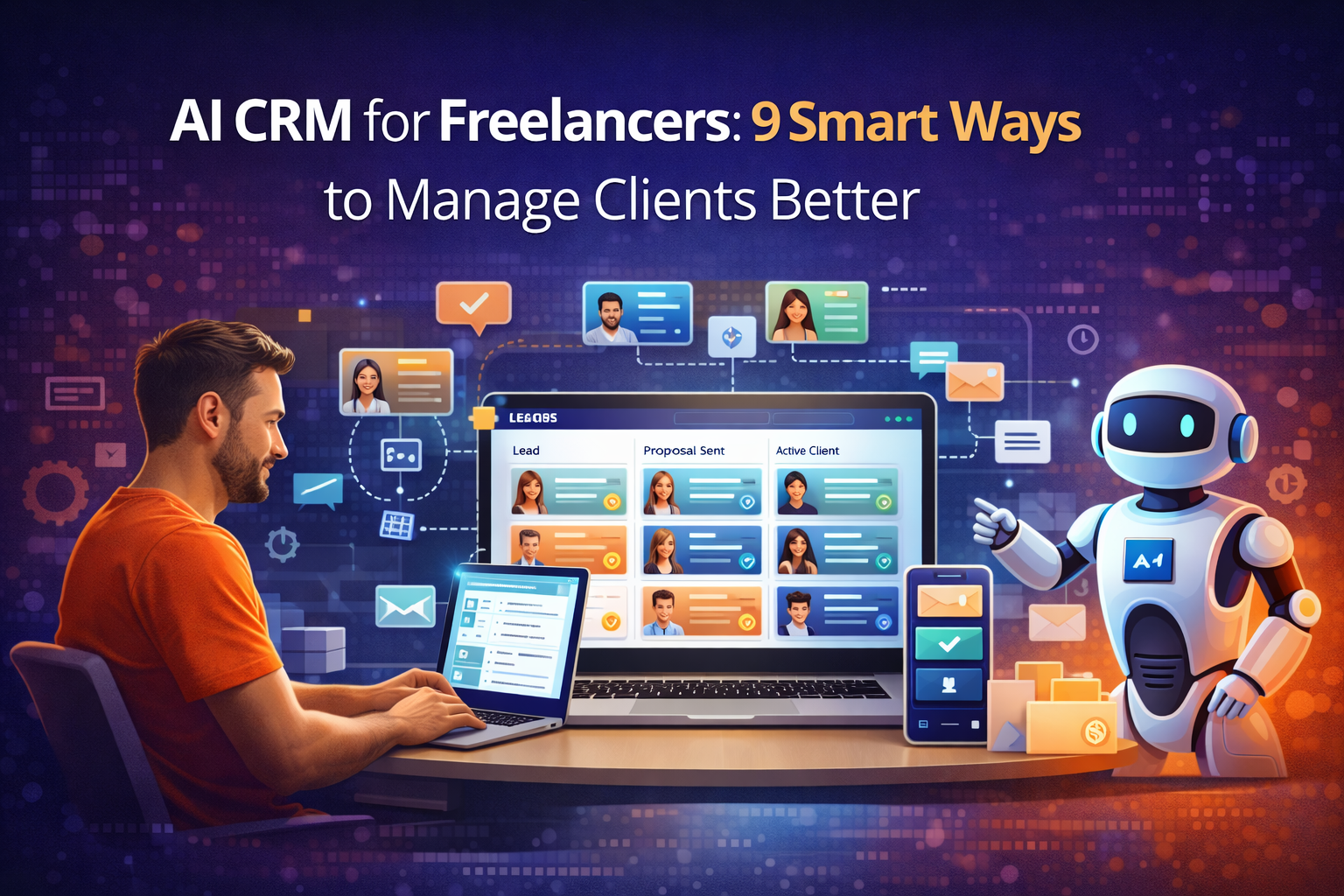
AI CRM for freelancers is becoming one of the most useful systems for solo professionals who want to grow without turning their business into a mess of scattered notes, missed follow-ups, forgotten leads, and inconsistent client communication. Most freelancers start with a simple setup. A few inquiries come through email, maybe some through social media, maybe a referral arrives through a past client, and everything feels manageable. At that stage, there is often no obvious need for a structured client relationship system. A spreadsheet is enough. A few starred emails seem fine. Notes live in memory, a notebook, or a folder called something vague like “clients.”
Then the business starts to move faster. More inquiries arrive. Different clients sit in different stages at the same time. One prospect asked for a proposal last week but has not replied yet. Another is ready to start but has not signed yet. A current client needs a follow-up on revised scope. A past client could be a strong fit for a retainer, but no one remembers to reach out. A referral lead looks promising, but the original conversation is buried somewhere in an inbox thread that now includes eight unrelated replies. This is the point where many freelancers realize that the biggest threat to growth is not always lack of demand. It is lack of system clarity.
That is exactly why AI CRM is becoming so relevant for independent professionals. A CRM, at its best, is not just a contact database. It is a decision system for relationships. It helps a freelancer understand who is in the pipeline, what happened last, what should happen next, where revenue may come from, where momentum is fading, and which opportunities deserve attention now instead of later. When AI becomes part of that system, the CRM gets more useful because it does not only store information. It can help interpret it, organize it, summarize it, and push the business toward better follow-through.
For freelancers, that matters because client management is often the hidden layer that determines whether the business feels calm or chaotic. Many solo operators do excellent work but lose revenue through weak follow-up, delayed replies, poor lead organization, inconsistent onboarding, and lack of reactivation systems for former clients. These are not glamorous problems, but they are expensive ones. AI CRM helps solve them by reducing the mental burden of remembering every relationship manually. Instead of depending on memory and inbox archaeology, the freelancer gains a clearer operational view of the business.
The goal is not to behave like a giant sales organization. Freelancers do not need bloated enterprise process. They need light, intelligent systems that help them stay responsive, organized, and professional while preserving the personal trust that makes freelance relationships work in the first place. That is where ai crm for freelancers becomes genuinely powerful. It supports better relationship management without making the business feel stiff, robotic, or over-engineered.
AI CRM for Freelancers: Why It Matters More Than Ever
The freelance market has changed. Clients expect fast communication, polished process, and a level of organizational maturity that used to be associated with agencies or larger firms. A solo professional may still be doing the work alone, but clients rarely judge only the craft itself. They also judge responsiveness, clarity, consistency, and the confidence that the freelancer will keep everything under control from first inquiry to final delivery. In other words, freelance success increasingly depends on relationship operations as much as technical skill.
At the same time, freelancers now attract work from more places than before. Leads can come from LinkedIn content, X posts, newsletters, referrals, inbound search traffic, portfolio forms, discovery calls, online communities, marketplaces, and repeat business from previous clients. That sounds positive, and it is, but it also creates fragmentation. When opportunities arrive through many channels, it becomes much easier to lose track of who said what, which lead looked strongest, what objections were mentioned, and when the next contact should happen.
This problem gets worse as a freelancer gets busier. Early-stage chaos is often survivable because there are only a few moving parts. Growth chaos is more dangerous because it creates invisible leaks. A freelancer may feel busy and still underperform commercially because warm leads are not nurtured, good-fit prospects are not followed up on quickly enough, and previous clients are forgotten once the project ends. None of these failures usually happen because the freelancer lacks intent. They happen because no clear relationship system exists.
AI CRM matters now because it reduces that leakage. It helps solo professionals build a stronger memory for the business. It can summarize conversations, surface next steps, recommend follow-up timing, organize leads by likely fit, and make it easier to see where revenue opportunities are becoming stale. Instead of manually piecing together the state of every relationship, the freelancer gets a cleaner view of the pipeline and client base.
This is especially important in a market where trust and speed both matter. Clients compare more options than before. Delays feel more expensive. Missed follow-up is easier to interpret as lack of seriousness. A freelancer who manages relationships well can often outperform a more talented but less organized competitor. That is why AI CRM is not just a nice operational upgrade. For many solo professionals, it is becoming part of the actual competitive advantage.
What AI CRM Actually Means for a Freelancer
For many freelancers, the term CRM sounds bigger than necessary. It can evoke images of complex dashboards, corporate sales teams, endless fields, and software that requires more maintenance than value. That is why it helps to redefine the concept in practical terms. A freelancer CRM is simply a system for tracking people, conversations, stages, opportunities, and follow-up in a way that helps the business grow more intentionally. When AI is added to that system, the CRM becomes more than a static repository. It becomes an assistant for relationship management.
That assistance can take several forms. AI can summarize inquiry messages, classify leads by service type, draft follow-up emails, identify when a prospect has gone quiet, extract action items from discovery calls, suggest reminders based on conversation history, organize client notes into cleaner records, and help surface which past clients may be ready for re-engagement. In some systems, it can also help identify sentiment, recurring objections, likely priorities, or upsell opportunities based on previous project patterns.
For freelancers, this is valuable because relationship work is often fragmented and repetitive. A new lead comes in, but the message must be understood, sorted, and answered. A discovery call happens, but the details need to become notes, a proposal, and a follow-up sequence. A project ends, but someone should ideally ask for a testimonial, suggest a next step, or schedule a future touchpoint. Without structure, these transitions depend too heavily on memory and motivation.
An AI CRM helps connect those transitions. It does not replace personal communication. It helps make personal communication more consistent. That distinction matters. The best freelance businesses are not built by sounding automated. They are built by making clients feel remembered, understood, and well-guided. AI CRM works when it supports that feeling instead of weakening it.
1. It Helps Freelancers See the Whole Client Pipeline Clearly
One of the biggest operational problems in freelance work is that the pipeline often exists only in fragments. Some leads are in email. Others are in DMs. One warm prospect lives in a calendar booking. Another exists in notes from a call that happened two weeks ago. A past referral sits in a browser tab or a half-finished draft. This makes the business harder to manage because the freelancer cannot easily see who is active, who is waiting, who is qualified, and who needs attention now.
AI CRM solves this by creating a more coherent pipeline view. Instead of treating every conversation as an isolated event, it connects them into stages. New inquiry, discovery call, proposal sent, follow-up due, active project, completed project, reactivation candidate. That visibility alone is powerful because it changes the business from reactive to structured. The freelancer is no longer guessing which relationships are alive. They can see the pipeline as a working system.
The AI layer makes this even more useful because it can help interpret the information flowing into the system. Instead of manually reviewing every lead from scratch, the freelancer can see summaries, likely fit, recent changes, and suggested next actions. This reduces the mental load of pipeline management and makes it easier to focus on the right relationship at the right time.
2. It Improves Follow-Up Without Making It Feel Forced
Follow-up is one of the most underestimated revenue drivers in freelance work. Many good projects are not won on the first reply. They are won because the freelancer stayed present without becoming annoying, clarified uncertainty, or re-entered the conversation at the right moment with useful context. Yet follow-up is also one of the easiest things to neglect when delivery work gets busy.
AI CRM helps by making follow-up more visible and more manageable. It can flag leads that have gone quiet, suggest when to check back in, draft a first version of the follow-up message, and remind the freelancer what happened in the last interaction. This removes one of the biggest barriers to consistent follow-up, which is the effort required to reconstruct context every single time.
Importantly, this does not have to make communication feel robotic. In fact, it often helps the opposite. When the context is already organized, the freelancer has more room to write a better human message. Instead of scrambling to remember the details of the opportunity, they can focus on tone, relevance, and timing. That is how follow-up becomes both more consistent and more natural.
3. It Makes Discovery Calls More Useful After They End
Discovery calls are full of clues. A client reveals priorities, fears, timing pressure, internal politics, budget flexibility, and the language they naturally use to describe the problem. But a lot of that value disappears if the conversation is only partially captured. Many freelancers walk away from a strong call with a rough memory of the overall direction and then build the proposal from fragments.
AI CRM can help by turning the call into structured client intelligence. Notes can be summarized. Pain points can be extracted. Goals can be categorized. Concerns can be logged. Next steps can be surfaced automatically. This turns the discovery process into more than a one-time conversation. It becomes a reusable source of truth for the relationship.
This improves proposal quality, scope clarity, and later delivery. The freelancer is more likely to reflect the client’s real priorities accurately because the conversation was captured in a clearer form. It also reduces the risk of missing subtle but important points that could shape how the project should be framed. Over time, that leads to better-fit proposals and smoother project starts.
4. It Creates Better Client Memory Across Long Gaps
Freelancers often work with clients in cycles. Someone hires you, the project ends, and then six months later they return with a new need. Or a prospect goes quiet for a long time and comes back when circumstances change. Or a referral lead appears through someone you last worked with two years ago. In these moments, memory matters. Clients feel the difference between being treated like a generic contact and being recognized as someone with history.
AI CRM makes long-gap memory much easier. Instead of trying to remember everything manually, the freelancer can see previous discussions, project notes, tone preferences, scope history, outcomes, and past follow-ups summarized in one place. That allows them to respond with continuity rather than starting from zero. Even a small touch such as referencing a previous project accurately can make the client feel remembered and respected.
This matters because relationship depth is part of freelance advantage. Large vendors often struggle to maintain personal continuity. A solo professional can win trust by remembering context better. AI CRM strengthens that natural advantage by making business memory easier to preserve over time.
5. It Helps Separate Warm Leads From Time-Wasting Leads
Not every inquiry deserves equal energy. Some leads are well aligned and serious. Others are exploratory, underfunded, unclear, or unlikely to move forward. Freelancers waste a lot of time when every inquiry receives the same amount of manual effort, especially if the pipeline is full of conversations that look promising on the surface but show weak buying signals underneath.
AI CRM can help sort these patterns earlier. Based on intake details, past conversation history, service type, urgency, or typical client patterns, the system can help highlight which leads appear strongest and which may need lighter handling. This does not mean blindly trusting automation to judge people. It means giving the freelancer better information so they can allocate energy more intelligently.
That distinction is crucial in solo work. Time is not just money. Time is capacity, attention, and emotional energy. A freelancer who learns to spot stronger opportunities earlier can protect their week from being consumed by low-conversion admin. AI CRM supports that by making pipeline signals more visible instead of hiding them inside scattered conversations.
6. It Makes Onboarding Feel More Professional
Client onboarding is often where freelancers either confirm confidence or introduce uncertainty. Once a prospect says yes, they want to feel guided. They want to know what happens next, what information is needed, how communication will work, what the timeline looks like, and how the project will move from idea to execution. If onboarding is slow or messy, excitement fades quickly.
AI CRM can support onboarding by generating next-step summaries, preparing welcome messages, organizing project notes, surfacing required assets, and helping create a cleaner handoff from sales conversation to active work. Instead of manually rebuilding the transition every time, the freelancer can run a repeatable but personalized flow that still feels thoughtful.
This matters because the early phase of a project shapes the entire relationship. A client who feels guided from the beginning is usually easier to work with later because expectations are clearer and trust forms faster. A CRM that remembers what was promised and helps carry that forward into onboarding reduces avoidable confusion at exactly the stage where clarity matters most.
7. It Helps Generate More Repeat Business
Many freelancers focus heavily on winning new clients while underusing one of their strongest growth channels: people they have already worked with successfully. Past clients are often easier to convert, faster to trust, and more valuable over time. Yet repeat business frequently happens only by accident because no one maintains a light reactivation system after the initial project ends.
AI CRM helps turn repeat business into something more intentional. It can remind the freelancer when to check in, identify past clients by service category, surface patterns that suggest future need, and help draft outreach messages that feel relevant rather than random. A website copy client may later need email strategy. A design client may need refresh work. A consulting client may need a quarterly review. Without a system, these opportunities stay invisible until the client initiates contact again.
That is a missed advantage. A good freelance CRM helps the business behave like it actually values long-term relationships. AI makes this easier by reducing the effort required to remember timing, context, and likely relevance. The result is more thoughtful re-engagement and, often, more stable revenue.
8. It Gives Freelancers Better Insight Into Their Best-Fit Clients
As freelancers grow, one of the most important strategic questions becomes: which clients actually fit best? Not just who pays, but who moves quickly, communicates well, respects the process, values the work, and leads to repeat opportunities or strong referrals. Without a structured system, freelancers often answer this question intuitively. Intuition is helpful, but it becomes more powerful when paired with organized evidence.
AI CRM can help reveal patterns across projects and leads. Which types of inquiries convert most often? Which industries tend to produce smoother engagements? Which services lead to upsells or long-term retainers? Which lead sources create the best-fit clients, not just the most inquiries? These insights help the freelancer shape better positioning and better decisions over time.
This is where CRM becomes strategic rather than merely administrative. It stops being a place to store names and starts becoming a feedback system for the business itself. AI adds value because it can summarize trends and surface patterns faster than a freelancer sorting through years of memory and inbox history manually.
9. It Reduces the Mental Weight of Running the Business Alone
Perhaps the most underrated benefit of AI CRM for freelancers is psychological. Running a solo business means carrying a large amount of invisible responsibility in your head. Who needs a reply? Which client is waiting on a revision? Which lead looked hot but paused? Which former client should be contacted this month? Which conversation hinted at a future project? This kind of mental load is exhausting because it stays active even when no immediate task is being performed.
A strong CRM reduces that load by holding more of the business memory externally. AI strengthens this effect by helping transform raw communication into clearer summaries, next steps, reminders, and organized records. Instead of feeling like the business is always slightly slipping through the cracks, the freelancer gains a stronger sense that the system is holding important context in place.
This does not only improve productivity. It improves steadiness. When the business feels less mentally chaotic, the freelancer can think more clearly about pricing, positioning, craft quality, and long-term growth. That is a serious advantage because many solo professionals do not stall from lack of demand. They stall from too much cognitive clutter.
What Freelancers Get Wrong About CRM
One common mistake is assuming a CRM is only useful for aggressive sales professionals. That is far too narrow. A freelancer does not need a CRM because they want to behave like a corporate account executive. They need a CRM because relationships are the foundation of the business, and relationships become hard to manage well once volume increases. Avoiding systemization in the name of staying personal often creates the opposite result: weaker memory, slower replies, and more inconsistent care.
Another mistake is overcomplicating the setup. Many freelancers adopt tools that are too large for the way they actually work. They create dozens of fields, intricate pipelines, and heavy maintenance demands, then stop using the system because it feels like admin for admin’s sake. A useful freelance CRM should feel lighter after setup, not heavier. Simplicity is part of the value.
Some freelancers also mistake storage for management. Having a list of contacts is not the same as having a relationship system. A good CRM should help answer practical questions. Who matters most right now? Who needs follow-up? What happened last? What should happen next? If the system cannot help with those decisions, it is not doing enough.
There is also the risk of becoming too automated in tone. Clients still want human communication. AI-generated suggestions are useful, but they should support warmth, clarity, and personal continuity, not replace them with generic efficiency. The strongest freelancers use AI to improve consistency while keeping the human layer unmistakably theirs.
How to Start Using AI CRM as a Freelancer
The best place to begin is not with features but with friction. Ask where relationship management currently feels weak. Is it lead follow-up, proposal tracking, onboarding continuity, past-client reactivation, or simply remembering what happened in every conversation? Start there. The point is not to install a giant system. The point is to remove one meaningful source of relationship chaos first.
Then keep the structure simple. A few clear stages are usually enough: new inquiry, qualified lead, discovery completed, proposal sent, follow-up needed, active client, completed client, reactivation opportunity. Add notes, next step, last contact date, and source. That alone can transform visibility. AI becomes useful once it helps summarize messages, suggest next actions, and reduce the manual effort needed to keep the system current.
It also helps to connect the CRM to the actual way you work. If your leads come through a form, calendar, or email, the CRM should make those inputs easier to manage rather than requiring constant manual copying. If discovery calls are important, notes should flow into the system cleanly. If repeat business matters, former clients should stay visible. A CRM only works when it becomes part of daily motion rather than a separate place you forget to check.
Finally, use AI as support, not authority. Let it draft, summarize, remind, and organize. Then apply your judgment. This balance is what makes the system practical. The freelancer stays in control of relationships while spending much less energy on the repetitive operational work surrounding them.
The Future of AI CRM for Freelancers
The future of ai crm for freelancers will likely feel less like using a separate database and more like having an intelligent relationship layer across the whole business. Instead of manually updating contacts and stages all the time, freelancers will increasingly rely on systems that understand conversations, detect movement, and keep relationship context current with less manual effort. A discovery call will generate structured notes automatically. A proposal follow-up will be suggested at the right time. A completed project will trigger a testimonial request, reactivation reminder, and upsell note without requiring the freelancer to remember every step personally.
That shift matters because freelancers do not need bigger software stacks. They need lighter business memory. They need systems that preserve context, reduce leakage, and support better timing across relationships. As AI becomes better at summarizing, classifying, and surfacing useful next actions, CRM will become more natural for solo operators who previously avoided it because it felt too corporate or too time-consuming.
The freelancers who benefit most will not be the ones who automate every interaction. They will be the ones who use intelligent systems to become more present where presence matters. Better memory. Better follow-up. Better continuity. Better use of past relationships. Better visibility into who actually fits their business. Those advantages compound.
In the end, freelance growth depends on more than skill. It depends on the ability to manage trust at scale without losing the personal edge that makes clients want to work with an independent expert in the first place. AI CRM helps make that possible. It gives solo professionals a smarter way to manage opportunities, clients, and timing without carrying the entire business in their heads all day. That is why it is becoming one of the most valuable systems a freelancer can build.