

7 Pareidolia vs Hallucinations: Shocking Truth Explained Guide
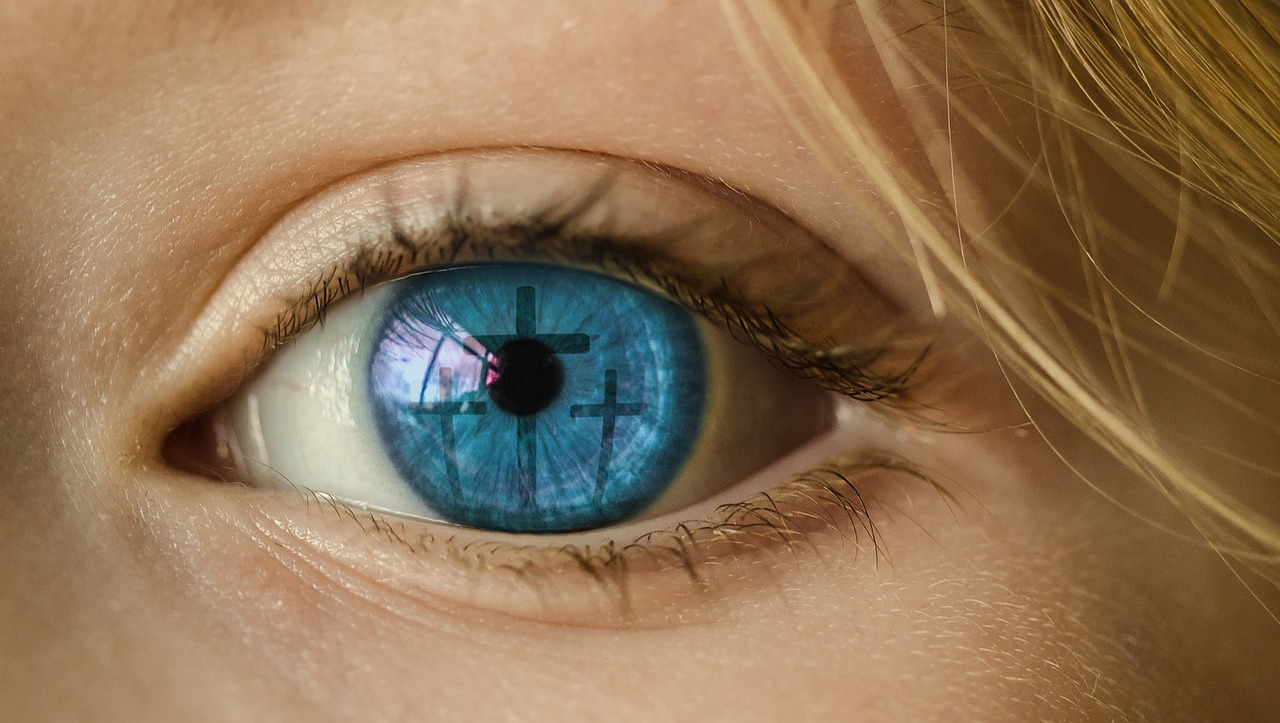
Pareidolia vs Hallucinations.
Are You Seeing Faces… Imagine walking through a bustling city street, your mind wandering as you glance at the clouds drifting lazily overhead. Suddenly, you spot a face in the fluffy white formations-a smile, eyes, perhaps even a mischievous grin. You chuckle to yourself, wondering if anyone else sees it too. This moment of connection with the world around you is both enchanting and oddly comforting.
But what if you start seeing faces in the most unexpected places: a knot in the wood, a pattern on the wallpaper, or even a shadow across the pavement? Are these mere tricks of perception, or are they something deeper? As we navigate the thin line between recognizing patterns and experiencing illusions, we unlock the fascinating realms of pareidolia and hallucination. Join us as we delve into this intriguing topic, exploring the science and psychology behind why our minds create faces where none exist.
Pareidolia vs Hallucinations: Pareidolia vs. Hallucination: Understanding the Differences
Key Aspects of Pareidolia vs Hallucinations
Pareidolia is the psychological phenomenon where people see familiar patterns, particularly faces, in random stimuli. This trait is believed to have evolutionary roots, as early humans who could recognize faces and social cues in their environment were more likely to survive and build social bonds. This ability to detect patterns helped our ancestors to identify threats and allies, thus enhancing their survival chances.
On the other hand, hallucinations involve perceiving things
20 Awesome Humanist Fonts” rel=”noopener”>that
Real-Life Examples or Famous Case Studies
Throughout history, there have been numerous instances of pareidolia and hallucinations that have captured public attention:.
- The Face on Mars: In 1976, a photograph taken by the Viking 1 spacecraft revealed what appeared to be a human face on the Martian surface. This discovery sparked debates about extraterrestrial life and highlights the pareidolia phenomenon in action.
- The Virgin Mary Grilled Cheese: In 2004, a woman in California found a grilled cheese sandwich that resembled the face of the Virgin Mary. This event garnered media attention and became a cultural sensation, demonstrating how pareidolia can lead to significant public interest.
- Auditory Hallucinations in Schizophrenia: Many individuals with schizophrenia report hearing voices that are not present. This symptom illustrates a severe form of hallucination that can significantly impact a person’s life and requires professional treatment.
- The “Ghost” in the Photograph: Paranormal investigations often feature photographs that supposedly capture ghostly figures. Many of these images can be explained through pareidolia, where shadows and light create the illusion of faces or figures.
- Oliver Sacks and Visual Hallucinations: Renowned neurologist Oliver Sacks documented the experiences of patients with visual hallucinations in his book “Hallucinations,” showcasing how their perceptions often stem from neurological conditions rather than external stimuli.
5 Actionable Coping Mechanisms or Takeaways
- Recognize Patterns: Understand that seeing faces in patterns is a normal psychological response. Embrace it as a part of human perception.
- Mindfulness Practices: Engage in mindfulness techniques to help ground yourself in reality, especially if you experience frequent hallucinations. Practices like meditation can improve your awareness of the present moment.
- Seek Professional Help: If you experience persistent hallucinations, consult a mental health professional for evaluation and support.
- Educate Yourself: Increase your understanding of both pareidolia and hallucinations. Knowledge can empower you to differentiate between the two and reduce anxiety related to false perceptions.
- Limit Triggering Stimuli: If certain environments or substances lead to hallucinations, take proactive steps to limit exposure to these triggers for your well-being.
Did You Know? Pareidolia is not limited to visual stimuli; it can also occur in auditory experiences, such as hearing familiar words or phrases in random sounds, like white noise.
Why the Brain Is So Quick to See Faces
The human brain is not a passive camera. It does not simply receive the world as it is and file it away with mechanical precision. Instead, it actively interprets, predicts, and fills in gaps based on prior experience, emotional relevance, and biological urgency. This is especially true when it comes to faces. Faces matter deeply to social survival. They signal safety, threat, affection, intention, and identity within fractions of a second. Because of that, the mind has evolved to treat face detection as a high priority, even at the cost of occasional mistakes.
20 Awesome Humanist Fonts” rel=”noopener”>That
This helps explain why so many people report face-like forms in ordinary objects without feeling disturbed by them. A car grille looks angry. A power outlet seems surprised. A house façade appears to smile. The emotional tone of these impressions may vary, but the mechanism is familiar. The brain is mapping social templates onto visual ambiguity. In doing so, it reveals just how central faces are to human thought. We do not simply look for them. We are prepared for them.
When Familiarity Becomes a Story
Seeing a face is often only the beginning. Once the brain detects something face-like, it may quickly generate a story around it. A cracked wall does not just resemble a face; it suddenly looks sad, stern, amused, or eerie. An object becomes expressive. A random pattern acquires personality. This is where pareidolia moves beyond simple pattern recognition and begins touching imagination, memory, and emotion. It is not just about identifying resemblance. It is about assigning significance.
20 Awesome Humanist Fonts” rel=”noopener”>That
This is one reason pareidolia has inspired so much folklore, spiritual interpretation, and cultural fascination. A face in stone, in smoke, or in food can quickly become more than a curiosity. It can be interpreted as a sign, a warning, a miracle, or a message. Whether those meanings arise from belief, hope, fear, or coincidence, the underlying mechanism remains familiar: human beings are not satisfied with raw perception alone. We turn recognition into narrative.
The Critical Difference Between External Ambiguity and Internal Generation
To understand the boundary between pareidolia and hallucination, it helps to focus on where the experience begins. In pareidolia, there is an external stimulus. Something is actually present: a cloud, a stain, a reflection, a cluster of shadows. The brain interprets
20 Awesome Humanist Fonts” rel=”noopener”>that
Hallucinations are different because they do not require an ambiguous external trigger. The person may see, hear, smell, taste, or feel something that has no basis in the surrounding environment at all. A voice may speak in an empty room. A figure may appear where nothing exists. A sensation may arise without a physical cause. Hallucinations are not simply misreadings of reality. They are perceptions generated in the absence of corresponding external input, often with a vividness that can make them feel completely real.
This distinction matters because the subjective experience may overlap in terms of emotional intensity, but the source and clinical implications can be very different. Pareidolia usually reflects normal perception operating under ambiguity. Hallucinations may reflect neurological changes, psychiatric conditions, extreme stress, substance effects, sleep disruption, grief responses, or sensory deprivation. One is typically a common feature of healthy pattern recognition. The other may indicate that the perceptual system is producing internally generated experiences that deserve closer attention.
Why the Confusion Happens
People sometimes confuse pareidolia and hallucination because both involve perceiving more than what a strict physical description would justify. Both can feel strange. Both can prompt the question, “Did I really just see that?” But confusion grows when people assume that all unusual perception belongs on the same spectrum in the same way. In practice, there are important differences in stability, context, and insight.
Pareidolia is often fragile. Change the angle, increase the light, move closer, and the face may disappear. The person usually knows, at least on some level, that the face is not literally there. They recognize the illusion while still enjoying or reacting to it. Hallucinations can be more persistent, more immersive, and less dependent on external features. In some cases, the person may fully believe in the reality of what they are perceiving, especially if insight is reduced.
Context also matters. Seeing a face in a cloud on a relaxed afternoon is one thing. Repeatedly seeing threatening figures
20 Awesome Humanist Fonts” rel=”noopener”>that Nvidia Takes AI Battle” rel=”noopener”>from
The Role of Stress, Sleep, and Sensory Conditions
The line between normal illusion and more concerning perceptual disturbance can become blurrier under certain conditions. Sleep deprivation, intense anxiety, grief, trauma, prolonged isolation, fever, and certain substances can all alter the way the brain processes sensory information. In those states, the mind may become more suggestible, more reactive to ambiguity, or more prone to generating perceptions that would not normally occur.
This helps explain why someone under stress may report more vivid pareidolia or begin feeling uneasy about patterns
20 Awesome Humanist Fonts” rel=”noopener”>that
In clinical settings, sleep disruption is especially important. Lack of restorative sleep can intensify anxiety, distort attention, and lower the threshold for perceptual anomalies. This is one reason clinicians often ask about sleep, medication, substance use, and stress levels when evaluating hallucination-like experiences. Sometimes the issue is not a fixed psychiatric condition but a temporary disruption of the brain’s normal filtering processes. Understanding that complexity prevents oversimplified conclusions.
How Culture Shapes What We See
Perception is never purely biological. Culture influences what we notice, what we value, and how we interpret ambiguous stimuli. A person raised in a highly religious environment may be more likely to perceive sacred imagery in everyday objects and to interpret it as meaningful. Someone immersed in horror films may more readily interpret shadows and reflections as threatening faces. A child raised around animated characters may detect expressive features in appliances, furniture, and toys more instinctively than an adult would.
This does not mean culture invents perception
Nvidia Takes AI Battle” rel=”noopener”>from
This is also why public reactions to pareidolia can become so intense. Once a community agrees that a perceived image resembles something culturally powerful, the interpretation spreads quickly. What began as an individual impression becomes a shared event. People line up to see the face in the tree trunk, the icon in the toast, or the figure in the window. The power of the experience grows not only because of perception itself, but because of collective validation.
Pareidolia in Art, Design, and Creativity
Far
Nvidia Takes AI Battle” rel=”noopener”>from
Surrealist art in particular thrives on this instability. It invites viewers to see one thing and then another, to hover between object and suggestion. In doing so, it activates the same perceptual flexibility
20 Awesome Humanist Fonts” rel=”noopener”>that
Creative thinking more broadly also benefits from this tendency. Innovation often begins by noticing resemblance across different domains. A scientist sees a pattern in data. A poet sees a face in weather. A child turns furniture into characters. These acts are not identical, but they share a common feature: the mind reaches beyond literal input to discover structure. Pareidolia, in this sense, belongs to the same family as metaphor, symbolism, and imaginative association.
When Hallucinations Require Care
While pareidolia is usually harmless, hallucinations can sometimes be signs that someone needs support. This does not mean every hallucination has the same cause or consequence. Hallucinations can appear in a wide range of contexts, including schizophrenia spectrum disorders, severe mood disorders, neurological illnesses, medication reactions, substance intoxication or withdrawal, migraine phenomena, sensory loss syndromes, and even bereavement. The meaning of the symptom depends on the full picture.
What matters most is not panic, but careful
11 Effective Attention Recovery Prom” rel=”noopener”>attention
Compassion is essential here. People who experience hallucinations are often frightened not only by the perceptions themselves, but by the fear of being judged, dismissed, or labeled. Reducing stigma can make it easier for people to seek help early. Hallucinations are not moral failures or signs of weakness. They are experiences with possible medical and psychological explanations, and they deserve thoughtful care rather than sensationalism.
The Comfort and Uncanniness of Faces Where None Exist
Why do face-like patterns feel so emotionally charged? Part of the answer lies in the fact that faces are never neutral. Human beings are exquisitely sensitive to the social information faces carry. Even a rough arrangement of eyes and a mouth can trigger judgments about mood, intention, trustworthiness, and familiarity. This is why a front-facing car can look aggressive or why a cracked ceiling can feel eerie at night. The pattern does not need to be perfect. It only needs to suggest social presence.
That suggestion can feel comforting in some contexts and uncanny in others. A face in the moon may feel whimsical. A face in the wallpaper at 3 a.m. may feel invasive. The setting, lighting, emotional state, and symbolic meaning all shape the response. The same mechanism that makes a child feel accompanied can make an exhausted adult feel watched. The face-like image is not just visual. It activates the deeper psychology of being in relation to another presence, even when that presence is illusory.
This emotional flexibility is part of what makes the topic so compelling. Pareidolia is not simply a mistake of recognition. It is a window into how relational the human mind really is. We are prepared to respond to signs of other minds even when the evidence is minimal. In ambiguous circumstances, the possibility of presence matters almost as much as presence itself.
How to Think More Clearly About Your Own Experiences
If you notice face-like patterns often, the first step is not to worry. Pareidolia is extremely common, and in most cases it reflects healthy perception doing exactly what it evolved to do. It can even be enjoyable to observe how quickly the mind organizes randomness into something familiar. In that sense, noticing pareidolia can become an exercise in self-awareness rather than a source of concern.
If you are trying to determine whether an experience is likely pareidolia or something more, context is your strongest guide. Ask yourself: is there an actual stimulus here? Does the image disappear when I change angle or lighting? Do I recognize that it only resembles a face, or do I believe it is literally present? Is this happening mainly when I am tired, stressed, anxious, or half-asleep? These questions help restore perspective without dismissing what you felt.
It can also help to track patterns over time. Occasional face-finding in clouds, wood grain, tiles, or shadows is one thing. Persistent perceptions without external cues, especially if they cause distress or begin affecting functioning, deserve a different kind of attention. Writing down what happened, when it happened, how long it lasted, and what state you were in can reveal whether the experience belongs to the realm of normal pattern recognition or whether it may be worth discussing with a mental health or medical professional.
The Brain as a Meaning-Making Machine
At the heart of both pareidolia and hallucination lies a broader truth: the brain is not merely detecting reality. It is continuously constructing it. It selects, prioritizes, predicts, and interprets. It turns incomplete information into coherent experience. Most of the time, this process works so smoothly that we hardly notice it. But phenomena like pareidolia reveal the construction process in action. Suddenly we catch the mind in the act of making sense.
That can be humbling. It reminds us that perception is not the same as perfect objectivity. We do not see the world raw. We see the world through systems shaped by evolution, memory, culture, fear, expectation, and need. Sometimes those systems produce delight and creativity. Sometimes they produce error. Often they produce both at once. A cloud-face can be false in a literal sense and still meaningful in an emotional one.
This is also why discussions of hallucination should remain nuanced. When perception becomes untethered
Nvidia Takes AI Battle” rel=”noopener”>from
Why the Topic Continues to Fascinate Us
Pareidolia and hallucination capture
11 Effective Attention Recovery Prom” rel=”noopener”>attention
These topics also fascinate us because they force us to confront the relationship between truth and experience. Something can feel vividly real and still not correspond to the world in the way we assume. Something can be objectively random and still stir genuine emotion. This tension does not weaken the value of the experience. It makes the experience more revealing. It shows us that what matters psychologically is not only what exists, but how existence is interpreted.
Perhaps that is why so many people return to stories of mysterious images, haunted photographs, miraculous objects, and uncanny perceptions. These stories speak to a deeper question: how much of the world do we discover, and how much do we create as we look? The answer is not simple, which is exactly why the subject remains so compelling.
Are You Seeing Faces… Final Reflection
To see a face where none exists is not a sign that the mind has failed. More often, it is a sign that the mind is doing what it does best: reaching for structure, relationship, and meaning. Pareidolia shows us the elegance and speed of pattern recognition. Hallucination, by contrast, reminds us that perception can sometimes break from external reality in ways that deserve care and understanding. The two experiences may feel related on the surface, but they arise from very different dynamics.
What unites them is their power to reveal the mind’s creative role in shaping lived experience. We do not merely observe the world; we interpret it through deeply social, emotional, and biological lenses. That is why a face in the clouds can make us laugh, a shadow can unsettle us, and a false perception can still feel true in the moment. Perception is never just about light entering the eyes. It is about meaning forming in the mind.
So the next time you notice a smile in a coffee stain, a profile in the bark of a tree, or eyes in the front of a passing car, you may find yourself appreciating more than the coincidence. You may be glimpsing the remarkable way your brain turns ambiguity into familiarity. And in that instant, the ordinary world becomes just a little more mysterious, and a little more human.
When it comes to Pareidolia vs Hallucinations, professionals agree that staying informed is key.
Read also: Home | Related you Guides | Best you Tips.
Focus keyword context: Pareidolia vs Hallucinations Pareidolia vs Hallucinations Pareidolia vs Hallucinations Pareidolia vs Hallucinations
Pareidolia Vs Hallucinations requires clear execution standards and regular review.
Related articles
Pareidolia vs Hallucinations remains a practical priority. Pareidolia vs Hallucinations remains a practical priority. Pareidolia vs Hallucinations remains a practical priority. Pareidolia vs Hallucinations remains a practical priority. Pareidolia vs Hallucinations remains a practical priority. Pareidolia vs Hallucinations remains a practical priority. Pareidolia vs Hallucinations remains a practical priority. Pareidolia vs Hallucinations remains a practical priority. Pareidolia vs Hallucinations remains a practical priority. Pareidolia vs Hallucinations remains a practical priority.
Pareidolia vs Hallucinations remains a practical priority. Pareidolia vs Hallucinations remains a practical priority. Pareidolia vs Hallucinations remains a practical priority. Pareidolia vs Hallucinations remains a practical priority. Pareidolia vs Hallucinations remains a practical priority. Pareidolia vs Hallucinations remains a practical priority. Pareidolia vs Hallucinations remains a practical priority. Pareidolia vs Hallucinations remains a practical priority. Pareidolia vs Hallucinations remains a practical priority. Pareidolia vs Hallucinations remains a practical priority. Pareidolia vs Hallucinations remains a practical priority.
Pareidolia vs Hallucinations matters in practical implementation. Pareidolia vs Hallucinations matters in practical implementation. Pareidolia vs Hallucinations matters in practical implementation. Pareidolia vs Hallucinations matters in practical implementation. Pareidolia vs Hallucinations matters in practical implementation. Pareidolia vs Hallucinations matters in practical implementation.
seo-refresh:1780660311 ->
Related articles
Pareidolia vs Hallucinations matters in practical implementation.
Related articles: Your Strategic Guide Winning: 7 Essential Strategies for 2026 | Building the Cloud for AI Agents: Key Developments from AWS in 2026 wi
Related articles: Your Strategic Guide Winning: 7 Essential Strategies for 2026 | Building the Cloud for AI Agents: Key Developments from AWS in 2026 wi
Related articles: Your Strategic Guide Winning: 7 Essential Strategies for 2026 | Building the Cloud for AI Agents: Key Developments from AWS in 2026 wi
Pareidolia vs Hallucinations matters in practical implementation.
Related articles: Your Strategic Guide Winning: 7 Essential Strategies for 2026 | Building the Cloud for AI Agents: Key Developments from AWS in 2026 wi
seo-refresh:1781877476 -->