

Attachment Anxiety vs ROCD: 9 Powerful Signs Relationship Doubt Turned Obsessive
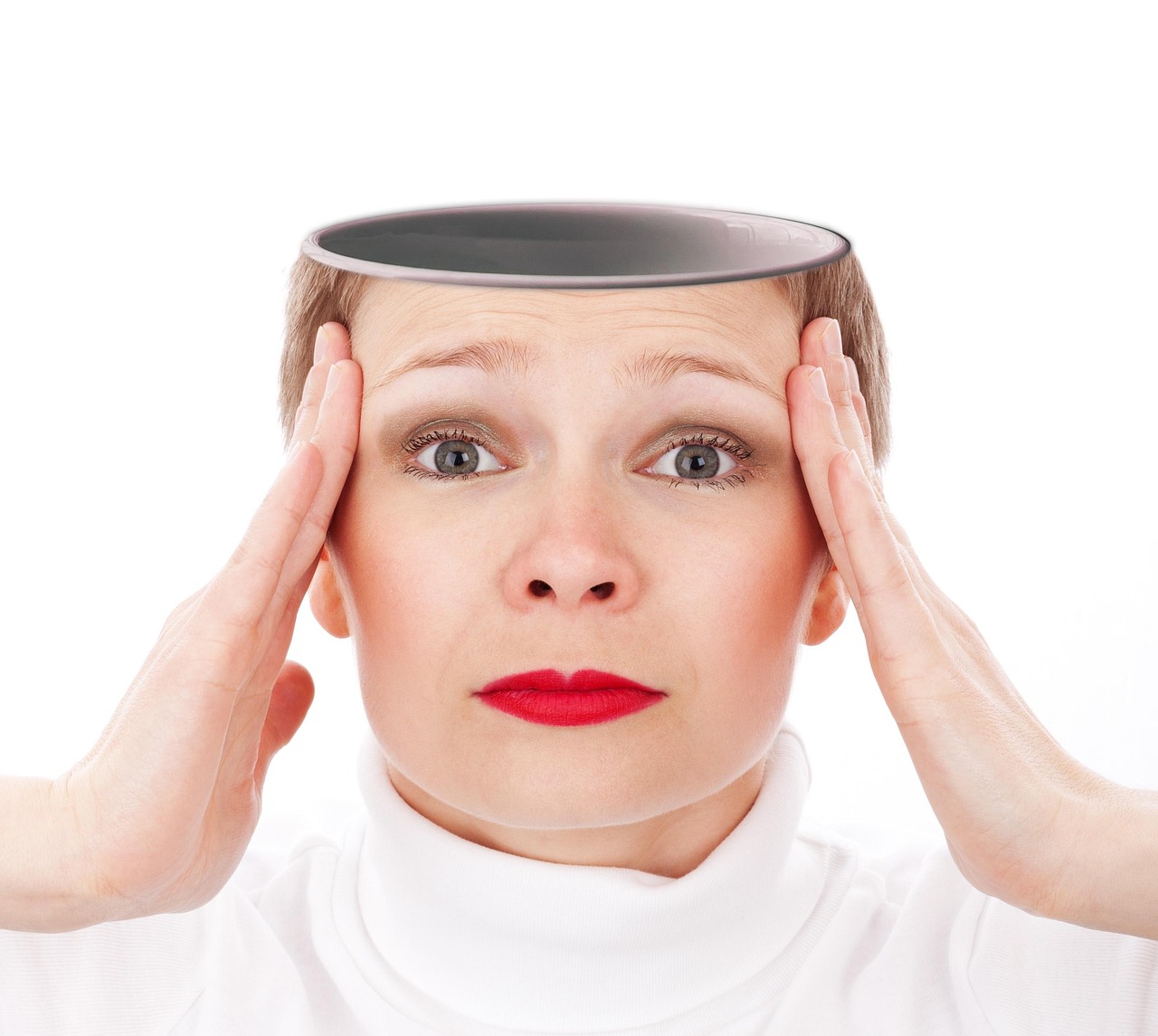
Attachment Anxiety vs ROCD… Have you ever found yourself lying awake at night, your mind racing with questions about your relationship? You scroll through memories, re-evaluating every moment shared with your partner, wondering if you truly belong together. That gnawing feeling, the one that whispers, “What if I’m not really in love?” or “Am I settling?” can be both exhausting and overwhelming. You’re not alone; many find themselves caught in the web of doubt, where the line between healthy questioning and obsessive worry blurs. In this exploration of ‘Attachment Anxiety vs. ROCD,’ we’ll delve into how these emotional experiences manifest, their impact on our relationships, and how to navigate the turbulent waters of love and uncertainty.
Attachment Anxiety vs ROCD: When Relationship Doubt Becomes Obsessive
The Evolutionary or Psychological Reason Behind Attachment Anxiety and ROCD
Attachment anxiety and Relationship Obsessive-Compulsive Disorder (ROCD) stem from deep-rooted psychological phenomena influenced by both evolutionary and social factors. Attachment theory, developed by John Bowlby, suggests that our early relationships with caregivers shape our emotional responses in adult relationships. Individuals with anxious attachment styles often experience heightened fears of abandonment and rejection, leading to obsessive thoughts about the stability of their romantic connections.
On the other hand, ROCD is characterized by intrusive thoughts regarding the quality of a romantic relationship, which can manifest as constant questioning of one’s feelings or the partner’s suitability. This condition often arises from a combination of cognitive distortions and the fear of making the wrong choice in a partner, compounded by societal pressures to find ‘the one.’
Real-Life Examples or Famous Case Studies
Several real-life examples illustrate the impact of attachment anxiety and ROCD on individuals and their relationships:
- Case Study 1: A young woman named Sarah, who grew up in an unstable household, frequently found herself questioning her boyfriend’s commitment. Despite his reassurances, she would obsessively check his social media for signs of infidelity, leading to significant strain in their relationship.
- Case Study 2: Mark, a successful entrepreneur, struggled with ROCD. He often experienced intrusive thoughts that he wasn’t compatible with his partner, despite their happy moments together. This led to anxiety that disrupted his professional life as well.
- Case Study 3: Celebrity couple A and B faced public scrutiny when their relationship faltered. B, who had a history of attachment anxiety, began doubting A’s loyalty after a brief separation. This resulted in public outbursts and further complicating their relationship dynamics.
5 Actionable Coping Mechanisms or Takeaways
- Practice Mindfulness: Engage in mindfulness techniques such as meditation or deep breathing exercises to help manage intrusive thoughts and anxiety.
- Open Communication: Foster an environment where both partners can express their feelings and doubts without fear of judgment, promoting understanding and reassurance.
- Seek Professional Help: Consider therapy or counseling, which can provide strategies to confront obsessive thoughts and improve attachment styles.
- Challenge Negative Thoughts: Actively identify and challenge cognitive distortions related to your relationship to reduce the power of obsessive thoughts.
- Limit Social Media Exposure: Reduce time spent on social media, which can exacerbate feelings of insecurity and comparison in relationships.
Did You Know? Studies suggest that nearly 1 in 10 individuals may experience symptoms of ROCD, indicating that relationship-related obsessions are more common than often acknowledged.
Conclusion
Understanding the difference between attachment anxiety and Relationship Obsessive-Compulsive Disorder (ROCD) is crucial for fostering healthier relationships and addressing persistent doubts.
Have you ever experienced overwhelming doubts about your relationship that felt more like an obsession than a concern?
Why Relationship Doubt Can Feel So All-Consuming
Relationship doubt is part of being human. Almost everyone questions their feelings, their compatibility, or the future of a relationship at some point. The problem begins when doubt stops behaving like a passing question and starts functioning like a mental trap. Instead of helping you reflect, it begins to dominate your attention. Instead of leading to clarity, it produces more checking, more rumination, and more fear. You do not simply wonder about the relationship. You become caught inside the wondering.
This is what makes the difference between ordinary uncertainty and something more painful. Healthy doubt tends to be connected to real observations, changing needs, or meaningful incompatibilities. It may be uncomfortable, but it usually leads somewhere. Obsessive doubt rarely feels resolved, even after long analysis. The more you think about it, the less settled you become. You seek reassurance, mentally review your feelings, compare your relationship to others, and still end up stuck. The mind behaves as if one more thought will finally solve it, but the cycle only gets stronger.
That is why relationship anxiety can feel so exhausting. It often masquerades as responsibility or honesty. You tell yourself you are just trying to be sure, just trying not to make a mistake, just trying to understand your heart. But underneath that effort there may be a nervous system trapped in threat mode, scanning your relationship not for connection, but for danger.
What Attachment Anxiety Usually Looks Like
Attachment anxiety is often rooted in fear of abandonment, inconsistency, or emotional disconnection. The person usually wants closeness very badly, but that desire is accompanied by insecurity about whether the bond is stable. They may become highly sensitive to changes in tone, responsiveness, affection, or availability. A delayed text, a distracted mood, or a slight shift in routine can feel disproportionately significant because it gets interpreted as possible rejection.
People with attachment anxiety often focus on whether they are loved enough, chosen enough, or safe enough in the relationship. Their distress is usually organized around the fear of losing connection. They may seek reassurance frequently, monitor their partner’s mood, overanalyze interactions, or become preoccupied with whether the other person is pulling away. Even when the relationship is good, they may struggle to relax into it because their nervous system remains braced for distance.
This does not mean the person is dramatic or needy in a shallow sense. Often, their system learned early that connection was inconsistent, unpredictable, or emotionally costly. As adults, they may crave intimacy deeply but feel unable to trust it fully. The doubt is painful because it threatens attachment itself.
What ROCD Usually Looks Like
Relationship Obsessive-Compulsive Disorder, often called ROCD, tends to revolve around intrusive doubt and compulsive checking. The person becomes preoccupied not only with whether the relationship is secure, but with whether it is “right,” whether their feelings are “real,” whether their partner is “the one,” or whether some imperfection means the relationship is fundamentally wrong. The mind keeps generating questions, and each question feels urgent, morally loaded, and impossible to leave alone.
ROCD often has a very obsessive quality. Instead of focusing mainly on closeness and abandonment, it focuses on certainty. The person may repeatedly ask themselves whether they are truly in love, whether they are attracted enough, whether their partner is good enough, or whether staying means settling. They may compare constantly, seek reassurance from friends, consume endless relationship content, or mentally test their feelings. The more they try to become certain, the less certain they feel.
This is what makes ROCD so confusing. The problem is not simply that the person has concerns. It is that the concerns become intrusive, repetitive, and compulsive. The relationship becomes a site of endless internal checking rather than a place where experience can unfold more naturally.
Attachment Anxiety vs ROCD: The Core Emotional Difference
The simplest way to begin separating attachment anxiety vs ROCD is to ask what the mind seems most afraid of. In attachment anxiety, the fear is often, “Will I be left, rejected, or emotionally abandoned?” In ROCD, the fear is often, “What if this relationship is wrong, imperfect, or not real enough, and I make a terrible mistake?” Of course, overlap happens, but the emotional center is often different.
Attachment anxiety tends to pull attention toward the partner’s behavior and the safety of the bond. ROCD tends to pull attention toward internal certainty, relationship evaluation, and intrusive doubt. Anxiously attached people often want reassurance that the relationship still exists and still matters. People struggling with ROCD often want reassurance that the relationship meets an impossible standard of correctness and that their feelings are pure, stable, and unquestionable.
This distinction matters because it changes the kind of relief the person seeks. Attachment anxiety often seeks closeness. ROCD often seeks certainty. Both can involve reassurance, rumination, and distress, but what the reassurance is trying to accomplish is often different.
Why Both Can Make You Feel Like You Are Losing Your Mind
Both attachment anxiety and ROCD can make a person feel mentally consumed because romantic relationships touch some of our deepest vulnerabilities. Love is not a casual topic for the nervous system. It involves safety, identity, belonging, future planning, sexuality, attachment, and self-worth all at once. When anxiety enters that system, it can quickly become totalizing. You may find it hard to focus on work, sleep peacefully, enjoy time together, or trust your own thoughts.
This happens partly because the relationship becomes linked to survival-level meaning. In attachment anxiety, the loss of connection may feel catastrophic. In ROCD, the possibility of choosing “wrong” may feel catastrophic. When catastrophe is imagined, the mind begins to monitor the relationship in the same way a body might monitor a threat. Every interaction becomes evidence. Every feeling becomes data. Every moment of uncertainty becomes emotionally amplified.
That is why these patterns are so exhausting. The relationship stops being only a relationship. It becomes a psychological test you feel you have to pass. And no relationship can breathe well under that kind of pressure.
How Reassurance Temporarily Helps but Quietly Makes It Worse
One of the most common patterns in both attachment anxiety and ROCD is reassurance seeking. You ask your partner if everything is okay. You ask friends what they think. You replay old messages. You read articles. You compare your relationship to other couples. You review your feelings over and over to check whether they are still there. In the short term, reassurance often brings relief. In the long term, it usually strengthens the cycle.
This happens because the brain learns that doubt is important and must be neutralized immediately. Every time reassurance reduces anxiety, the mind becomes more dependent on reassurance as the solution. But reassurance never lasts long. Soon the next doubt appears, and the whole process starts again. Instead of increasing trust, the cycle teaches the brain that uncertainty is dangerous and must always be resolved before you can feel safe.
In attachment anxiety, reassurance may become the emotional glue holding the bond together, which makes any gap feel frightening. In ROCD, reassurance becomes part of the compulsion, feeding the obsession by suggesting that certainty is possible if only you analyze enough. In both cases, relief comes at a hidden cost.
How Past Experiences Shape the Pattern
Neither attachment anxiety nor ROCD appears in a vacuum. Both are often shaped by earlier emotional learning. Someone with attachment anxiety may have grown up with inconsistent caregiving, emotional unpredictability, or love that felt conditional. Their system learned that closeness could vanish, so now it scans for signs of loss even when love is present. Their fear is not irrational in origin. It is learned vigilance.
ROCD can also be shaped by history, though often through slightly different channels. People prone to obsessive doubt may have histories of high anxiety, perfectionism, moral sensitivity, fear of making mistakes, or environments where certainty and control were overvalued. If they learned that mistakes are dangerous or irreversible, romance can become the next domain where they seek impossible certainty. Relationships are especially vulnerable to obsessive doubt because they can never provide total proof.
Sometimes the two histories combine. A person may have both inconsistent attachment and obsessive tendencies. They want closeness desperately, but also feel compelled to evaluate the relationship constantly. In those cases, the experience can feel especially confusing because the person may swing between fear of losing the relationship and fear of staying in the wrong one.
Why Feeling “Off” Around Your Partner Is Not Always the Truth
Many people caught in these patterns become highly sensitive to internal feelings. They constantly ask, “Do I feel enough?” “Do I feel close enough?” “Do I feel excited enough?” “Why do I feel numb right now?” But anxiety changes feeling states. A nervous system under pressure does not produce clean emotional data. It may produce fear, detachment, irritation, or numbness even in a loving relationship simply because the mind is over-monitoring and overprotecting.
This is especially common in ROCD, where people often interpret anxiety-induced emotional dullness as proof that they are not truly in love. They may think, “If I loved my partner enough, I would feel sure all the time.” But love does not feel vivid every second, especially when the brain is in obsessive checking mode. Constant self-monitoring tends to flatten spontaneous emotion. The more you test love, the less naturally love is felt.
Attachment anxiety can create a similar distortion. If the person feels insecure, they may misread temporary distance or ordinary relational fluctuation as evidence that the bond is failing. The nervous system becomes such a loud signal that it starts drowning out the more stable truths underneath.
Common Signs It May Be More Attachment Anxiety
Some signs point more strongly toward attachment anxiety. You may feel deeply preoccupied with whether your partner still loves you, still wants you, or is emotionally pulling away. You may become especially activated by distance, delayed responses, less affection, or changes in tone. You may find yourself seeking closeness, reassurance, or emotional proof that the relationship is secure. Your fear often softens when the bond feels warm and available again.
You may also notice that your distress is especially relational and abandonment-focused. The worry is not usually, “Is this the perfect relationship?” but “Am I safe in this relationship?” The emotional pain often centers on disconnection and the possibility of being left. You may overfocus on your partner’s behavior, mood, and level of engagement as if your emotional survival depends on reading them correctly.
These patterns do not mean you are incapable of love. They often mean love feels high-stakes because attachment has been linked with uncertainty in your nervous system.
Common Signs It May Be More ROCD
Some signs lean more strongly toward ROCD. You may find yourself repeatedly questioning whether you truly love your partner, whether they are attractive enough, whether the relationship feels “right” enough, or whether some flaw means you should leave. These thoughts may feel intrusive and repetitive rather than grounded in a specific relational problem. You may spend hours mentally reviewing, comparing, testing, or seeking reassurance, and still feel no closer to peace.
You may also notice compulsive behaviors around the doubt. Searching for articles, asking others to validate your relationship, checking your emotional response when your partner texts, comparing them to other people, or monitoring your own attraction can all become forms of compulsion. The doubt rarely resolves through insight. Instead, it keeps regenerating in slightly new forms.
Another clue is that the fear often centers on certainty and correctness rather than only closeness. The mind treats the relationship like a verdict that must be proven beyond doubt. Because no real relationship can provide that kind of certainty, the obsession continues.
How to Respond Differently if It Is Attachment Anxiety
If attachment anxiety seems more central, the work often involves building internal safety alongside healthier relational communication. This means learning to soothe your system without relying entirely on your partner to regulate every wave of fear. It also means identifying the specific triggers that make you feel abandoned and learning how to communicate them without accusation or panic.
Grounding, self-compassion, and secure-attachment practices matter here. Instead of immediately assuming distance means loss, you begin practicing more tolerable interpretations. Instead of demanding constant proof, you work on staying connected to yourself when uncertainty rises. Supportive relationships can help, but so can therapy, especially when earlier attachment wounds are strong.
The goal is not to become detached or stop caring. The goal is to care without making every fluctuation mean catastrophe. Secure connection grows when your nervous system becomes less convinced that love disappears the moment reassurance goes quiet.
How to Respond Differently if It Is ROCD
If ROCD seems more central, the work often involves reducing compulsions rather than solving the doubt perfectly. This can feel very counterintuitive at first because the mind is convinced that more analysis will bring peace. In reality, compulsive analysis usually keeps the obsession alive. What helps more is learning to tolerate uncertainty without constantly trying to neutralize it.
This may involve noticing intrusive questions without answering them fully, limiting reassurance seeking, reducing comparison behaviors, and resisting the urge to use feelings as constant evidence. Exposure and response prevention approaches can be especially helpful for ROCD because they teach the nervous system that uncertainty can be survived without compulsive checking. Therapy with someone who understands OCD-style patterns can make a huge difference here.
The goal is not to prove the relationship is perfect. It is to stop treating doubt like an emergency that must be solved immediately. Love can exist with uncertainty. Obsession convinces you otherwise.
When Both Are Present at the Same Time
Sometimes the clearest answer is both. A person can have strong attachment anxiety and also experience obsessive relationship doubt. In that case, the emotional experience can become extremely tangled. One part of the self fears abandonment and craves reassurance. Another part keeps questioning whether the relationship is truly right. The result is often a painful push-pull: “Please don’t leave me,” mixed with “What if this isn’t right?”
When both are present, healing often requires working on both layers. The attachment layer needs safety, emotional regulation, and relational repair. The obsessive layer needs less reassurance, fewer compulsions, and greater tolerance for uncertainty. This can feel complicated, but it is workable once the patterns are named accurately. Often the first real relief comes not from solving the relationship, but from finally understanding the mind’s pattern inside it.
You do not need to fit neatly into one category for your suffering to be real. Human emotional patterns are often mixed. What matters most is noticing which processes are keeping the doubt alive.
What Healthy Relationship Reflection Looks Like
It is important to remember that not all relationship doubt is pathology. Sometimes doubt points to real incompatibility, repeated hurt, lack of trust, or mismatched values. Healthy reflection usually feels different from anxiety loops, though. It tends to be more grounded in observable patterns and more open to reality. It may be painful, but it does not usually require endless internal checking to stay alive. It leads toward clearer boundaries, wiser decisions, or honest conversations rather than compulsive mental spirals.
Obsessive doubt, by contrast, often feels repetitive, circular, and disconnected from resolution. It asks the same questions in slightly different words and rarely feels satisfied by the answers. That is why one of the most useful questions is not simply “Am I doubting?” but “How is this doubt behaving?” Is it helping me see something real, or is it trapping me in endless uncertainty?
That question can create more clarity than trying to force yourself to feel perfectly sure.
When to Seek Professional Support
If relationship doubt is dominating your daily life, interfering with closeness, consuming hours of mental energy, or creating constant distress, professional support is worth considering. This is especially true if you notice intrusive thoughts, compulsive checking, reassurance dependence, strong abandonment fear, or patterns that repeat across relationships. Therapy can help you sort out whether attachment wounds, OCD-style processes, trauma, or some combination is driving the cycle.
Good support matters because these patterns are difficult to untangle alone. The relationship itself often becomes so emotionally charged that self-reflection turns into more rumination. A therapist can help slow things down, identify the pattern, and teach responses that actually reduce the cycle instead of feeding it.
You do not need to wait until a relationship collapses to get help. Sometimes getting clarity early prevents months or years of unnecessary suffering.
Final Thoughts
Attachment Anxiety vs ROCD is not always easy to distinguish because both can fill a relationship with fear, doubt, and emotional exhaustion. But the difference often becomes clearer when you look at what the mind is truly asking for. Attachment anxiety usually seeks safety, reassurance, and protection from abandonment. ROCD usually seeks certainty, correctness, and freedom from intrusive relationship doubt.
Both can make love feel heavier than it needs to feel. Both can turn ordinary uncertainty into major distress. And both can be worked with once they are recognized clearly. The goal is not to force perfect certainty about your relationship or perfect calm in your attachment system. The goal is to reduce the loops that keep your mind trapped and help you return to something more grounded, honest, and emotionally workable.
When you stop assuming every doubt is truth and start examining how the doubt functions, you often gain the clarity you were trying to force all along. That is where healing usually begins: not in proving love perfectly, but in learning how anxiety has been shaping the way you experience it.