

Gaslighting in Relationships: 12 Signs, Tactics, and Recovery Steps
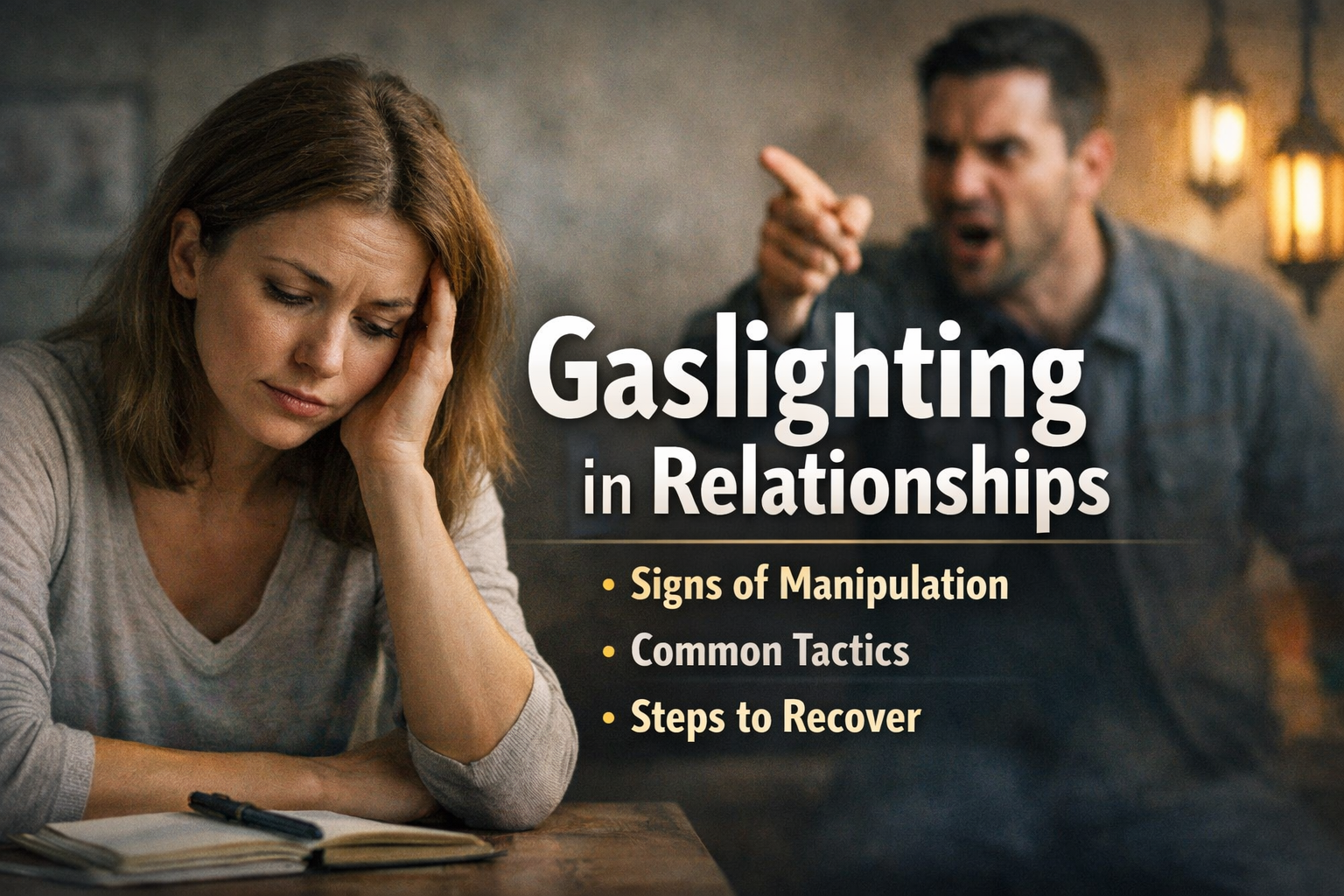
Gaslighting in Relationships… In the intricate dance of human relationships, mutual respect and understanding are often the cornerstones that hold two people together. Yet, beneath the veneer of seemingly harmonious partnerships, there can sometimes lurk a more insidious dynamic-gaslighting. This covert form of emotional manipulation can subtly distort reality for one partner, leaving them questioning their own perceptions and sanity. The term ‘gaslighting’ originates from the 1944 film “Gaslight,” where a husband’s deceitful ploys lead his wife to doubt her grip on reality. While the movie may be a work of fiction, the technique it highlights is all too real, manifesting in relationships across the globe.
Imagine feeling increasingly unsure of your own experiences, your instincts blunted by a persistent, unsettling doubt seeded by the very person you trust. Gaslighting erodes confidence with a stealthy precision, as the manipulator twists events, denies facts, or trivializes emotions, all while feigning innocence or concern. This psychological warfare can be devastating, leaving the victim isolated, anxious, and dependent on their partner for an interpretation of reality. It’s a gradual, often imperceptible shift, making it difficult for the victim to recognize or articulate the manipulation they are experiencing.
Understanding the techniques of gaslighting is crucial for identifying and combating this form of abuse. By shedding light on these tactics, individuals can better protect themselves and foster healthier, more honest relationships. Whether you are seeking to safeguard your own mental well-being or support a loved one in need, recognizing the signs of gaslighting is the first step toward reclaiming agency and truth in your relationships.
Understanding Gaslighting in Relationships
Gaslighting is a psychological manipulation technique that aims to make the victim doubt their perception, memory, or reality. This form of emotional abuse is often subtle, making it difficult to identify and more challenging to address. In this article, we will delve into the different facets of gaslighting, focusing on cognitive tools and therapy notes that can aid in recognizing and mitigating its effects.
Case Studies: The Dynamics of Gaslighting
To comprehend the intricacies of gaslighting, let us explore some case studies that reveal its varied manifestations in relationships.
Case Study 1: The Subtle Underminer
Anna and Tom had been married for five years. Anna often found herself questioning her actions and decisions due to Tom’s subtle comments. He would often say things like, “Are you sure that’s how it happened?” or “I don’t think you remember it correctly.” Over time, Anna started doubting her memory, which led to increased anxiety and self-doubt.
Case Study 2: The Overwhelming Denier
In another instance, Rebecca and Mike had frequent disagreements. Whenever Rebecca expressed her emotions or concerns, Mike would deny the events entirely, insisting that Rebecca was imagining things or overreacting. This constant denial left Rebecca feeling isolated and confused, unsure of her own emotional responses.
Cognitive Tools: Recognizing and Resisting Gaslighting
Recognizing gaslighting is the first step toward counteracting its effects. Here are some cognitive tools that can be employed:
- Reality Checking: Keep a journal to document events, conversations, and feelings. This practice helps to create a tangible record of events that can be referenced later, counteracting the manipulator’s attempts to distort reality.
- Self-Validation: Develop a strong sense of self-validation. Trust your intuition and emotions, and remind yourself that your perceptions are valid.
- External Support Systems: Engage with friends, family, or support groups. External perspectives can provide clarity and affirmation, countering the isolating effects of gaslighting.
Therapy Notes: Strategies for Practitioners
For therapists working with clients experiencing gaslighting, several strategies can be particularly effective:
Building Awareness
Therapists should guide clients in identifying patterns of gaslighting in their relationships. By highlighting specific behaviors and their psychological impact, clients can develop a clearer understanding of the manipulation they are experiencing.
Empowerment Through Self-Reflection
Encourage clients to engage in self-reflection to reinforce their sense of reality and personal agency. Techniques such as mindfulness and cognitive restructuring can help clients reframe negative thoughts and affirm their own experiences.
Developing Communication Skills
Equip clients with assertive communication skills to express their emotions and boundaries effectively. Role-playing scenarios can be a useful tool in therapy, allowing clients to practice responding to gaslighting behaviors in a safe environment.
Experiments: Psychological Insights into Gaslighting
Understanding the psychological underpinnings of gaslighting can be further enhanced through empirical research. Here are some notable experiments that provide insights:
The Misinformation Effect
Studies on the misinformation effect demonstrate how people’s memories can be distorted by misleading information post-event. This research parallels gaslighting, showcasing how manipulators can implant doubt and false narratives, leading victims to distrust their own memories.
Cognitive Dissonance
Research on cognitive dissonance explores how conflicting beliefs lead individuals to rationalize behaviors or beliefs. Gaslighters exploit this by creating scenarios where victims must choose between their perception and the manipulator’s narrative, often leading to internal dissonance and self-doubt.
Practical Applications: Mitigating the Impact of Gaslighting
Practitioners and individuals can take specific actions to mitigate the impact of gaslighting:
- Education and Awareness: Raising awareness about gaslighting can empower potential victims and bystanders to recognize and challenge manipulative behaviors.
- Therapeutic Interventions: Incorporate therapeutic techniques such as cognitive-behavioral therapy (CBT) to help victims rebuild their self-esteem and trust in their perceptions.
- Legal and Social Support: Encourage victims to seek legal advice or social services if gaslighting occurs in contexts of domestic abuse or workplace harassment.
By understanding the dynamics of gaslighting and employing effective cognitive tools and therapeutic strategies, individuals and professionals can work towards healthier, more authentic relationships. Acknowledging and addressing gaslighting is crucial in fostering environments where honesty and mutual respect prevail.
In conclusion, gaslighting is a pernicious form of emotional abuse that can deeply undermine an individual’s self-esteem and perception of reality within a relationship. Recognizing the signs-such as persistent denial of your experiences, manipulation of facts, and the subtle erosion of your confidence-can be the first step toward reclaiming your personal power. It’s crucial to trust your instincts and seek support, whether through friends, family, or professional counseling. Remember that healthy relationships are built on mutual respect, trust, and validation, not manipulation or control.
While confronting gaslighting may be daunting, it’s also an opportunity for personal growth and empowerment. By setting boundaries and advocating for yourself, you can foster environments that honor your feelings and truths. It’s important to remember that you are not alone and resources are available to help you navigate these challenges. As you move forward, hold onto the knowledge that you deserve a relationship where your voice is heard and valued.
Final thought: Empowerment begins with self-awareness and the courage to trust your own perceptions. Embrace your journey toward emotional freedom and remember that every step you take is a testament to your strength and resilience.
Gaslighting in Relationships: How the Pattern Usually Begins
Gaslighting rarely starts with obvious cruelty. In many relationships, it begins with small corrections, selective memory, or dismissive humor that seems harmless at first. A partner may say you are too sensitive, that you misunderstood a conversation, or that you always make things bigger than they are. Because these comments appear in ordinary moments, they are easy to rationalize. The person being manipulated may assume stress, poor communication, or temporary conflict is to blame. Over time, though, the pattern becomes more organized. One person increasingly claims authority over what was said, what happened, and what emotions are reasonable. The other person begins to explain themselves more, apologize more, and trust their own judgment less.
This is part of what makes gaslighting so damaging. It often does not feel like a single event. It feels like erosion. Instead of one shocking incident, there are many smaller moments that create confusion and emotional fatigue. The manipulative partner may not openly announce control. They may present themselves as the calm one, the rational one, or the person trying to help. That image can make the victim doubt their own discomfort even more. By the time the pattern is fully visible, self-trust may already be deeply weakened.
Common Phrases Gaslighters Use
Although gaslighting can take many forms, certain phrases appear again and again. Statements such as “That never happened,” “You are imagining things,” “You always twist my words,” and “Everyone agrees with me” are common examples. Some manipulative partners use softer language that sounds caring on the surface, such as “I am only worried about your memory,” or “I think you are under too much stress to see this clearly.” The wording may differ, but the function is the same: to shift authority away from your lived experience and toward the manipulator’s version of reality.
Gaslighting language often includes denial, minimization, reversal, and deflection. Denial rejects the event completely. Minimization admits part of it but treats it as trivial. Reversal turns the concern back onto the victim, suggesting the real problem is their instability or aggression. Deflection changes the subject, forcing the discussion away from the original issue. These tactics are powerful because they do not merely avoid accountability. They actively train the other person to distrust their own mind.
Why Victims Often Stay Confused for So Long
People often ask why gaslighting is not recognized sooner, but that question misses how psychologically disorienting the experience can be. Many victims stay because they want to be fair, not because they are weak. They remember the loving parts of the relationship, hope the behavior will improve, or assume they can solve the problem by communicating more clearly. They may also be dealing with trauma bonds, financial dependence, family pressure, cultural expectations, or fear of retaliation. Confusion is not a sign of failure. It is often a predictable outcome of prolonged manipulation.
Another reason victims remain uncertain is that gaslighting can coexist with affection, apology, gifts, or brief periods of apparent insight. Those moments create emotional whiplash. The relationship does not look abusive every hour of every day, which makes it harder to define. Intermittent kindness can deepen attachment and keep hope alive long after the pattern has become harmful. That is why outside perspective is often so important.
Early Warning Signs You Should Not Ignore
One of the earliest signs is a growing sense that conversations leave you more confused than before they began. You may enter a discussion with a clear concern and leave it feeling guilty, unstable, or unsure what the original issue even was. Another warning sign is repeated second-guessing of your memory around the same person. If you are generally competent in other areas of life but regularly feel mentally scrambled after conflict with one partner, that pattern deserves attention. Other signs include hiding parts of your experience from friends because you cannot explain them, apologizing constantly to restore peace, or feeling like you need evidence for things you know you lived through.
Physical symptoms can also appear. Chronic gaslighting often produces anxiety, insomnia, tension, brain fog, digestive stress, and emotional numbness. The body may register danger even when the mind is still trying to rationalize the relationship. Paying attention to these signals can help people take their own distress more seriously before the damage becomes even deeper.
Gaslighting in Relationships and Power Imbalances
Gaslighting becomes especially dangerous when paired with strong power imbalances. A person with more money, social credibility, age, institutional status, or family influence may have more tools to distort the victim’s reality. In those contexts, the manipulation does not stay private. The gaslighter may recruit others, control access to resources, or shape the story before the victim has a chance to speak. This can make the victim feel trapped not only emotionally but socially and materially as well.
Power imbalances also affect self-perception. When the manipulative person is seen as respected, successful, or unusually composed, the victim may assume that others will believe the gaslighter first. That fear alone can keep people silent. Understanding the role of power helps explain why gaslighting is not just a communication issue. It is a control strategy that often relies on inequality to become more effective.
What Makes Gaslighting Different from Ordinary Conflict
Healthy conflict can include misunderstanding, defensiveness, and emotional mistakes. Gaslighting is different because the goal or repeated effect is to destabilize the other person’s trust in their own perceptions. In normal conflict, two people may disagree about events but remain open to repair, evidence, and mutual accountability. In gaslighting, one person consistently refuses shared reality. They do not merely want to be seen as right in a specific argument. They want to become the final authority over what is real.
This distinction matters because many victims are told they are just describing a difficult relationship. Difficulty alone is not the issue. The issue is repeated reality manipulation that leaves one person increasingly dependent, self-doubting, and emotionally off balance. Recognizing that difference can be a major turning point in recovery.
How Therapy Can Help After Gaslighting
Therapy can be helpful for survivors of gaslighting because the core wound is often epistemic as much as emotional. In simple terms, people may stop trusting not only others, but also their own memory, intuition, and interpretation. A good therapeutic process helps rebuild that trust. This may include naming the abuse clearly, tracking patterns rather than isolated events, and reconnecting the client to their own observations without shame. Many survivors find relief simply in hearing that confusion was a normal response to manipulation.
Therapeutic work may also focus on grief. Gaslighting does not only injure self-esteem. It can force people to grieve the relationship they hoped they had, the time they lost trying to repair it, and the parts of themselves that became small in order to survive. Recovery often includes anger, sadness, embarrassment, relief, and fear all at once. A supportive therapist helps organize these emotions rather than rushing them away.
Practical Recovery Steps
Recovery usually becomes stronger when insight is paired with action. Journaling can help restore continuity and self-belief. Saving messages, timelines, and notes may reduce future self-doubt. Reaching out to a trustworthy friend or support group can interrupt isolation. Limiting contact, using written communication, or establishing firm boundaries may be necessary when the manipulator continues trying to rewrite events. Some people benefit from creating a list of phrases they no longer want to argue against, such as “You are too sensitive” or “That never happened,” because the goal is no longer winning the debate. The goal is protecting reality.
Self-care after gaslighting should also include nervous system support. Rest, routine, movement, nourishing food, quiet, and time away from constant emotional defense are not trivial comforts. They help the body learn that confusion and hypervigilance do not have to be permanent states. Emotional clarity often returns more fully when the body is no longer bracing for the next distortion.
Supporting Someone Who May Be Experiencing Gaslighting
If someone you care about may be experiencing gaslighting, your role is not to force a conclusion but to offer stability. Victims are often already overwhelmed by pressure and self-doubt. Saying “Why do you stay?” may deepen shame and silence. More helpful responses include “I believe you,” “You do not seem crazy to me,” and “Would it help to talk through what happened step by step?” Gentle questions can help the person reconnect with their own timeline and feelings without making them feel pushed.
It is also important not to replace one controlling voice with another. Support works best when it strengthens the person’s own agency. Offer practical help, document concerns if requested, and remind them that healthy love does not require surrendering basic reality. If safety is an issue, encourage professional and legal support where appropriate. Emotional validation can be powerful, but material planning may also be necessary.
How to Rebuild Trust in Yourself
After gaslighting, many people ask how they can trust themselves again. The answer is usually gradual. Self-trust is rebuilt through repeated evidence that your perceptions are meaningful, your emotions contain information, and your boundaries deserve protection. Start small. Notice what your body feels in conversations. Write down what happened before discussing it with others. Practice making simple decisions without excessive reassurance. Pay attention to whether peace comes from genuine resolution or from giving up your perspective to avoid conflict.
Over time, self-trust grows when you see that your reality holds up. You remember accurately more often than you were led to believe. Your emotional reactions make sense in context. Your discomfort was not irrational; it was information. This realization can be both painful and freeing. It means the confusion was not proof of your weakness. It was evidence of what prolonged manipulation can do to a human mind.
Final Thoughts on Recognizing Reality Manipulation
Gaslighting in relationships is one of the most disorienting forms of emotional abuse because it attacks the very tools people use to protect themselves: memory, perception, and judgment. That is why learning to identify it matters so much. When denial, minimization, blame reversal, and repeated reality distortion become normal in a relationship, the damage can reach far beyond the arguments themselves. Confidence shrinks, isolation grows, and the victim may begin living according to someone else’s version of the truth.
But gaslighting loses power when it is named clearly. Awareness creates language, language creates perspective, and perspective makes action possible. Whether that action means setting firmer boundaries, seeking therapy, leaning on trusted support, or leaving the relationship entirely, clarity is the beginning of recovery. Healthy love does not require you to abandon your mind. It makes room for your experience, your voice, and your reality. The path out of gaslighting begins when you remember that your inner world is not a problem to be erased. It is something worthy of respect, protection, and trust.